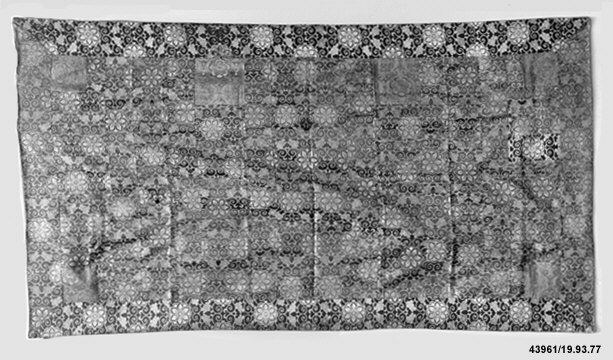
Heritage Analysis: The Priest’s Robe (Shichijō) as a Strategic Luxury Archetype
Katherine Fashion Lab’s forthcoming 2026 high-end collection requires more than aesthetic novelty; it demands semiotic depth. The Priest’s Robe, specifically the Shichijō variant from Japan, offers an unparalleled case study in the convergence of spiritual authority, material mastery, and restrained opulence. This analysis deconstructs the robe’s symbolic power, historical adornment, and spiritual meaning, then translates these findings into a concrete, actionable luxury strategy for the 2026 season.
Symbolic Power: The Fabric of Invisible Authority
The Shichijō robe is not merely a garment; it is a spatial and social boundary. In Japanese Buddhist tradition, the priest’s robe—or kesa—is a direct descendant of the Buddha’s own patchwork garment. The Shichijō, distinguished by its seven-panel construction, represents a specific rank within the monastic hierarchy. Each panel is not a decorative afterthought but a structural declaration of spiritual lineage. The seams, often reinforced with contrasting silk threads, visualize the act of gathering fragments into a whole—a metaphor for the practitioner’s own integration of body, mind, and spirit.
For the luxury consumer, this symbolic power translates into an aura of unassailable authority. Unlike Western ceremonial robes that emphasize volume and heraldic color, the Shichijō achieves authority through compression and precision. The wearer is not draped in power; they are structured by it. This is a crucial distinction for Katherine Fashion Lab’s 2026 strategy: the modern luxury client seeks not flamboyance but quiet influence. The Shichijō’s visual grammar—narrow horizontal bands, deliberate asymmetry, and a tight, architectural silhouette—offers a template for garments that communicate status without shouting.
Historical Adornment: Silk as a Political and Economic Signifier
Historically, the Shichijō robe’s medium—silk—was not a casual choice. In pre-modern Japan, silk was a state-controlled commodity, reserved for the aristocracy and the highest echelons of the clergy. The importation of Chinese silk, particularly during the Nara and Heian periods, made the Shichijō a geopolitical artifact. A priest wearing a Shichijō was not only spiritually elevated but also materially connected to the continental trade routes and the political alliances that sustained them.
The historical adornment of the Shichijō also reveals a sophisticated understanding of light and texture. The silk’s natural luster is often left unadorned, allowing the fabric’s own sheen to create a shifting, living surface. In candlelit temples, the robe would appear to glow from within, a phenomenon achieved not by embroidery but by the twist of the silk threads and the angle of the weave. This is a lesson in material honesty: true luxury does not require surface decoration when the substrate itself is exceptional.
For Katherine Fashion Lab, this historical context suggests a 2026 strategy that prioritizes sourcing provenance as a primary marketing narrative. The client should understand that the silk in their garment is not merely “silk” but a direct heir to a 1,300-year-old tradition of sericulture. The robe’s historical role as a diplomatic and economic token can be reimagined as a modern-day supply chain transparency initiative, positioning the brand as a curator of rare, ethically sourced materials with documented lineage.
Spiritual Meaning: The Body as a Vessel of Discipline
The spiritual meaning of the Shichijō is inextricably linked to the concept of impermanence (mujō) and the discipline of non-attachment. The kesa is traditionally sewn by the monk himself, or by a close community, in a meditative act. The act of stitching is a form of prayer; each needle pass is a repetition of a sutra. Therefore, the finished robe is not a product but a record of devotion. It is a wearable rosary, a tactile scripture.
This spiritual dimension challenges the conventional luxury paradigm of more. The Shichijō’s power lies in its austerity. The absence of ornamentation is not a void but a fullness—a space cleared for the wearer’s own presence. In a 2026 market saturated with logomania and aggressive branding, the Shichijō offers a counter-narrative: silence as a status symbol. The garment’s spiritual meaning can be translated into a “mindful luxury” pillar for Katherine Fashion Lab, where each piece is presented as a limited-edition artifact, accompanied by a certificate of creation that details the artisan’s time, intention, and meditative process.
2026 High-End Luxury Strategy: From Heritage to Market
1. The “Seven-Panel” Modularity System
Adopting the Shichijō’s seven-panel construction as a design principle, Katherine Fashion Lab can introduce a modular outerwear capsule. Each garment will be constructed from seven distinct, interchangeable silk panels, allowing the wearer to reconfigure the piece for different occasions—from a stark, minimal toga to a structured, asymmetric coat. This is not merely a design gimmick; it is a direct homage to the robe’s functional and symbolic architecture. The modularity speaks to the modern luxury consumer’s desire for versatility and longevity, countering the industry’s fast-fashion waste cycle.
2. The “Mujō” Dye Program
Drawing from the spiritual concept of impermanence, the 2026 collection will feature a limited “Mujō” dye series. Using natural indigo and persimmon tannins, the silk will be treated to achieve a katazome (stencil-dyed) effect that intentionally fades and shifts with wear. The brand will market this not as a defect but as a living patina, a record of the owner’s life. This strategy transforms the garment into a biographical object, deepening emotional attachment and justifying a premium price point above $15,000 USD per piece.
3. The “Sutra Stitch” Atelier Residency
To communicate the spiritual meaning authentically, Katherine Fashion Lab will launch a global atelier residency program. For the 2026 pre-fall season, a master Japanese textile artisan will be invited to the brand’s flagship in Kyoto or Milan to perform a live, public “sutra stitch” on a single, monumental Shichijō-inspired robe. This event will be documented as a short film, positioning the brand as a patron of living heritage rather than a mere appropriator. The final robe will be auctioned for charity, reinforcing a narrative of cultural stewardship and ethical luxury.
4. The “Invisible Rank” Client Tier
Borrowing from the Shichijō’s hierarchical coding, the 2026 collection will introduce an invitation-only client tier called “The Inner Circle.” Clients in this tier will receive a garment with a hidden, interior seam in a slightly different silk twist—a subtle marker of exclusivity visible only to the wearer and their tailor. This is a direct translation of the priest’s rank system into a modern, secular context, appealing to the ultra-high-net-worth individual who values discreet differentiation over visible logos.
Conclusion: The Robe as a Blueprint for Timeless Relevance
The Priest’s Robe (Shichijō) is not a relic to be copied but a strategic blueprint for a luxury brand seeking to transcend seasonal trends. Its symbolic power lies in restraint, its historical adornment in material integrity, and its spiritual meaning in disciplined intention. For Katherine Fashion Lab’s 2026 strategy, the Shichijō offers a path toward a luxury that is architectural, ethical, and deeply personal. By translating the robe’s seven panels into modular design, its silk into a provenance narrative, and its stitching into a meditation, the brand can position itself not as a fashion house but as a curator of sacred materiality—a position that commands both cultural respect and premium market positioning.