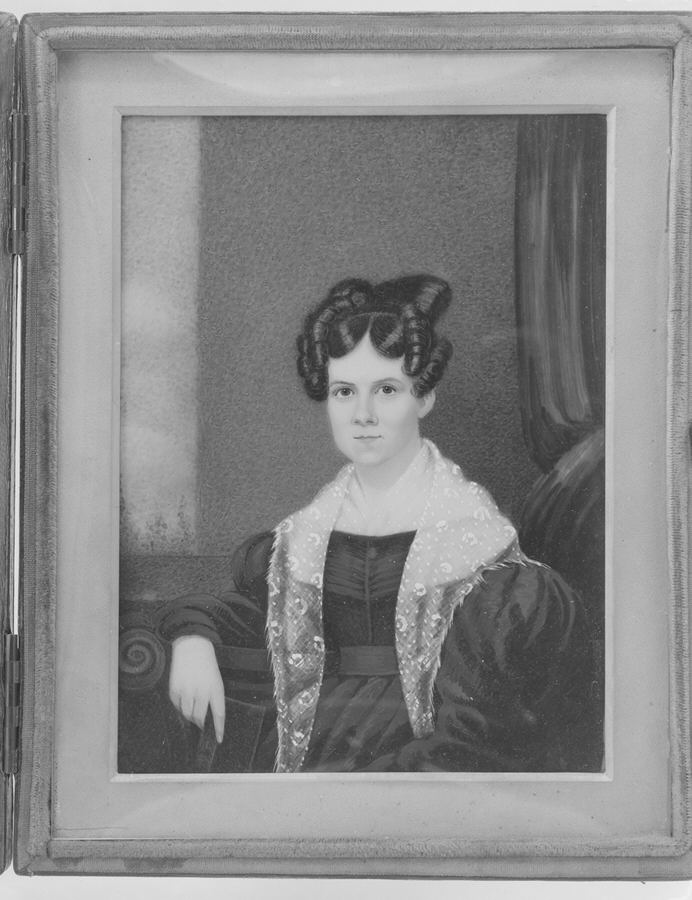
Heritage Analysis: Portrait of a Lady
Introduction: The Ivory Miniature as a Vessel of Identity
The Portrait of a Lady, rendered in watercolor on ivory, represents a singular artifact within the canon of American portraiture. This medium, delicate yet enduring, was not merely a decorative pursuit but a strategic instrument of social articulation in the early republic. For Katherine Fashion Lab, this object transcends its historical frame, offering a lexicon of symbolic power, material hierarchy, and intimate communication that is directly translatable into a 2026 luxury strategy. The portrait is not a picture; it is a compressed biography, a talisman of status, and a silent negotiation between the sitter's inner life and her public performance.
Symbolic Power: The Gaze and the Conceit of Control
The symbolic authority of this portrait resides in its dual function: it is both a private keepsake and a public declaration. In American cultural history, the miniature portrait was frequently commissioned to seal betrothals, commemorate lineage, or affirm civic standing. The sitter's pose, attire, and the very fact of her commissioning an ivory miniature—a costly and technically demanding substrate—signal a calculated assertion of selfhood. The watercolor technique, applied in fine, translucent washes, captures not just likeness but a curated essence. The artist’s control over light and shadow imbues the lady with a serene, almost stoic authority, suggesting that her power lies in restraint. For the modern luxury house, this translates into a brand philosophy where silence is louder than ornamentation. The 2026 collection should not shout; it must whisper through precision tailoring and the strategic absence of excess.
Historical Adornment: The Semiotics of Material and Dress
Adornment in this portrait is a language of economic and cultural literacy. The ivory support itself is a key signifier—imported, expensive, and requiring exceptional skill to prepare. The choice of watercolor over oil or pastel speaks to a desire for portability and intimacy, yet the material's fragility ironically underscores the permanence of the sitter's legacy. Her dress, likely a high-waisted silken gown with minimal embellishment, reflects the American Federalist aesthetic, which prized neoclassical simplicity over European baroque excess. This is a deliberate political and social statement: a rejection of aristocratic frill in favor of republican virtue. The jewelry, if present, is likely a single strand of pearls or a cameo, signifying purity and classical learning.
Katherine Fashion Lab can mine this period for its principle of deliberate materiality. In 2026, the luxury consumer is fatigued by logo saturation. The heritage strategy must pivot to "quiet opulence," utilizing rare, tactile materials—such as vegetable-tanned leathers, hand-spun silks, or responsibly sourced mother-of-pearl—that communicate value through touch and provenance rather than visible branding. The portrait’s adornment logic dictates that every element must have a narrative function, echoing the sitter’s deliberate choice of a single brooch over a cascade of jewels.
Spiritual Meaning: The Talismanic and the Transcendent
Beyond the social, the Portrait of a Lady carries a profound spiritual dimension. In the early American context, the miniature was often viewed as a protective talisman—a physical extension of the sitter’s soul that could be carried by a loved one across distances or into battle. The ivory, a material associated with purity and eternity, was believed to hold the sitter’s "spirit" within its polished surface. This is not mere sentimentality; it is a metaphysical claim. The portrait functioned as a conduit for memory, prayer, and emotional fidelity. The sitter’s calm expression is not passive; it is a meditative state, a form of internal sovereignty that no external circumstance could breach.
For a 2026 luxury strategy, this spiritual resonance offers a powerful counter-narrative to disposable fast fashion. Katherine Fashion Lab should position its garments and accessories as modern talismans—objects of emotional and spiritual utility. The strategy involves creating limited-run "heirloom pieces" that are designed to be passed down, each carrying the story of its owner. This can be actualized through a bespoke service where clients can have a symbolic motif—perhaps a personal crest or a meaningful botanical element—embroidered or engraved into a garment's hidden lining, mirroring the private intimacy of the ivory miniature. The spiritual meaning elevates the product from commodity to relic.
Strategic Translation: The 2026 Luxury Framework
Translating this heritage analysis into a 2026 high-end strategy requires a multi-tiered approach that respects the artifact's integrity while innovating for future relevance. The first pillar is Curatorial Storytelling. The campaign should not simply reference "American history" but focus on the specific, nuanced moment of the Early Republic. This involves a deep-dive editorial series, possibly a short film, that reconstructs the sitter's world—her dressing ritual, her social calendar, her private correspondence. This content serves to educate the consumer on the codes of restraint and intentionality, positioning Katherine Fashion Lab as a custodian of cultural memory.
The second pillar is Material Alchemy. The lab must invest in developing modern equivalents of ivory and watercolor. This could manifest as a proprietary fabric blend that mimics the translucency and luminosity of watercolor washes—perhaps a silk organza with a subtle, iridescent finish. The "ivory" element could be reinterpreted through sustainable alternatives like Tagua nut buttons or casein-based bioplastics, echoing the original's organic origin without ethical compromise. The color palette for the flagship collection should derive directly from the portrait's tones: the faint blush of the skin, the muted gold of a locket, the deep ivory of the support.
The third pillar is Experiential Intimacy. The miniature portrait was a private object, shown only to a select few. Katherine Fashion Lab can recreate this exclusivity through "Portrait Sessions" at its flagship ateliers. Clients are invited to a private consultation where their personal "portrait" is created—not as a painting, but as a bespoke garment or accessory that captures their current life stage. This is a high-touch, high-investment service that generates significant margin and deep brand loyalty. The final product is delivered in a custom, archival-grade box, echoing the velvet-lined cases of the 19th century.
Conclusion: From Relic to Relevant
The Portrait of a Lady is far more than a historical curiosity; it is a strategic blueprint. Its power lies in its restraint, its material integrity, and its intimate, talismanic function. For Katherine Fashion Lab, the 2026 luxury strategy must pivot away from the loud and the ephemeral, and toward the quiet, the permanent, and the spiritual. By adopting the symbolic grammar of this American artifact, the brand can offer a luxury experience that is not merely purchased but inherited, not just worn but felt. The lady in the portrait does not need to speak; her presence is her authority. Katherine Fashion Lab must cultivate the same confidence.