Executive Summary: The Cup and Saucer as a Vessel of Cultural Capital
For Katherine Fashion Lab, heritage is not a static archive but a dynamic lexicon of forms, symbols, and narratives waiting to be translated into contemporary luxury. This strategic standalone research analyzes the archetypal cup and saucer, tracing its lineage from ancient ceremonial objects to its zenith in hard-paste porcelain. The analysis decodes its intrinsic symbolic power, its role in historical systems of adornment and social ritual, and its latent spiritual meaning. The culmination is a direct strategic framework for leveraging this heritage into a distinctive, high-value positioning for the 2026 luxury market, where depth of narrative and authenticated symbolism will define the next frontier of desire.
Archaeological Provenance: From Sacred Vessel to Social Code
The cup’s origin transcends mere utility. In ancient civilizations—from the ceremonial kylix of Greek symposia to the ritual jade cups of Chinese dynasties and the shared drinking vessels of Mesopotamian rites—the cup was a primary interface between the individual, the community, and the divine. It held not just liquid, but libations, vows, and poison. The saucer, emerging later, performed a critical dual function: practical containment and symbolic elevation. It framed the cup, literally and figuratively, announcing that the vessel and its contents were of consequence. This dyad established a microcosm of order: a celestial body (the cup) and its orbit (the saucer). For Katherine Fashion Lab, this foundational history positions the form not as domestic ware, but as an ancient technology of communion and status, a precedent ripe for re-contextualization in personal adornment.
Hard-Paste Porcelain: The Alchemical Medium of Absolute Luxury
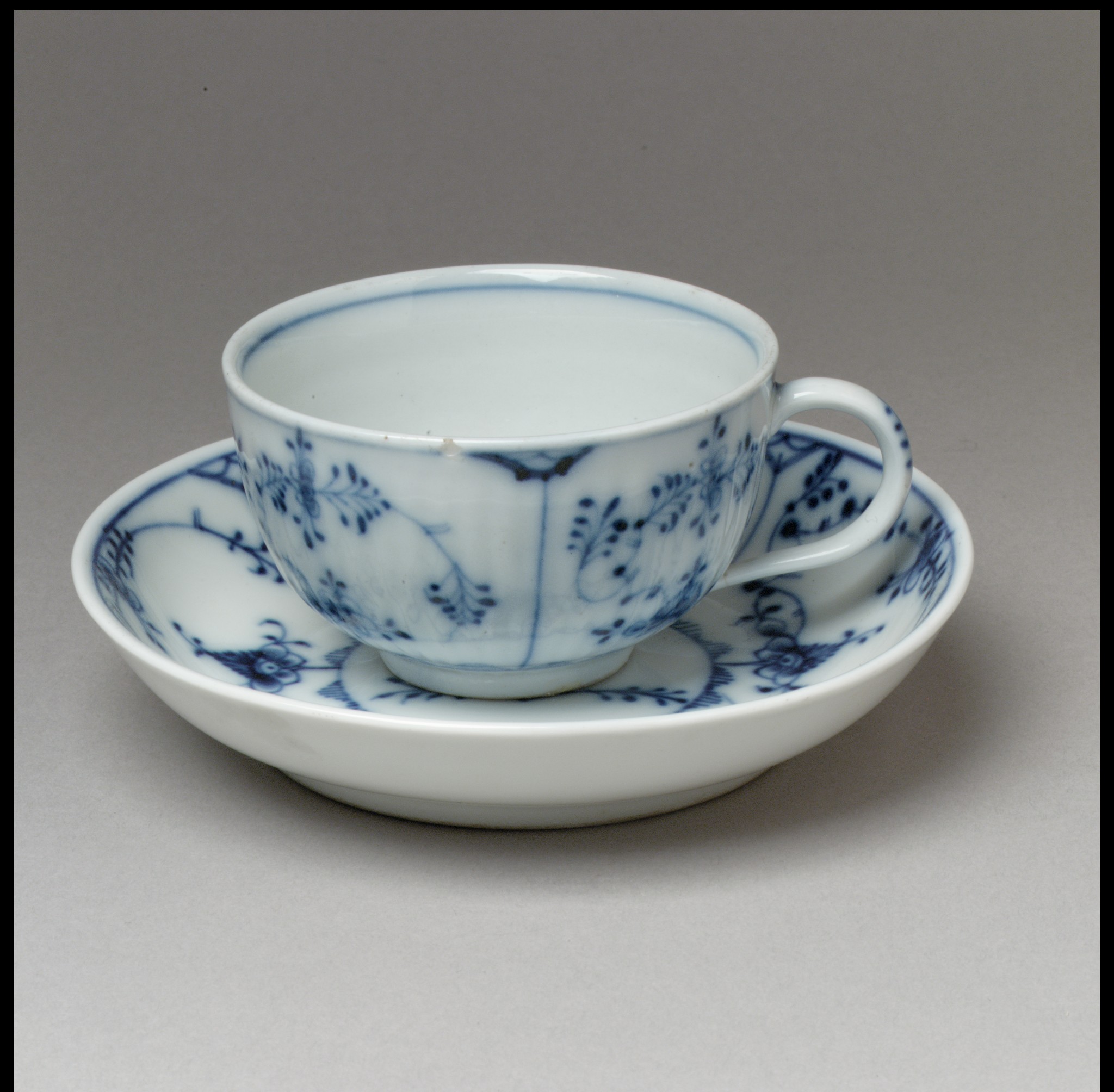
The medium is inseparable from the message. The 18th-century European mastery of hard-paste porcelain—the "white gold"—catapulted the cup and saucer into the apex of material culture. Its qualities mirror the very attributes of high luxury: translucency signaling rarity and refinement; durability masquerading as fragility; a resonant, clear ring proving its integrity. The difficulty of its production, the secrecy of its formulas, and its association with royal manufactories (Meissen, Sèvres) made porcelain services the ultimate aspirational commodity. They were less about drinking and more about displaying technological mastery, economic power, and aesthetic discernment. For our strategic purpose, hard-paste porcelain provides the material metaphor: a substance that is transformed by fire, embodies value through skilled artistry, and carries an innate narrative of exclusive discovery.
Decoding Symbolic Power and Spiritual Meaning
The cup and saucer ensemble is a dense symbolic matrix. The cup universally represents the feminine, the receptive, the container of essence and emotion. The saucer symbolizes the masculine, the supportive, the grounded plane of manifestation. Together, they form a sacred geometry of wholeness and equilibrium. Spiritually, the act of raising a cup is one of invocation and integration—taking the external (the poured liquid) into the internal self. In Christian Eucharist, Japanese tea ceremony, or Sufi poetry, the cup is a central metaphor for the heart ready to receive grace or wisdom. The saucer catches overflow, representing containment of abundance and mindfulness against waste. This spiritual syntax translates directly to luxury: it speaks to the modern consumer’s search for meaning, ritual, and intentionality in their possessions. A piece from Katherine Fashion Lab should not merely be worn; it should be engaged with as a talisman of balance and inner wealth.
Historical Adornment: The Body as a Site of Ceremonial Display
Historically, the most exquisite cups and saucers were adornments for the space and the social performance of the self. They were central to the "adornment" of the tea table, which was a stage for displaying fashion, etiquette, and cultural capital. The intricate paintings, gilding, and sculptural handles (often mimicking natural forms or mythological figures) were direct correlates to jewellery and textile patterns. They completed a holistic aesthetic ensemble. Furthermore, in many cultures, vessels were worn as pendants or used as hair ornaments, blurring the line between object and accessory. This historical precedent authorizes Katherine Fashion Lab to transpose the formal language, iconography, and compositional principles of porcelain services directly onto the body. A brooch is not merely a brooch; it is a miniature, portable service of one, invoking the ritual and presence of a full table setting.
Strategic Translation: 2026 High-End Luxury Market Application
The 2026 luxury consumer will prioritize radical authenticity, intellectual engagement, and sustainable symbolism over overt branding. Katherine Fashion Lab’s strategy, rooted in this deep-dive analysis, will be to launch a curated collection titled "Service of One: The Personal Reliquary."
Product Narrative & Design Pillars:
1. Symbolic Architecture: Pieces will architecturally reference the cup-and-saucer dyad. Expect saucers as structured collar pieces, cup forms as sculptural earrings or pendants, and handles reinterpreted as clasp or motif. The integrity of the circular form, the relationship of convex to concave, will be paramount.
2. Material Alchemy: We will move beyond literal porcelain. Instead, we will emulate its spirit through innovative materials: proprietary ceramics fused with precious metals, translucent resins inlaid with gold leaf to mimic porcelain's "skin," or reclaimed porcelain fragments set in titanium. The focus is on the sensorial experience of porcelain—cool touch, weight, acoustic properties.
3. Adornment as Ritual: Each piece will be accompanied by a "Ritual Card," not just a certificate. This card will explain its symbolic heritage (e.g., "This saucer-cuff grounds the overflow of your ambitions") and suggest mindful engagement, transforming the act of wearing into a personal ceremony.
4. Limited Edition & Provenance: Collections will be released as numbered "Services," with each "service" comprising 3-5 wearable pieces that work together. Marketing will leverage the language of archaeology and curation, not seasonal fashion. We are not selling accessories; we are issuing "cultural artefacts for contemporary life."
Market Positioning & Communication:
Positioning: "Where Ancient Ceremony Meets Modern Consciousness." Visual campaigns will be stark, reverent, and museum-like, juxtaposing artefacts with contemporary wearables. Partnerships will be with institutions (The Victoria & Albert Museum, The Getty) and thinkers (historians, philosophers of ritual), not traditional fashion influencers. The price point will reflect not just materials, but the intensive research and narrative depth, appealing to the ultra-high-net-worth individual seeking intelligent exclusivity.
Conclusion: The Vessel Reborn
The cup and saucer, through this heritage analysis, are revealed as potent vessels of human aspiration. For Katherine Fashion Lab, they provide a rigorous, untapped framework for a 2026 luxury strategy that is both intellectually robust and profoundly emotive. By distilling their symbolic power, spiritual resonance, and history as social adornment into wearable artefacts, the Lab can transcend the fashion cycle. We will offer instead heirlooms of meaning, re-establishing the worn object as a site of personal ritual, historical continuity, and silent, powerful communication—a true service for the singular self.