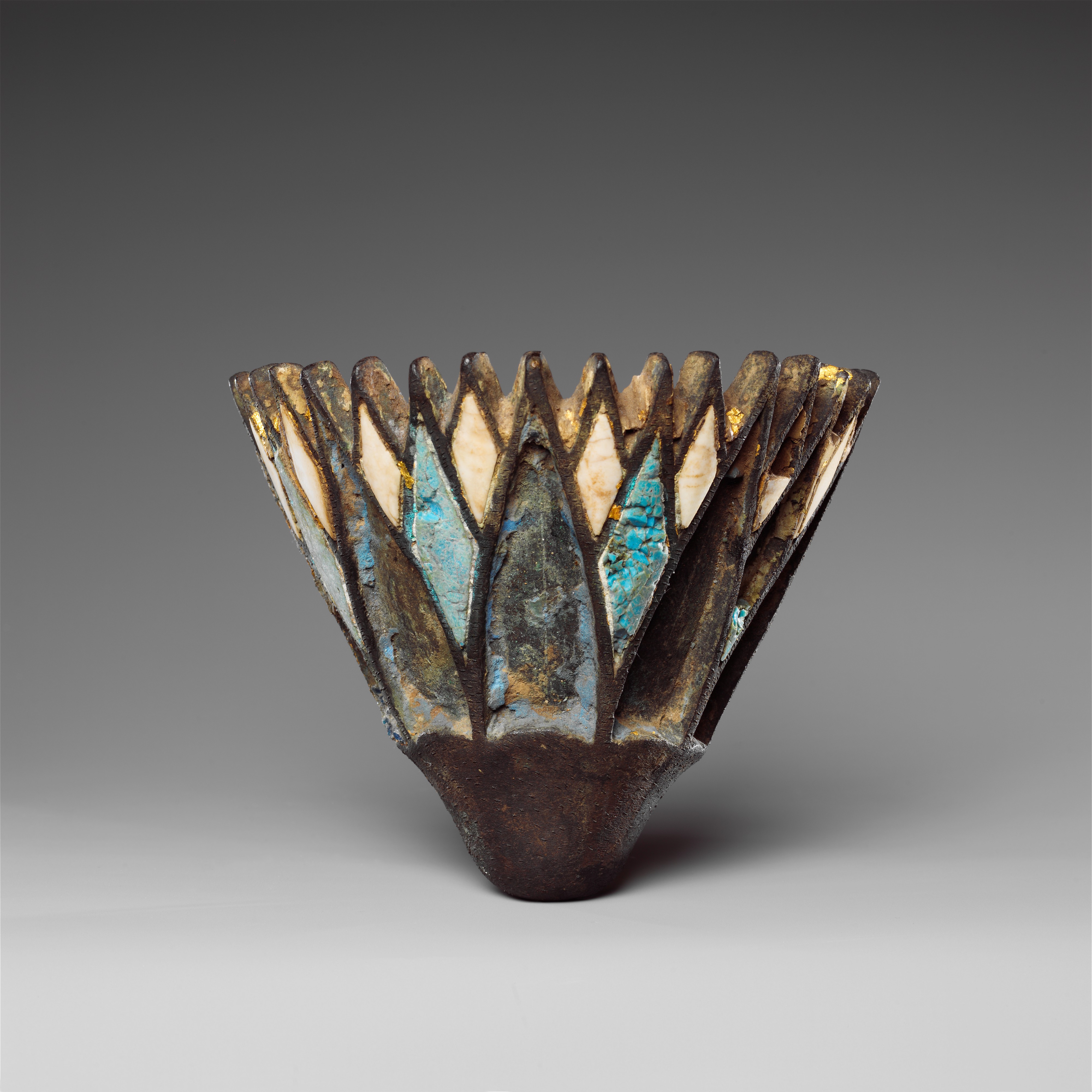
Heritage Analysis: The Water Lily Attachment and Its Strategic Resonance for Katherine Fashion Lab
The water lily attachment, a resplendent artifact from an ancient civilization, serves as a profound testament to the intersection of divine symbolism, artisanal mastery, and socio-political power. Crafted from bronze and adorned with gold foil over gesso, the piece is further enriched by inlays of white, dark blue, and light blue glass set against light and dark blue grounds. For Katherine Fashion Lab, this object is not merely a historical curiosity; it is a strategic blueprint for a 2026 luxury narrative that prioritizes heritage authenticity, material storytelling, and spiritual resonance. This analysis deconstructs the artifact’s symbolic power, historical adornment practices, and spiritual meaning, culminating in a forward-looking strategy for high-end market positioning.
Symbolic Power: The Lotus as a Metaphor for Divine Ascendancy
In the ancient world, the water lily—often conflated with the lotus—was not a passive decorative motif but a potent glyph of cosmic regeneration. The flower’s daily cycle of submerging at night and emerging pristine at dawn symbolized resurrection, purity, and the cyclical triumph of order over chaos. Attached to a processional barque, the water lily functioned as a mobile emblem of the deity’s presence, transforming a physical vessel into a sacred microcosm. The use of gold foil is critical here: gold, impervious to tarnish, was considered the flesh of the gods. By layering gold over gesso, the artisan created a luminous surface that caught torchlight during nocturnal rituals, effectively simulating divine radiance.
For Katherine Fashion Lab, this symbolic architecture offers a powerful brand metaphor. The water lily’s journey from murky depths to sunlit bloom mirrors the luxury consumer’s desire for transcendence—not merely purchasing a product, but acquiring a talisman of personal renewal. The strategic implication for 2026 is to position the brand not as a purveyor of clothing or accessories, but as a curator of transformative moments. The water lily’s dual nature—rooted yet rising—aligns with the modern luxury ethos of grounded opulence, where material richness is balanced by spiritual intentionality. The artifact’s blue glass inlays, evoking the Nile’s life-giving waters, further reinforce themes of fluidity and adaptability, traits essential for navigating the volatile high-end market.
Historical Adornment: The Craftsmanship of Sacred Ornamentation
The technical execution of the water lily attachment reveals a sophisticated understanding of material hierarchy and visual engineering. Bronze provided structural integrity, while the gold foil overlay, applied over a gesso ground, allowed for intricate detailing without the weight of solid gold. This technique—gilding over a prepared substrate—was a hallmark of high-status workshops, where cost efficiency met aesthetic maximalism. The glass inlays, set in contrasting blue grounds, demonstrate an early mastery of polychromy. White glass likely represented the flower’s petals, while dark and light blue inlays simulated the reflective surface of water or the lapis lazuli associated with divinity. The deliberate juxtaposition of matte and glossy surfaces created a dynamic interplay of light, ensuring the attachment was visible from a distance during processions.
From a strategic standpoint, this historical adornment practice offers a lesson in material storytelling. Katherine Fashion Lab’s 2026 strategy should prioritize tangible, traceable material provenance. Just as the ancient artisan sourced specific glass pigments and gold leaf, the modern luxury brand must articulate the origin and transformation of its materials—whether regenerated cashmere, ethically mined gemstones, or bio-fabricated silks. The water lily’s gesso base, a humble yet essential substrate, underscores the value of invisible foundations. In luxury strategy, this translates to investment in unseen craftsmanship: reinforced seams, precision-cut linings, and sustainable dye processes. The artifact’s layered construction—bronze, gesso, gold, glass—mirrors a tiered brand architecture, where each element supports the next, creating a cohesive, multi-sensory consumer experience.
Spiritual Meaning: Ritual Function and the Luxury of Devotion
The water lily attachment was not created for static display; it was animated through ritual. Processional barques carried divine effigies from temple to temple, and the water lily attachments would have swayed, caught light, and reflected the surrounding crowd. This kinetic aspect is essential to understanding its spiritual meaning. The artifact was not an object of passive veneration but an active participant in a communal act of faith. The blue grounds, likely symbolizing the primordial waters of creation, positioned the deity as the force that ordered chaos. For the ancient audience, the water lily was a visual prayer, a promise of eternal life, and a marker of the pharaoh’s or priest’s intermediary role between the mortal and the divine.
For Katherine Fashion Lab, the spiritual dimension translates into a luxury strategy centered on ritualized consumption. In 2026, high-end consumers are increasingly seeking meaning beyond status. The water lily suggests a framework: create limited-edition pieces or collections that are released in conjunction with specific seasons, celestial events, or cultural moments, thereby transforming a purchase into a ceremonial act. The brand can adopt a "processional" approach to retail—pop-up experiences that move through cities, carrying the collection like a sacred barque. The spiritual resonance of the water lily also invites a focus on mindfulness and provenance storytelling. Each garment or accessory could be accompanied by a digital or physical "ritual card" explaining its symbolic intent, material journey, and the artisan’s blessing, thereby elevating the product from commodity to heirloom.
Strategic Blueprint for 2026: Translating Heritage into Market Leadership
The water lily attachment provides Katherine Fashion Lab with a three-pillar strategic framework for 2026: Symbolic Differentiation, Material Provenance, and Experiential Ritual.
Pillar One: Symbolic Differentiation
In a saturated luxury market, differentiation cannot rely solely on aesthetics. The water lily’s symbolism of rebirth and purity offers a unique emotional positioning. Katherine Fashion Lab should develop a "Regeneration" narrative, where each collection cycle is framed as a rebirth—a shedding of the old and an emergence into a new, luminous identity. This can be communicated through campaign imagery that juxtaposes dark, watery backgrounds with the brand’s products emerging into light, echoing the flower’s daily resurrection. The symbolic power of the water lily also supports a color strategy: deep blues and greens as foundational tones, with gold and white as accent highlights, creating a visual language that is both ancient and avant-garde.
Pillar Two: Material Provenance and Craftsmanship
The artifact’s composite construction—bronze, gesso, gold, glass—demonstrates that true luxury is a symphony of materials, not a single note. For 2026, Katherine Fashion Lab should implement a transparent supply chain that highlights the journey from raw material to finished product. This could involve partnering with artisan workshops that employ traditional gilding or glass-making techniques, adapted for contemporary use. For example, a limited-edition handbag could feature a bronze clasp with gold plating and hand-set blue glass inlays, directly referencing the artifact. The brand should also publish an annual "Material Provenance Report," detailing the ethical sourcing of metals, the carbon footprint of dye processes, and the labor conditions of every workshop. This transparency builds trust and positions the brand as a leader in responsible luxury.
Pillar Three: Experiential Ritual and Client Engagement
Finally, the water lily’s ritual function suggests a move beyond transactional retail. Katherine Fashion Lab should design immersive client experiences that mimic the processional barque’s journey. This could take the form of a traveling exhibition, where the collection is displayed in a series of curated spaces—each representing a stage of the water lily’s symbolic life: submersion, emergence, and full bloom. Clients would be invited to private viewings, not just to see the products but to participate in a narrative. Additionally, the brand could offer a "Commissioning Ritual," where high-net-worth clients can customize a piece—selecting materials, inlays, and engravings—in a ceremony that includes a craftsman’s blessing. This transforms the purchase into a memorable, spiritual event, fostering deep brand loyalty and word-of-mouth advocacy.
Conclusion: The Water Lily as a Timeless Strategic Compass
The water lily attachment, with its bronze core, gold skin, and glass eyes, is a miniature masterpiece of ancient luxury. It teaches us that true adornment is never superficial; it is a layered language of power, faith, and artistry. For Katherine Fashion Lab, this artifact is not a relic of the past but a living guide for the future. By embracing its symbolic power, honoring its material complexity, and reviving its ritual function, the brand can craft a 2026 strategy that is both deeply rooted and radically innovative. In an era where luxury consumers crave authenticity and meaning, the water lily offers a timeless answer: rise from the depths, shine with intention, and invite the world to witness your transformation. Katherine Fashion Lab, by channeling this ancient wisdom, will not merely sell products—it will orchestrate moments of transcendence, securing its place as a vanguard of heritage-driven luxury.