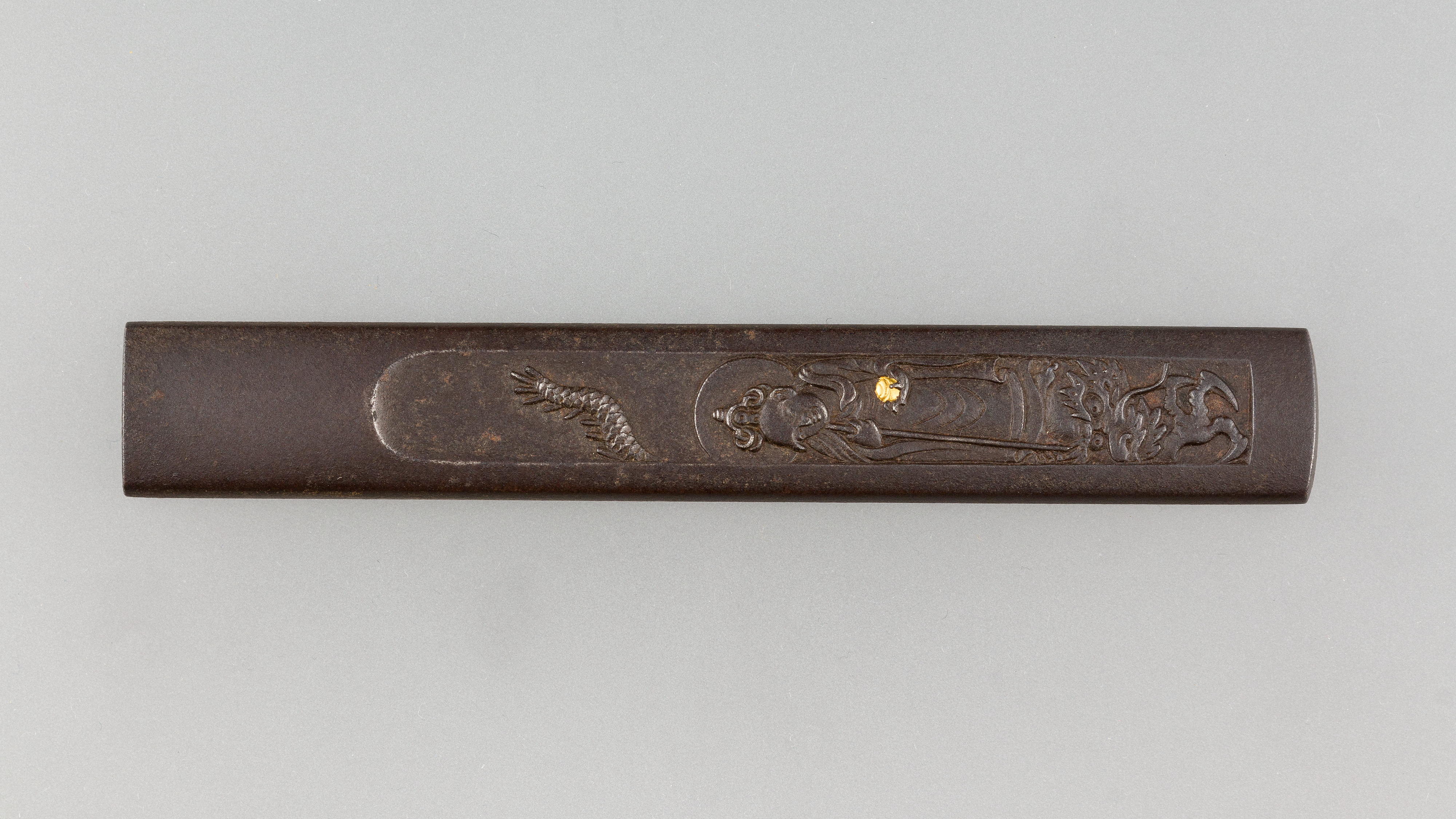
Executive Heritage Analysis: The Japanese Kozuka as a Blueprint for 2026 Luxury Strategy
Within the canon of Japanese metalwork, the kozuka—the small knife handle fitted to the scabbard of a samurai’s tanto or wakizashi—represents a singular convergence of utilitarian precision and aristocratic expression. For Katherine Fashion Lab, this object is not merely an antique artifact; it is a strategic case study in compressed symbolism, where a 10-centimeter strip of iron, silver, and gold carries the weight of an entire warrior ethos. This analysis deconstructs the kozuka’s symbolic power, historical adornment practices, and spiritual underpinnings, then translates these findings into a concrete, high-end luxury strategy for the 2026 season.
Symbolic Power: The Microcosm of Status and Restraint
The kozuka’s symbolic authority derives from its paradoxical position. It was hidden—tucked into the scabbard’s edge—yet its visibility upon drawing the blade was immediate and decisive. In Edo-period Japan (1603–1868), when the samurai class shifted from battlefield combat to bureaucratic governance, the kozuka became a primary vehicle for non-verbal communication. A warrior could not display a gold-lacquered helmet at a tea ceremony, but he could subtly reveal a kozuka carved with a dragon or a chrysanthemum. This act of controlled revelation—showing only to those who knew to look—is the essence of quiet luxury. For Katherine Fashion Lab, the kozuka teaches that power in 2026 is not broadcast but inscribed. The symbolic weight lies in the material’s density: iron for resilience, silver for purity, gold for divine right. Each metal is a layer of meaning, and their combination on a single handle creates a hierarchical visual grammar that the modern luxury consumer craves—an alternative to logo-saturation.
Historical Adornment: The Art of the Goto School
Historically, the kozuka was not a mass-produced accessory but a bespoke commission. The most celebrated artisans, such as the Gotō School, worked exclusively for the shogunate and high-ranking daimyō. Their techniques—takazōgan (high-relief inlay) and honzōgan (flat inlay)—transformed the handle into a sculptural micro-landscape. A typical masterwork would feature a shakudō (a copper-gold alloy) base, patinated to a deep, almost black indigo, against which silver waves or gold cranes would emerge in stark relief. The adornment was never random. Motifs were chosen for their allusive resonance: a tiger in a bamboo grove signified courage tempered by flexibility; a single pine branch denoted longevity; a pair of mandarin ducks evoked fidelity. The kozuka’s historical function was therefore mnemonic—it reminded the wearer of his virtues and reminded the observer of his lineage. For Katherine Fashion Lab, this historical precedent validates a shift from seasonal trend-driven design to permanent, symbolic collections. The 2026 client is not buying a "look" but a personal talisman that encodes their identity.
Spiritual Meaning: The Warrior’s Silent Prayer
Beyond status, the kozuka held profound spiritual weight. In Shinto and Zen Buddhist traditions, the blade was considered a kami (spirit) dwelling, and the kozuka, as its guardian, was treated with ritual reverence. The act of drawing the knife was not casual; it was a meditative gesture. The materials themselves were believed to carry spiritual properties: iron was thought to repel malevolent spirits, while gold was a conductor of celestial energy. The kozuka’s small size was deliberate—it forced the warrior to focus his intention into a single, precise movement. This is the antithesis of modern fast-fashion consumption. The spiritual lesson for Katherine Fashion Lab is the concept of ritualized ownership. A luxury item in 2026 must function as a secular ritual object—something that demands a pause, a breath, and a deliberate action from its owner. The kozuka’s spiritual power was not in its decoration alone but in the ritual of handling. Thus, the Lab’s strategy should incorporate "ceremony" into the product experience—from unboxing to daily wear—positioning the item as a conduit for mindfulness.
Strategic Translation: The 2026 High-End Luxury Framework
Drawing from the kozuka’s dual identity as a hidden weapon and a sacred artifact, Katherine Fashion Lab’s 2026 strategy will be anchored on three pillars: Compressed Iconography, Patina as Provenance, and Silent Revelation.
Pillar One: Compressed Iconography
Just as the kozuka fit an entire narrative into a few square centimeters, the Lab will launch a “Micro-Motif” capsule—a line of small leather goods, jewelry, and hardware where each piece features a single, hand-engraved emblem. These emblems will not be literal Japanese motifs but abstracted geometric forms derived from the kozuka’s metalwork patterns (e.g., wave crests, pine scales, and crosshatched iron textures). The strategy is to create a private language for the brand’s top-tier clientele. The motif will be identifiable only to those within the brand’s inner circle, replicating the samurai’s selective display. This approach counters the "loud luxury" trend by offering intellectual exclusivity rather than mere price-based exclusivity.
Pillar Two: Patina as Provenance
The kozuka’s value increased with age, as the shakudō darkened and the gold inlay caught the light differently. In 2026, Katherine Fashion Lab will introduce a “Living Metal” program for its premium accessories. Using a proprietary alloy that mimics shakudō’s patination, the Lab will encourage clients to wear the item daily, allowing natural oils and time to darken the surface. This transforms the product from a static object into a biographical artifact. The marketing narrative will shift from "new" to "becoming." Each piece will be sold with a certificate documenting its initial metal composition, and clients will be invited to return for a "patina appraisal" in 2030. This creates a long-term brand attachment that fast fashion cannot replicate, positioning the Lab as a steward of heirloom creation.
Pillar Three: Silent Revelation
The kozuka’s most powerful strategic lesson is its concealment. For the 2026 flagship launch, Katherine Fashion Lab will design a “Kozuka Pocket”—a discreet, magnetically sealed compartment inside tailored outerwear and handbags. This compartment is not for utility but for personal talismans: a small gold coin, a folded poem, a micro-sculpture. The compartment’s existence will be hinted at through a single, polished silver seam—visible only upon close inspection. The retail experience will include a private consultation where clients select their "talisman" to be custom-fitted into the garment. This strategy elevates the product from apparel to armor for the modern psyche, offering a sense of control and private power in a chaotic world. It also creates a secondary market for the Lab’s micro-sculptures, which will be produced in limited editions of 100.
Conclusion: From Artifact to Archetype
The Japanese kozuka is a masterclass in economy of expression. It proves that true luxury is not about size, volume, or visibility, but about the density of meaning per square inch. For Katherine Fashion Lab, the 2026 strategy is not an appropriation of Japanese culture but an adoption of its design philosophy—one that values intentionality, material honesty, and spiritual resonance. By translating the kozuka’s symbolic power into compressed motifs, its historical adornment into living patina, and its spiritual ritual into silent compartments, the Lab will position itself as the premier purveyor of "meaningful minimalism" in the high-end market. The kozuka was never merely a handle; it was a philosophy. And in 2026, Katherine Fashion Lab will ensure that philosophy remains not just preserved, but re-enchanted for a new generation of discerning patrons.