Deconstructing the Silhouette: Cañon of Kanab Wash as a Foundational Pattern
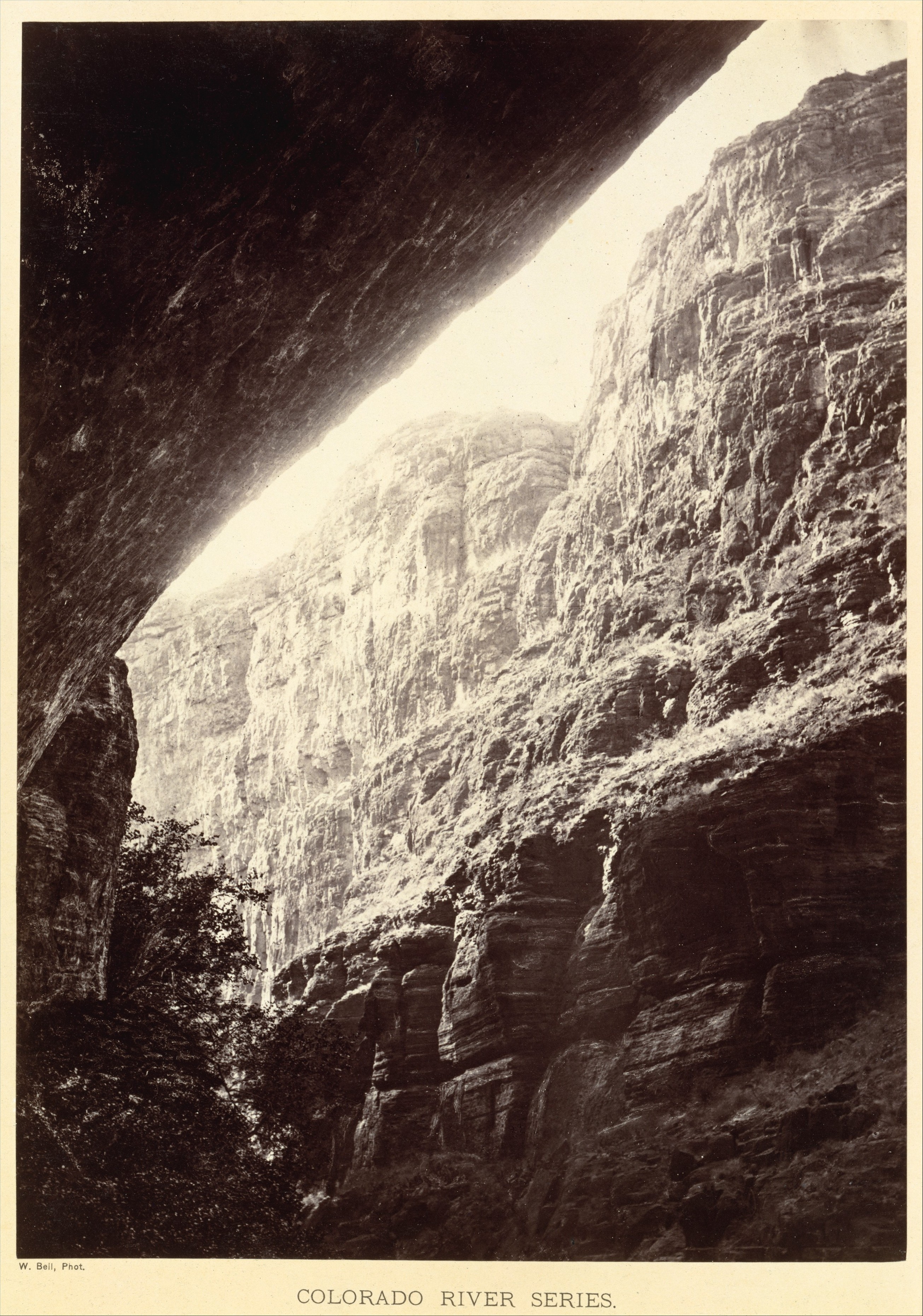
The albumen silver print "Cañon of Kanab Wash, Looking South" transcends its origin as a 19th-century geological survey document to emerge as a profound, standalone study in the fundamental principles of haute couture. At first glance, the connection between the arid, stratified landscapes of the American Southwest and the rarified air of the atelier may seem tenuous. Yet, for the analytical eye at Katherine Fashion Lab, this image serves as a masterclass in structural integrity, textural narrative, and the sublime power of negative space. It is not a garment, but a blueprint; not a collection, but a constitution of form.
The Architecture of the Bodice: Stratification and Seamlessness
The photograph’s most immediate sartorial translation lies in its depiction of geological stratification. The canyon walls, composed of layer upon layer of sedimentary rock, present a visual manifesto on the art of construction and the illusion of effortless form. Each distinct stratum can be read as a foundational layer of a garment: the internal corsetry, the structural underlining, the horsehair canvas, and finally, the exquisite outer fabric. The genius, however, is in their seamless integration. There are no visible seams, no abrupt transitions—only a gradual, majestic evolution of tone and texture.
This mirrors the highest objective of couture: a garment that appears as a singular, organic form on the body, belying the countless hours of meticulous handwork beneath its surface. The canyon’s face, eroded by millennia of elemental force, reveals its internal history without appearing fragmented. Similarly, a masterfully constructed gown reveals its complexity through drape, movement, and silhouette, not through exposed seams. The print instructs us to consider clothing as archaeology, where every internal layer, though unseen, is essential to the integrity and story of the final form.
Textural Dialectics: Erosion as Embroidery
Moving from macro-structure to micro-detail, the albumen silver print offers a stunning study in texture. The glass negative process captures with exquisite clarity the contrast between the smooth, water-sculpted rock faces and the sharply eroded, almost lace-like ridges along the canyon’s rim. This dialectic is the heart of tactile design in fashion. The smooth expanse represents the luxury of a pristine, heavy silk satin or a matte wool crepe—surfaces that absorb and reflect light in a calm, continuous plane.
Conversely, the intricately eroded topographies are nature’s own passementerie. They evoke the possibilities of laser-cut leather, intricate beadwork that mimics erosion patterns, or three-dimensional embroidery that casts dramatic shadows. The "Cañon of Kanab Wash" demonstrates that true textural sophistication lies not in uniformity, but in the deliberate, artistic contrast between polished and raw, between fluid and fractured. It is a lesson in creating visual interest through the play of light and shadow across a surface, where texture becomes the primary ornamentation, obviating the need for applied decoration.
The Couture of Negative Space: Silhouette and Shadow
Perhaps the most avant-garde lesson from this geological study is its masterful use of negative space. The composition is dominated by the vast, open chasm of the canyon itself—a deep, untouchable void. This is not emptiness; it is a powerful, defining presence that shapes our perception of the solid forms surrounding it. In couture, this translates directly to the critical importance of silhouette and the space between the body and the fabric.
The canyon’s void is the equivalent of the exquisite, deliberate gap in a cap sleeve, the dramatic open back of an evening gown, or the strategic cut-out that frames the collarbone. It is about what is removed, what is revealed, and how that absence amplifies the beauty of what remains. The deep shadows within the wash, rendered in the rich, velvety blacks of the albumen print, are akin to the strategic use of opaque and transparent fabrics—a play of concealment and revelation that is the essence of allure. This image teaches that the most powerful statements are often made not by addition, but by precise, courageous subtraction.
Material Alchemy: The Albumen Silver Print as Fabric
Finally, we must consider the materiality of the artifact itself. The albumen silver print process imparts a specific aesthetic: a warm, sepia-toned base with a subtle sheen, capable of rendering both immense tonal range and exquisite detail. This is not a neutral document; it is an object with its own tactile and visual personality. For the fashion curator, this speaks to the alchemy of fabric manipulation and finish.
The albumen’s sheen is the glow of a duchesse satin or the muted luster of a silk-wool blend. Its ability to hold deep blacks in the shadows while detailing highlights in the rock is analogous to a fabric with a rich, complex depth of color—a devoré velvet or a double-faced cashmere. The photograph, as a physical object, reminds us that couture is an encounter with a transformed material. The original scene—rock, sand, sky—has been alchemized through a chemical and artistic process into something new, just as raw silk, linen, or metal threads are transformed through human ingenuity into an object of beauty and meaning.
In conclusion, "Cañon of Kanab Wash, Looking South" stands as a peerless study for the couture mind. It provides a foundational framework where structure is sublime, texture is narrative, space is substance, and materiality is alchemy. It argues that the principles of great design are universal, etched not only in Parisian sketchbooks but in the very bedrock of the planet. For Katherine Fashion Lab, this image is a timeless reminder that inspiration, when analyzed with rigor and poetic insight, can be mined from the most elemental of sources, yielding a vision that is as enduring as the landscape itself.