Executive Summary: Amuletic Heritage as a Strategic Asset
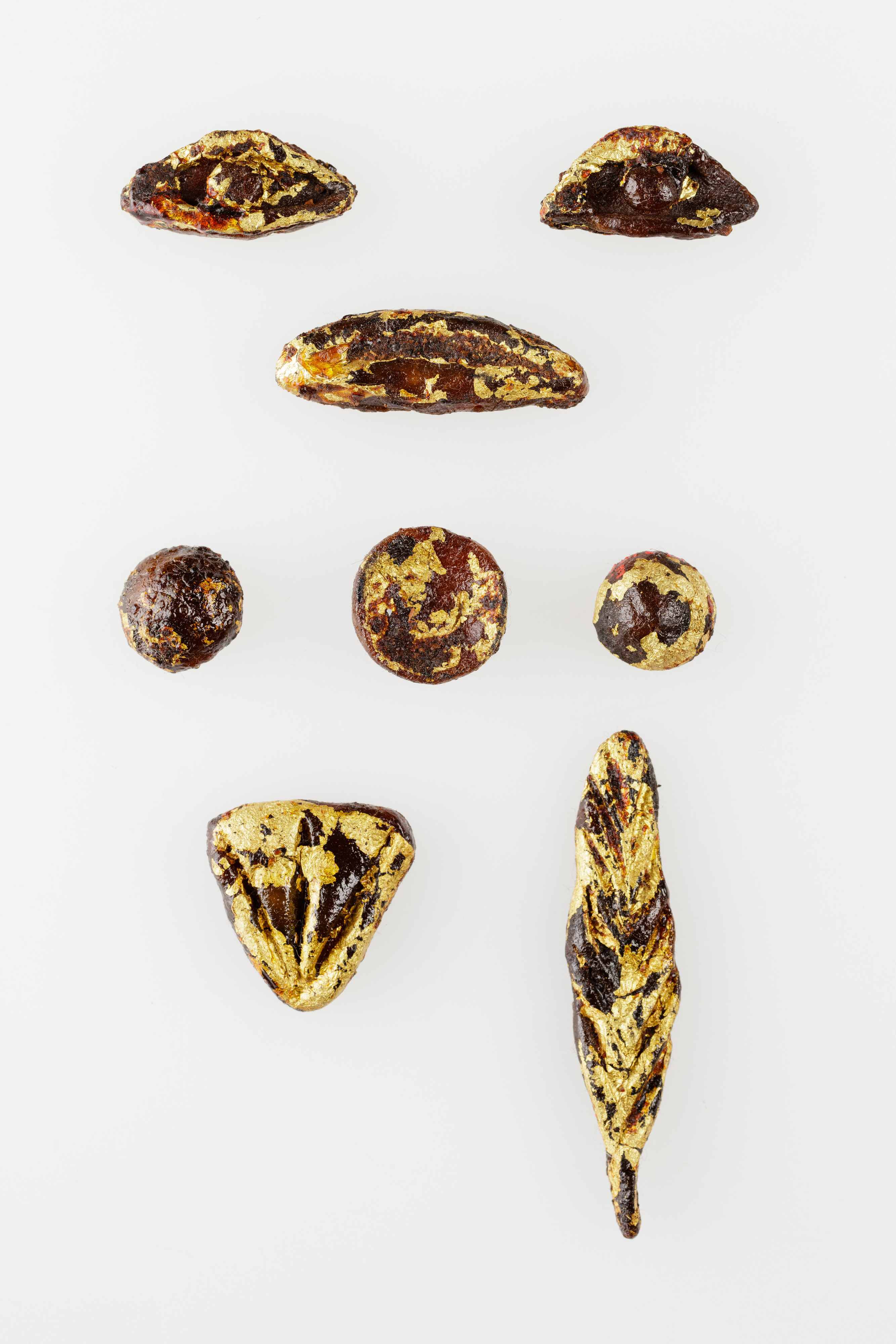
This analysis examines a curated set of amulets from an unspecified ancient civilization, crafted from wax and finished with gold leaf, as a foundational heritage asset for Katherine Fashion Lab. Moving beyond mere aesthetic inspiration, this research positions these objects as a dense repository of symbolic capital. The investigation deconstructs their intrinsic properties—material juxtaposition, form, and intended function—to formulate a strategic blueprint for a 2026 high-end luxury launch. The objective is to translate ancient spiritual meaning and historical adornment principles into a contemporary language of exclusivity, personal sovereignty, and metaphysical branding, thereby creating a standalone category that transcends seasonal trends.
Archaeological & Material Analysis: The Dialectic of Ephemeral and Eternal
The primary materials, wax and gold leaf, constitute a profound symbolic dialectic central to the amulets' original power and their modern strategic relevance. Wax, as a malleable, organic, and historically ephemeral medium, represents the human dimension: intention, ritual, and the mutable self. In ancient practices, wax was often used for votive offerings or magical figurines, its softness allowing for the precise imprint of prayer or identity before being transformed. Gold leaf, conversely, is the immutable, the divine, and the eternal. Its application sheathes the vulnerable wax core in a skin of perceived incorruptibility and celestial light.
This material synergy is a direct metaphor for the modern luxury value proposition: the transformation of the personal and perishable (experience, identity) into something timeless and treasured (a legacy object). For Katherine Fashion Lab, this is not a detail but a core brand philosophy. The 2026 strategy must physically and narratively embrace this dichotomy—perhaps through techniques that preserve the tactile, organic impression in wax before its gilding, making each piece a unique artifact of its creation moment.
Historical Adornment Context: Armor for the Soul
In ancient civilizations, adornment was rarely purely decorative; it was a functional technology for navigating a world perceived as spiritually charged. Amulets were wearable armor, providing protection (the apotropaic function), conferring abilities (strength, fertility, eloquence), and signaling identity and status within a sacred cosmology. Their placement on the body—at the throat (pulse of life), wrist (point of action), or over the heart—was strategically intentional. This represents a historical precedent for the modern concept of "intentional dressing" or "wardrobing as ritual," a trend accelerating in post-pandemic luxury markets. The wearer engaged in an active, spiritual collaboration with the object.
Decoding Symbolic Power for a Contemporary Lexicon
The specific symbology of the amulet set—whether geometric, zoomorphic, or divine—forms the non-verbal vocabulary of the future collection. Each shape is a legacy code to be decrypted and re-contextualized.
Spiritual Meaning as Emotional Resonance: The ancient belief in the "eye" that wards off malice translates today into a symbol of clarity, intuition, and protection from negative energy—a highly resonant concept for high-net-worth individuals navigating constant scrutiny. A serpent motif, symbolizing regeneration and wisdom, aligns with modern values of transformation and cyclical growth. The strategic imperative is to meticulously document this symbolic translation, creating a "Codex" for the collection that elevates each piece from accessory to narrative artifact.
From Collective Totem to Personal Talisman: Historically, amulets often drew power from shared cultural myths. The 2026 luxury strategy must pivot this power source to the personal. The value proposition shifts from "wearing a commonly understood protection symbol" to "commissioning a unique vessel for your own intention." This leverages the bespoke and personalization trends at the zenith of luxury, positioning Katherine Fashion Lab as a conduit for self-authored symbolism.
Strategic Integration: The 2026 High-End Luxury Launch Blueprint
The heritage analysis directly informs a three-pillar launch strategy for 2026, designed to establish a standalone, high-margin category.
Pillar 1: The Artifact Collection – Ultra-Limited Narrative Pieces
This tier directly mirrors the analyzed set. Pieces are presented as modern artifacts, utilizing the wax-and-gold-leaf technique, perhaps with incorporated ancient-inspired materials like engraved gemstones or patinated metals. Each piece is numbered and accompanied by a "Heritage Dossier"—a scholarly yet luxurious document detailing the historical inspiration, symbolic meaning, and artisan techniques. This is not jewelry; it is "wearable archaeology," targeting collectors and cultural investors. Price points are in the high six to seven figures, distributed exclusively through private salons.
Pillar 2: The Personal Glyph Service – Bespoke Symbolism
This pillar operationalizes the shift from collective to personal symbolism. Clients engage in a curated consultation with a "Symbolism Director" (a role blending historian, strategist, and designer) to develop a personal glyph representing a core intention, legacy, or milestone. This glyph is then rendered in the signature wax-and-gold medium or in precious metals. This service transforms heritage into a confidential, co-created product, building immense client loyalty and commanding premium bespoke pricing.
Pillar 3: The Ritual Adornment Ecosystem – Beyond the Object
To fully capture the amulet's original context, the launch must extend into experiential and ancillary offerings. This includes curated "Adornment Rituals" at retail points, developed in partnership with experts in mindfulness or ceremonial practice. Complementary products like silk ritual cloths for storing the pieces, or custom fragrances with "charged" ingredient narratives, create a holistic ecosystem. This builds brand world depth and drives multi-category revenue.
Conclusion: Patrimony as Future-Proof Strategy
For Katherine Fashion Lab, this set of ancient amulets is far more than a museum reference; it is a strategic blueprint. The analysis reveals that the true luxury of the future lies not in overt logos, but in layered meaning, material authenticity, and spiritual utility. By leveraging the profound dialectic of wax and gold, translating historical protection into modern personal sovereignty, and building a launch strategy that moves from limited artifact to bespoke service, the brand can carve a unique, defensible position at the apex of the market. The 2026 collection will thus succeed by offering what the original amulets offered their wearers: a tangible anchor for identity, intention, and a perceived connection to something transcendent—the ultimate luxury for an uncertain age.