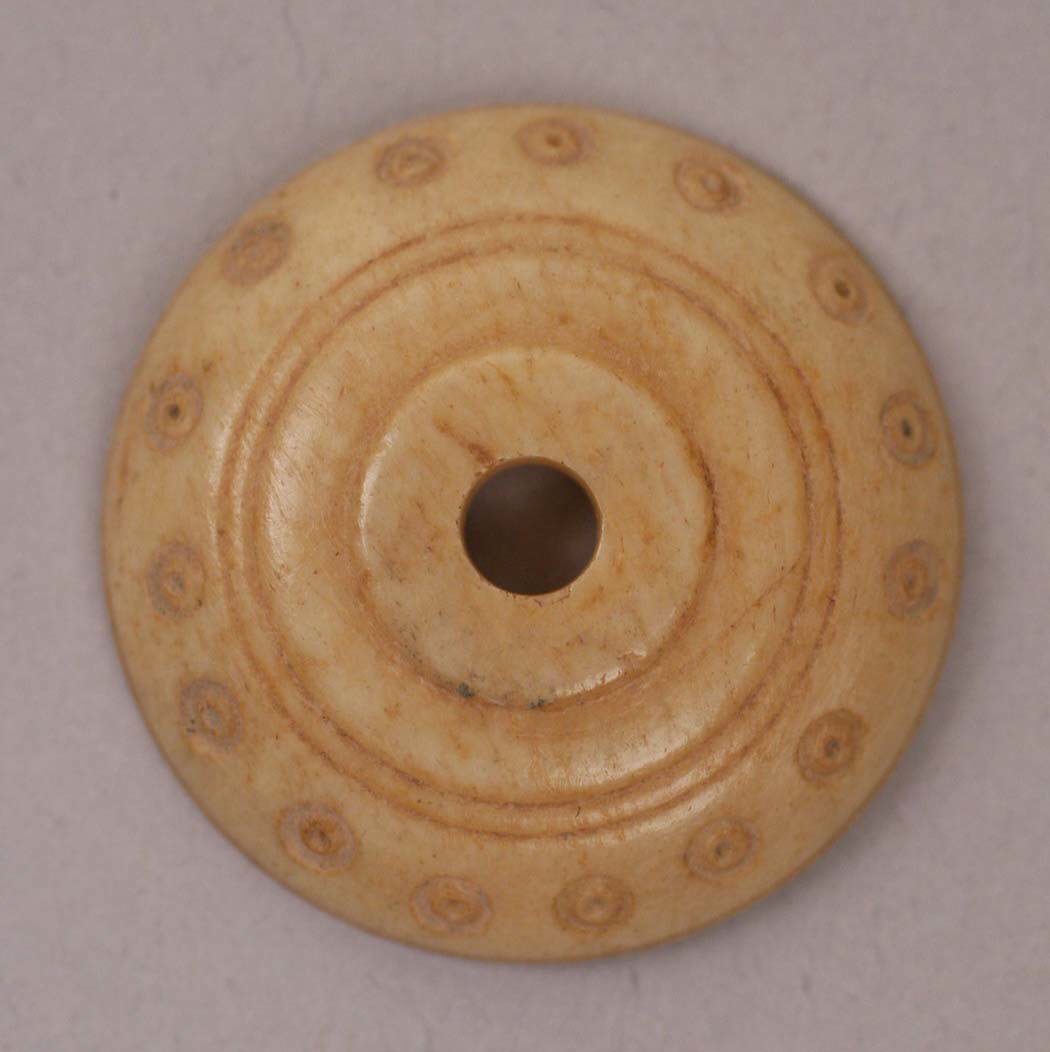
Executive Heritage Brief: The Bone Button as Proto-Luxury Artifact
In the lexicon of adornment, few objects are as deceptively mundane as the button, and few materials carry the visceral, ancestral weight of bone. For Katherine Fashion Lab, the strategic examination of an ancient bone button—incised and inlaid with mineral paint—is not an exercise in antiquarian nostalgia. It is a forensic study in symbolic power and material hierarchy, offering a blueprint for a 2026 high-end luxury strategy rooted in authenticity, ritual, and the reclamation of craft as a form of spiritual currency.
Historical Adornment and the Genesis of Status
To the contemporary eye, a button is a mechanism of closure. To the ancient artisan, it was a portable amulet of social positioning. In civilizations ranging from the Indus Valley to Zhou-dynasty China and pre-dynastic Egypt, the button—predating its functional use in fastening—served as a disc of distinction. Worn on the ear, the wrist, or as a pectoral toggle, it signified not merely wealth, but access to specialized knowledge. The choice of bone is critical here. Unlike stone or metal, bone is a living material that has been transformed. It is the architectural remnant of a sentient being, carrying an inherent mana—the life force of the animal imbued into the wearer.
From a heritage strategy perspective, this shifts the narrative from “accessory” to “reliquary.” The bone button is not an object; it is a compressed biography of the natural world. The incised lines—whether geometric chevrons or solar spirals—were not decorative whimsy. They were a form of proto-writing, a coded language that communicated clan affiliation, marital status, or cosmological alignment. The inlaid paint, often red ochre or cinnabar, was not mere pigment. Red symbolized blood, vitality, and the threshold between the living and the ancestral realm. Thus, the button became a micro-ritual object, worn to negotiate power between the human and the divine.
Spiritual Meaning and the Semiotics of Bone
In the strategic analysis of luxury, we must interrogate the why of material choice. Why bone over wood or clay? The answer lies in ontological permanence. Bone is the last tissue to decay, representing the skeleton of the world—the enduring structure beneath ephemeral flesh. For ancient cultures, wearing bone was an act of memento mori and victory over entropy. It was a talisman against the chaos of the unknown, a physical anchor for the soul.
The incised patterns further amplified this spiritual payload. A concentric circle, for example, was not a geometric exercise but a depiction of the cosmic eye, offering the wearer divine surveillance and protection. The act of inlaying paint into the recesses of the bone created a tactile topography, a Braille for the gods. When the wearer moved, the light caught the pigment, causing the symbol to “breathe.” This kinetic spirituality is a precursor to what modern luxury brands call “experiential detailing.” The object was not static; it was an active participant in the wearer’s daily negotiation with fate.
For Katherine Fashion Lab, this translates into a profound strategic insight: Luxury is not about surface, but about depth. The modern consumer, saturated with digital flatness, craves the tactile authenticity of an object that feels alive. The bone button, with its inherent grain, its slight asymmetry from hand-carving, and its permanent bond with mineral pigment, offers a counter-narrative to mass-produced perfection.
Strategic Translation: The 2026 High-End Luxury Framework
As we project toward 2026, the luxury market is bifurcating. One segment chases hyper-novelty and technological gimmickry. The other, more discerning segment—the “cultural vanguard”—is seeking meaningful permanence. They are not buying products; they are acquiring genealogical artifacts for their personal narrative. The ancient bone button provides the perfect strategic archetype for this second segment. Here is the proposed activation framework:
1. The “Reliquary Closure” Product Philosophy
Katherine Fashion Lab will reposition all closures—buttons, toggles, and fasteners—as primary jewelry, not secondary hardware. In the 2026 collection, a garment will be designed around the button, not the reverse. We will source ethically harvested bone (a critical ESG compliance point) from regenerative livestock programs, ensuring that the material’s origin story is as clean as its aesthetic. Each button will be hand-incised by master artisans using traditional tools, with a lead time of 72 hours per unit. This deliberate slowness creates an artificial scarcity that justifies a price point of $400–$800 per closure, positioning the garment as a canvas for these miniature sculptures.
2. Chromatic Spirituality: The “Ochre Protocol”
The inlaid paint is our most potent differentiator. We will develop a proprietary palette derived from mineral pigments—ochre, malachite, and lapis—ground and mixed in-house. This is not a color trend; it is a ritual color system. Each hue will correspond to a specific intention: ochre for vitality, azurite for clarity, cinnabar for protection. The 2026 campaign will not present colors as aesthetic choices but as spiritual modulators. The client will not ask “Which color?” but “Which energy do I require?” This elevates the purchase from transaction to consultation.
3. The “Ancestral Provenance” Certificate
To monetize the symbolic power, we will introduce a digital heritage ledger. Each bone button will come with a unique cryptographic certificate detailing the animal’s origin, the artisan’s lineage (tracing their craft back three generations), and the specific incised symbol’s meaning. This is blockchain meets shamanism. The certificate will be presented in a hand-bound folio, echoing the weight of a historical manuscript. This transforms the button into a collectible asset, akin to a numbered art print, with a secondary market value that appreciates with the brand’s heritage narrative.
4. The “Wearable Ritual” Experience
Finally, the 2026 strategy will include a private client ritual. Upon purchasing a garment with a signature bone button, the client is invited to a “Binding Ceremony” in a flagship store’s private sanctum. Here, the artisan will personally inlay a final dot of pigment in the client’s presence, symbolizing the transference of the wearer’s intent into the object. This is not a gimmick; it is a psychological anchor, ensuring that the garment is irreplaceable and deeply personal. It creates an emotional moat that fast-fashion cannot cross.
Conclusion: The Bone as a Bridge to the Future
The ancient bone button, once dismissed as a rudimentary fastener, is revealed as a masterclass in material semiotics. It teaches us that true luxury is not the accumulation of objects, but the curation of meaningful artifacts that carry the weight of history and the promise of spiritual agency. For Katherine Fashion Lab, this heritage analysis is not a retrospective. It is a forward-looking manifesto. By resurrecting the bone button—incised, painted, and charged with intention—we do not merely create fashion. We create portable heirlooms for the 21st-century nomad, connecting the wearer to a lineage of human expression that predates language itself. In 2026, the most radical luxury statement will not be a new silhouette, but a single, perfect, ancient button that whispers of bones, blood, and the immutable power of the human hand.