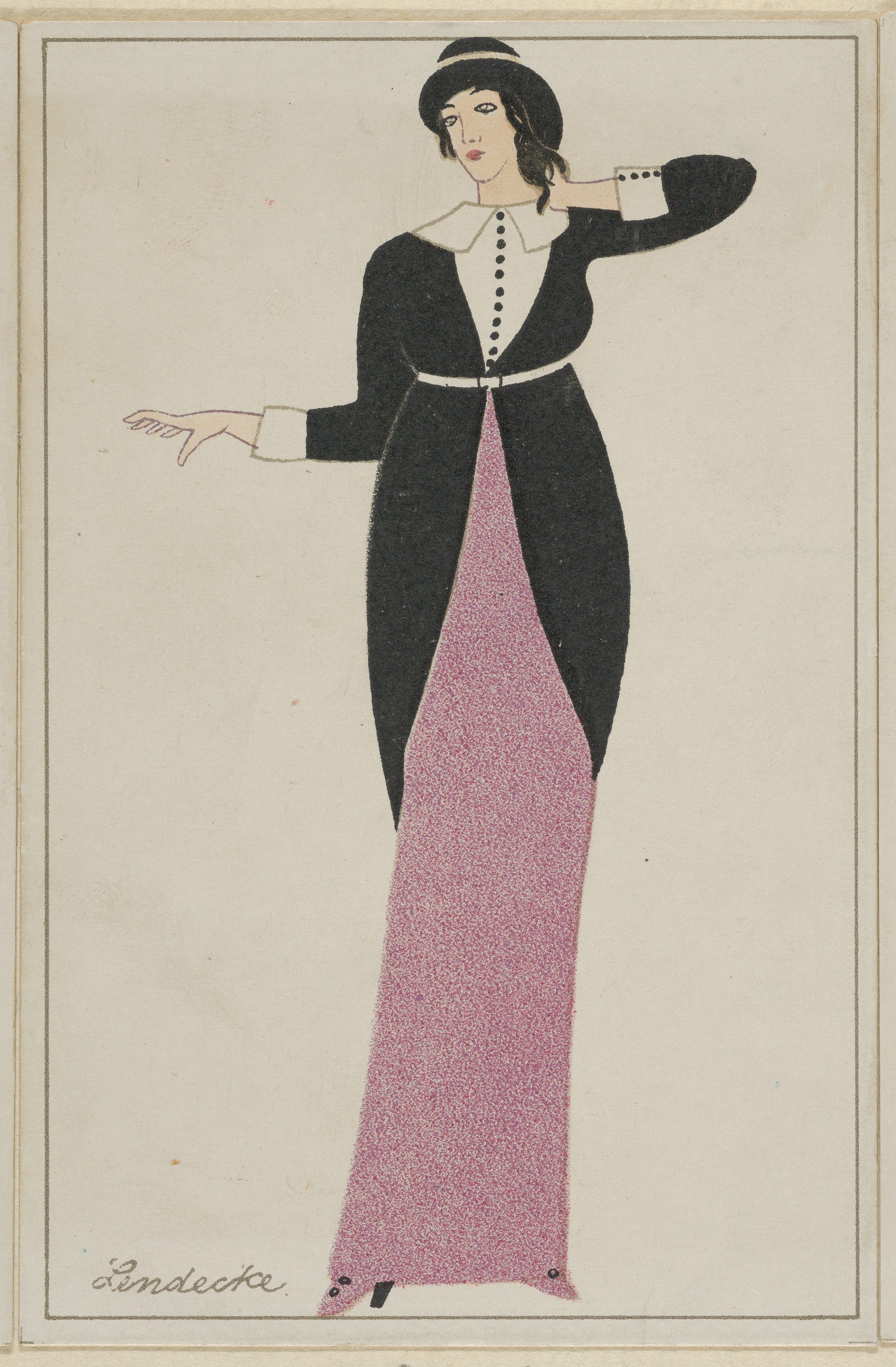
The Chromatic Cartography of Couture: A Study of Global Heritage in Lithographic Form
In the rarefied echelons of fashion scholarship, the medium of transmission is often as significant as the message it conveys. Katherine Fashion Lab’s latest standalone study, a singular color lithograph titled Global Heritage, transcends the conventional boundaries of a design sketch or a mood-board reproduction. It operates instead as a chromatic cartography, mapping the intangible threads of ancestral dress codes onto a tangible, pigment-laden plane. This analysis dissects the lithograph not merely as an image of garments, but as a critical text that interrogates the very ontology of couture in a globalized context.
The choice of color lithography is neither nostalgic nor accidental. In an era dominated by digital rendering and algorithmic pattern-making, the lithograph’s tactile grain reintroduces an element of artisanal fallibility—a human hand’s pressure on stone, the viscosity of ink, the slight misregistration that creates a shimmering life. Katherine Fashion Lab leverages this medium to argue that global heritage is not a sterile archive but a living, breathing, and occasionally imperfect negotiation. The print’s surface becomes a metaphor for the palimpsest of cultural memory, where layers of indigo, madder root, and ochre are overlaid not to obscure but to enrich.
Deconstructing the Visual Lexicon: From Motif to Meaning
At first glance, the composition presents a fragmented mannequin—a bust, a draped hip, a gestural hand—rendered in a cubist-inflected realism. Yet, upon deeper engagement, the viewer realizes that the figure is a vessel, not a subject. The lithograph’s true protagonists are the textile architectures that envelop the form. A Japanese shibori tie-dye pattern cascades into a West African kente strip, which in turn dissolves into a Scottish tartan sett. These are not merely juxtaposed; they are woven into a continuous, flowing drape that defies geographic logic.
The analytical brilliance of this piece lies in its refusal to exoticize. Each pattern is rendered with equal weight and fidelity, avoiding the trap of orientalist hierarchy. The global heritage referenced in the title is not a melting pot but a mosaic—each tessera retains its distinct chemical composition while contributing to a cohesive silhouette. The lithograph’s color palette is deliberately muted at the edges, with a burst of vermilion and lapis lazuli at the center, suggesting that cultural fusion is not a dilution but a concentration of vibrancy at the point of contact.
The Semiotics of Drape: Tailoring as Translation
Fashion theorist Anne Hollander posited that drapery is the visual language of movement and morality. In this lithograph, Katherine Fashion Lab extends that thesis into a postcolonial discourse. The way the fabric folds is not arbitrary; it is a structural translation of differing tailoring traditions. The sharp, architectural pleats of a Japanese kimono sleeve are re-cut to accommodate the voluminous puff of a Renaissance gigot sleeve. The result is a hybrid silhouette that is neither authentically Eastern nor Western, but a third entity—a couture mutant that thrives on its own hybrid vigor.
This is where the study’s standalone context becomes crucial. Removed from a series or a collection, the lithograph forces a singular, prolonged gaze. It does not allow the viewer to move to the next “look” for relief. Instead, it demands a forensic examination of the seams—both literal and metaphorical. The viewer is compelled to ask: Where does one culture’s hem end and another’s collar begin? The answer, the lithograph suggests, is that in true couture, such boundaries are porous. The standalone study functions as a manifesto, declaring that fashion’s future lies not in novelty for its own sake, but in the rigorous, scholarly re-combination of its global past.
Materiality as Memory: The Lithograph’s Tactile Ontology
Lithography, by its chemical nature, is a process of resistance and acceptance—grease repels water, ink adheres to the drawn line. This dichotomous process mirrors the negotiation of cultural identity. The paper itself, a heavy, cotton-rag stock, is allowed to breathe, its tooth visible in the unprinted margins. This is a deliberate curatorial choice by Katherine Fashion Lab to foreground materiality as memory. The fabric in the print is not depicted with hyper-realistic sheen; rather, it is rendered with a matte, chalky quality that evokes the feel of vintage textile swatches in a museum archive.
This tactile ontology challenges the ephemerality of fast fashion. By presenting heritage motifs in a permanent, collectible medium, the lab elevates them from disposable trends to enduring artifacts. The lithograph’s edges are left slightly rough, untrimmed, suggesting a fragment torn from a larger, unknowable fabric of human history. This is a powerful anti-totalizing statement: global heritage is not a finite set of patterns but an infinite, ongoing weave.
Critical Implications for Contemporary Couture
For the MBA-level strategist and the design director alike, this lithograph offers a profound lesson in differentiation through cultural intelligence. In a saturated market where “global-inspired” collections often result in homogenized, sanitized products, Katherine Fashion Lab’s work demonstrates the value of deep, material-specific research. The lithograph is not a mood board for mass production; it is a blueprint for a new type of luxury—one that trades in cultural capital rather than mere logos.
The standalone nature of the piece also speaks to the power of the artifact in a digital age. While Instagram reels and lookbooks are disposable, a lithograph demands physical presence, lighting, and a contemplative viewer. It repositions fashion as a subject of intellectual inquiry, not just visual consumption. The study implicitly critiques the industry’s amnesia, its relentless chase for the next novelty, by anchoring its composition in the deep time of textile history.
Conclusion: A Cartography for the Future
Global Heritage is not a nostalgic retreat into the past but a forward-looking proposition. By using the color lithograph—a medium historically associated with democratic reproduction and avant-garde expression—Katherine Fashion Lab resolves the paradox of haute couture’s exclusivity and global inclusivity. The print suggests that true luxury is the ability to carry one’s entire ancestral wardrobe in a single, coherent drape, without losing the integrity of any single thread.
This standalone study is a masterclass in synthesis. It teaches that the future of fashion does not lie in erasing borders but in redrawing them with pigment and pressure. The lithograph remains, as a physical object, a testament to the fact that the most sophisticated statement a garment can make is not about the body it covers, but the history it carries. In this, Katherine Fashion Lab has not merely created an artwork; it has produced a critical framework for the next decade of couture—a framework where every stitch is a citation, and every fold, a footnote to the sprawling, magnificent text of human creativity.