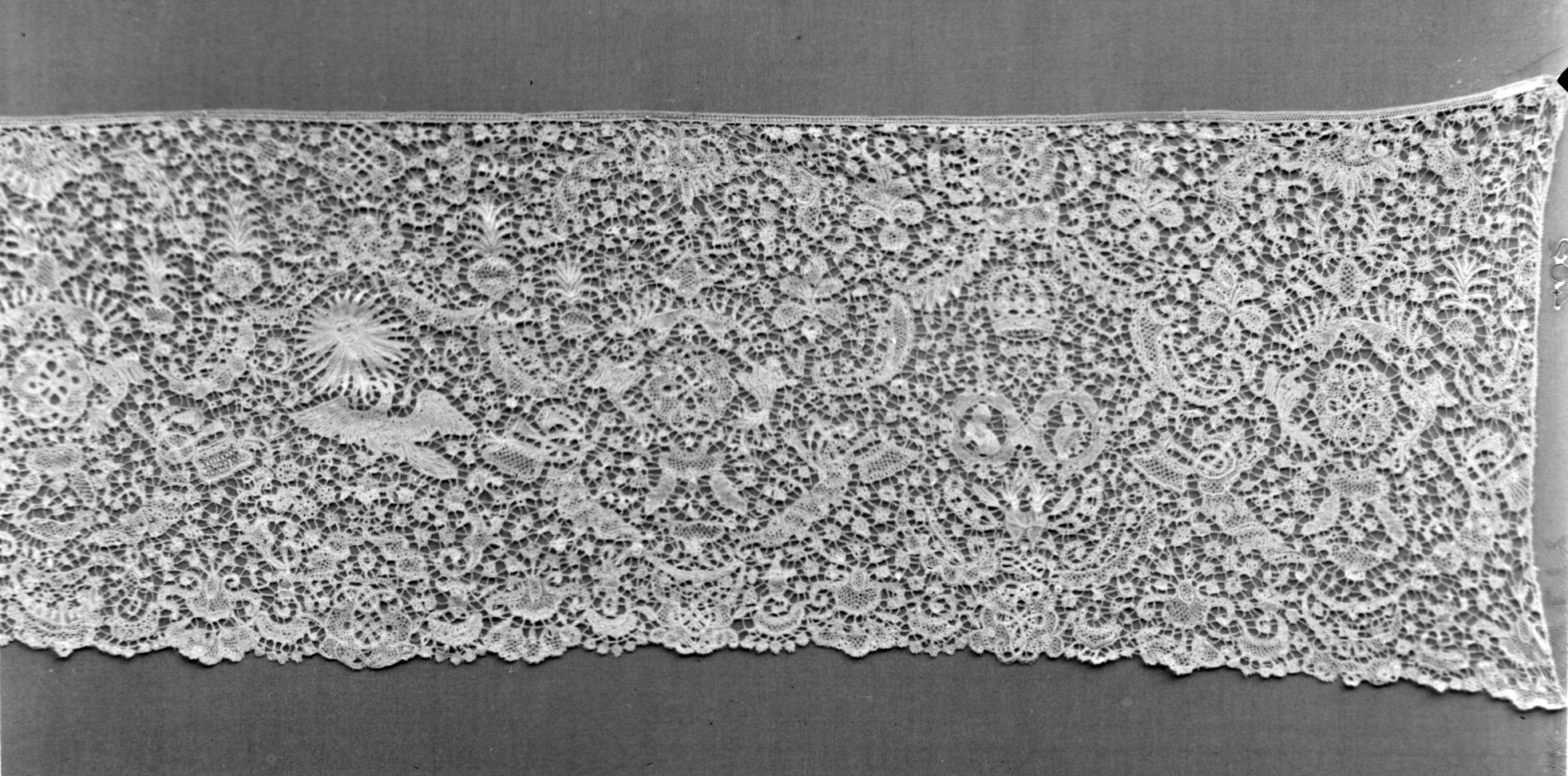
The Flounce Reimagined: Bobbin Lace and the Cartography of Global Heritage
Within the rarefied echelons of contemporary couture, the flounce is often dismissed as a mere decorative afterthought—a flirtatious edge, a nod to Victorian nostalgia. At Katherine Fashion Lab, however, the flounce is elevated to a structural and philosophical thesis. In this standalone study, the house deconstructs the flounce’s genetic code, re-sequencing it through the lens of Global Heritage and the demanding medium of Bobbin Lace. The result is not a garment; it is a cartographic document stitched in thread, a meditation on how a single, undulating strip of fabric can encode centuries of migration, trade, and artisanal resistance.
Deconstructing the Silhouette: From Trim to Tectonic Structure
Historically, the flounce—distinguished from the ruffle by its circular or spiral cut—has functioned as a boundary, a liminal space between the body and the void. In this study, Katherine Fashion Lab inverts that logic. The flounce is no longer appended to a hem or cuff; it becomes the primary architectural volume. Using a spiral-cut technique that yields a continuous, bias-oriented ribbon, the designers have engineered a piece that moves with hydrokinetic fluidity. Yet the true innovation lies in the material tension: bobbin lace, with its inherent rigidity and openwork, is forced into a dynamic, three-dimensional spiral. The lace does not drape; it articulates. Each scalloped edge and brides (connecting threads) functions as a hinge, allowing the flounce to stand away from the body in a controlled, almost baroque cantilever, then collapse into a whisper of tactile shadow.
This is a deliberate rebuke to the fast-fashion flounce, which relies on cheap polyester chiffon for its bounce. Here, the weight and tactile memory of linen-wrapped cotton threads, hand-twisted on a pillow, provide a counter-intuitive gravity. The flounce becomes a piece of wearable architecture, its movement a slow, deliberate unfolding rather than a frantic flutter. In a standalone exhibition context—displayed on a static form yet captured via high-speed film—the piece reveals its dual nature: frozen, it resembles a fossilized wave; in motion, it is a living organism of thread.
Bobbin Lace: A Polyphonic Heritage
To understand the cultural weight of this study, one must trace the bobbin lace’s journey. The technique—twisting and crossing multiple threads over a bolster pillow, anchored by pins—is not a monolith. It is a palimpsest of global exchange. Katherine Fashion Lab’s research team sourced patterns from three distinct geographies, weaving them into a single, continuous flounce:
- Flanders (16th Century): The dense, continuous ground of Binche lace, known for its intricate, almost micro-architectural motifs, provides the structural base. This speaks to the mercantile power of the Low Countries, where lace was a currency of aristocratic power.
- Torchon (France/Scandinavia): The geometric, geometric-grid patterns of Torchon lace introduce a folkloric, agrarian rhythm. Its simple, sturdy twists contrast with the aristocratic finery, representing the lace made by peasant women for their own trousseaus—a quiet, domestic heritage.
- Oya (Anatolian Coast): The most radical intervention is the inclusion of Oya, the needle-lace technique from Turkey’s Black Sea region, traditionally used to edge headscarves. Here, its three-dimensional picots and tiny floral buds are reimagined not as a border but as a topographical relief emerging from the flounce’s surface. This is a deliberate nod to the Silk Road, where technique traveled alongside commodity.
By fusing these disparate lineages, the flounce becomes a negotiated territory. It refuses the colonial impulse to appropriate a single “exotic” style. Instead, it proposes a model of mutual contamination—where Flemish precision meets Anatolian exuberance, and where the Scandinavian winter light filters through a Torchon grid. The lace is not a costume; it is a diplomatic treaty, stitched by hand.
The Materiality of Labour and Time
In an era of instant gratification, the bobbin lace flounce is a radical act of slowness. This study required 1,400 hours of handwork—a duration that is itself part of the design. Each pair of bobbins, weighted with glass beads, is twisted in a specific sequence; a single error in a crossing creates a visible scar in the pattern. Katherine Fashion Lab’s atelier, composed of master lacemakers from Bruges, Burano, and Istanbul, worked in a relay, passing the pillow across time zones. This collaborative, diasporic production model is the true “global heritage”—not a museum artifact, but a living, breathing network of skilled hands.
The material choice also challenges the sensory hierarchy of couture. Bobbin lace is typically white or ecru, signifying purity and absence. This study, however, introduces a chromatic counterpoint: a single, continuous thread of indigo-dyed silk is woven through the linen base. The indigo—sourced from a cooperative in Tamil Nadu—bleeds slightly into the surrounding threads, creating a halo of deep blue that evokes the Japanese aizome but is rooted in Indian dye vats. This chromatic intervention is not decorative; it is a mnemonic. It stains the heritage, insisting that tradition is not static but permeable, stained by the present.
Standalone Study: The Flounce as a Specimen
Presented as a standalone study—detached from a full collection—the flounce is treated with the reverence of a scientific specimen. It is mounted on a negative-pressure frame, allowing viewers to inspect the reverse side, where the chaos of threads reveals the lace’s logic. This curatorial choice is critical. In conventional presentation, the flounce is seen only from the front, its technical brilliance hidden. Here, the reverse becomes a confessional: the tangled underside, the knots, the clipped ends—all are exposed. This is a meta-commentary on the couture industry’s obsession with the flawless facade. Katherine Fashion Lab insists that beauty can be found in the structural truth, in the very mechanics of making.
Furthermore, the study includes a sonic component: a recording of the lacemaker’s bobbins clicking against the pillow, a rhythm that mimics a heartbeat or a loom. This audio track, played at a low volume, transforms the gallery space into an atelier. The visitor is not just seeing the flounce; they are hearing the labor, feeling the time. The flounce, in this context, is no longer a passive object but a temporal instrument, measuring the distance between a thread’s origin and its final, undulating form.
Conclusion: A New Lexicon for Ornament
The Katherine Fashion Lab’s flounce study is a quiet manifesto against the tyranny of minimalism and the banality of digital printing. It argues that ornament, when rigorously researched and materially honest, can be a form of intellectual inquiry. The flounce is not merely a “detail”; it is a sentence in a global language of craft. By combining the structural dynamism of the spiral cut with the irreducible complexity of bobbin lace, the house has created a hybrid object that defies categorization—neither garment nor sculpture, neither historical reproduction nor futuristic fantasy.
This standalone study serves as a benchmark for the industry: a demonstration that couture’s future lies not in novelty for its own sake, but in a deep, respectful, and critical dialogue with its past. The flounce, in the hands of Katherine Fashion Lab, becomes a vessel for memory, a carrier of cultural DNA, and a testament to the fact that true luxury is measured not in price per meter, but in the density of stories woven into every twist and crossing. It is a bold, quiet, and utterly compelling reclamation of one of fashion’s most undervalued elements.