Deconstructing the Archetype: A Couture Analysis of the "New Printed Model"
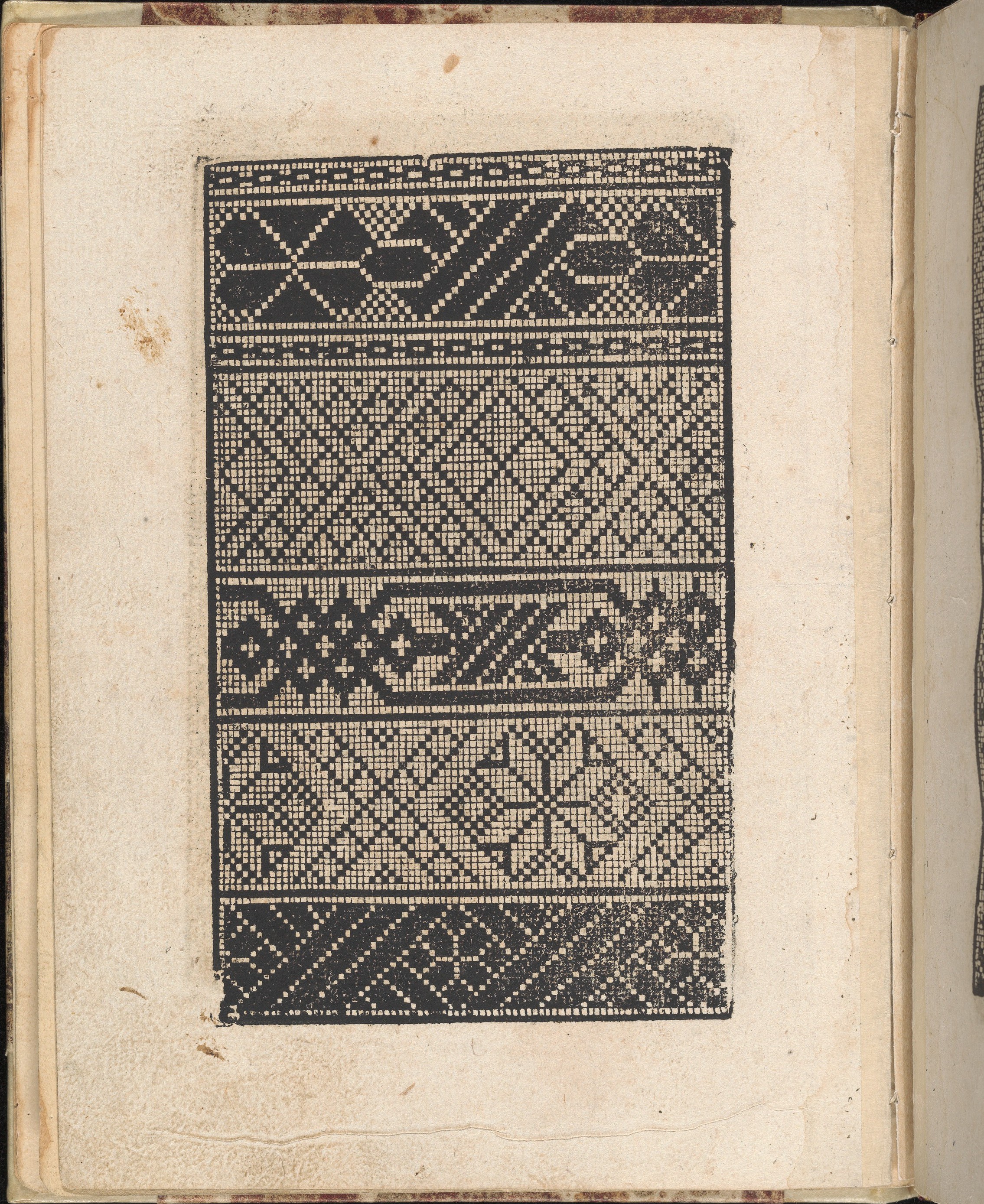
The woodcut plate titled Ein new getruckt model Büchli... from the Global Heritage archive presents a singular, profound challenge to the contemporary couturier. Far from a mere historical costume illustration, this 16th-century "new printed model" is a crystallized manifesto of structural ideology. As a standalone study, divorced from the sequential context of a pattern book, it demands an analysis that transcends chronology to engage with its enduring architectural principles. This examination posits that the garment depicted is not simply attire but a calibrated exoskeleton of social order, a framework whose geometric severity and deliberate artifice offer radical insights for modern haute couture's pursuit of volume, silhouette, and identity.
The Architecture of Authority: Silhouette as Social Stratigraphy
The immediate and arresting impact of the figure is its engineered silhouette, an inverted triangle stabilized upon a conical base. This is not a representation of the human form but its complete architectural re-imagination. The shoulders, extended to an impossible breadth via the "whalebone or wickerwork" farthingale (verdingale), establish a horizontal line of formidable power. This line functions as a cornice, a architectural feature denoting importance and shelter. In couture terms, this is the foundational shoulder line reimagined as a power base, predating the iconic pads of 1980s power dressing by four centuries, yet conceived with a more rigid, ceremonial intent.
The torso, compressed and elongated into a rigid, tapered vault, creates a vertical thrust that emphasizes containment rather than natural curvature. This juxtaposition—extreme horizontal against severe vertical—creates a silhouette of controlled tension. For the modern atelier, this is a masterclass in using opposing directional forces to create drama and presence. The silhouette itself becomes the primary signifier, announcing status and discipline before any fabric detail is perceived. It communicates that the wearer exists within a structured societal framework, her very shape a product of and testament to that order.
Material Intelligence: The Woodcut as a Blueprint for Construction
The medium of the woodcut is intrinsically linked to the garment's meaning. The bold, unshaded lines, the stark contrast, and the necessary simplification of form speak to conceptual clarity over decorative realism. Each line in the print appears to denote a structural boundary: the seam where bodice meets skirt, the edge of a sleeve, the border of a partlet. This is essentially a technical drawing, a blueprint emphasizing construction points over fluid drapery.
This "blueprint" quality directs our attention to the unseen infrastructure. The true garment exists beneath the visible fabric: a complex scaffold of wood, bone, and wire. In contemporary couture, this translates to an emphasis on internal engineering. The work of designers like Iris van Herpen, who utilize 3D printing and laser-sintered fabrics to create self-supporting structures, or the late Alexander McQueen, whose pieces often featured internal corsetry and armatures, follows this same principle. The woodcut, in its starkness, reminds us that the most revolutionary silhouettes begin with a radical structural premise, often hidden from view but fundamental to the aesthetic result.
Symbolic Motifs and the Semiotics of Surface
While the silhouette is dominant, the surface decoration is not incidental. The precise, repetitive patterns on the skirt and sleeves—likely representing embroidery, applied passementerie, or costly slashed fabric (a technique where the outer fabric is cut to reveal a luxurious lining beneath)—serve a critical function. On a body so geometrically defined, pattern becomes a language of precision and wealth. The ordered, symmetrical motifs reinforce the overall ethos of control and cultivated artifice. They map the constructed form, drawing the eye along its engineered lines rather than contradicting them.
In a modern context, this speaks to the strategic use of embellishment in couture. Beading, embroidery, and appliqué are not merely decorative but are employed as tools for optical contouring and narrative emphasis. They can reinforce a seam line, amplify volume, or create a focal point that anchors the silhouette. The woodcut’s model demonstrates that surface detail must be in absolute dialogue with the underlying form; it is an integrated layer of meaning, not an afterthought.
Contextual Absence and the Standalone Archetype
Analyzed as a "Standalone study," as per its archival context, this image gains further power. Removed from the practical sequence of a pattern book, it becomes an archetype, a pure idea of "the fashioned body." This isolation forces us to consider it as a timeless proposition about fashion itself: that it is a medium for constructing identity through imposed form. It challenges the contemporary viewer to see beyond historical specificity to underlying principles of proportion, support, and symbolic communication.
For Katherine Fashion Lab, this standalone archetype serves as a potent creative catalyst. It invites deconstruction and transposition. How might the inverted-triangle power base be reinterpreted in biodegradable polymers? How can the concept of the rigid, vertical torso be expressed through seamless knit technologies? The woodcut is not a relic to be reproduced, but a theoretical framework to be interrogated. It presents a grammar of construction—a vocabulary of line, volume, and constraint—that remains profoundly relevant.
Conclusion: The Enduring Grammar of Structure
Ein new getruckt model Büchli... is ultimately a treatise on the foundational relationship between body, structure, and society. Its genius lies in its uncompromising commitment to an artificial ideal. For the modern couture house, it underscores that true innovation often resides in re-examining the most fundamental questions of form and support. The rigid farthingale finds its echo in contemporary hoop skirts and crinolines; the compressed bodice prefigures the sculptural breastplates on today's runways. This woodcut, in its stark, graphic clarity, teaches that before color, before narrative, before even fabric, comes the architecture of intention. It is a permanent reminder that in haute couture, to create a new silhouette is to propose a new way of being in the world—a principle as radical now as it was five hundred years ago.