The Silent Architecture of Surface: A Couture Analysis of the Stucco Fragment
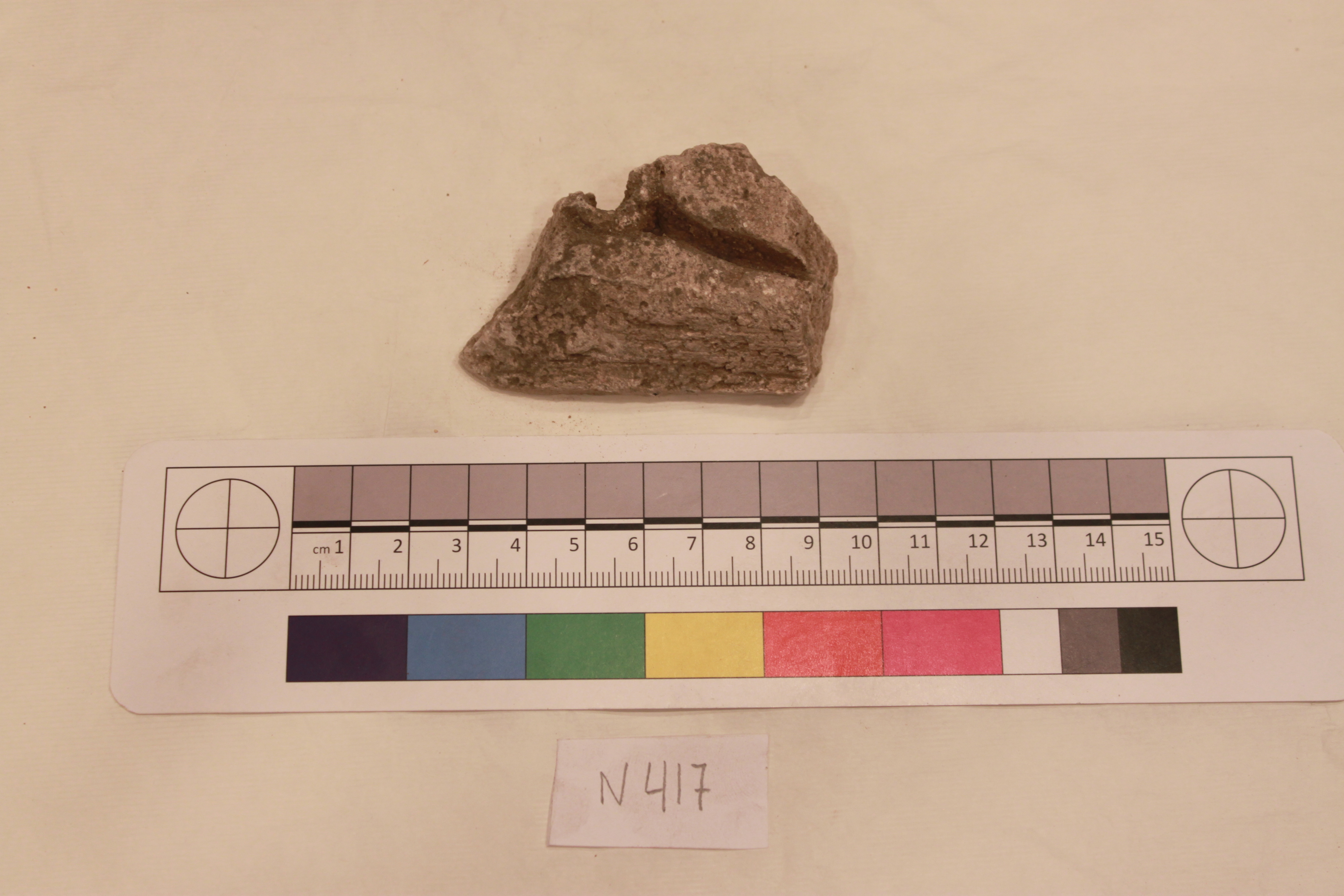
In the atelier of Katherine Fashion Lab, where the ephemeral meets the archaeological, the Stucco Fragment stands as a profound meditation on the origins of ornament. This piece, a standalone study drawn from the Global Heritage collection, is not merely a decorative object but a philosophical treatise rendered in carved mineral. At first glance, it appears as a relic—a broken piece of a forgotten wall. Yet, upon deeper analysis, it reveals itself as the ur-text of couture construction: a lesson in the tension between structural integrity and expressive surface, between the hand of the artisan and the agency of the material.
The fragment’s materiality is its primary language. Stucco, a composite of lime, sand, and water, is historically a humble medium, yet here it is elevated to a state of noble austerity. The carving is not additive but subtractive; the artisan has removed material to reveal form, a process that mirrors the couturier’s drape-and-cut methodology. Each incision is a decision, each negative space a deliberate void. In this context, the fragment is a blueprint for negative-volume tailoring, where the garment’s silhouette is defined as much by what is removed as by what is retained. The surface, now aged and weathered, carries a patina that no modern finish can replicate. This is not decay but a narrative of time, a slow oxidation that transforms the piece into a living archive of its own history.
The Grammar of the Unfinished
What distinguishes this study from a mere architectural salvage is its intentional incompleteness. The fragment is a synecdoche—a part that stands for a greater, now-lost whole. In couture, we often speak of the toile, the preliminary muslin that precedes the final garment. The Stucco Fragment occupies a similar liminal space: it is neither a sketch nor a finished monument, but a frozen moment of becoming. This aesthetic of the unfinished is a powerful counter-narrative to the perfectionism of contemporary fashion. It challenges the viewer to consider the beauty of the process, the beauty of the seam that is not yet sewn, the beauty of the raw edge that has not been bound.
From a global heritage perspective, the fragment is an orphaned object, its original cultural context lost to time. Yet this very dislocation becomes its power. It is a universal archetype, a piece of visual syntax that transcends geographical boundaries. Whether it originated in a Roman villa, a Mughal palace, or a Mesoamerican temple, its formal language—the interplay of light and shadow, the rhythm of repetition, the balance of mass and void—speaks to a shared human impulse toward decoration. In the Lab, we treat this fragment not as a historical artifact to be preserved under glass, but as a generative source code for new design languages. We extract its principles and re-encode them into silk, wool, and organza.
Surface as Structure, Structure as Surface
The technical mastery of the carving is most evident in its treatment of the surface’s topography. The fragment does not possess a single plane; rather, it undulates with a series of shallow reliefs and deep undercuts. This is a direct parallel to the concept of architectural draping in haute couture. When we look at a gown by a master, we see that the fabric is not merely covering the body but is creating a secondary architecture. The Stucco Fragment teaches us that the surface is not a skin to be applied over a skeleton; the surface is the skeleton. The carved ridges act as structural ribs, providing rigidity and form, while the recessed areas create soft shadows that suggest volume without physical mass.
This principle is translated into the Lab’s design methodology as relief pleating. Just as the stucco carver digs into the wet plaster to create a raised pattern, our artisans manipulate fabric through heat, pressure, and stitching to create permanent, sculptural folds. The result is a garment that holds its shape independently of the wearer’s body, a garment that is a self-supporting sculpture. The fragment’s edges, rough and broken, are equally instructive. They do not conform to a neat hemline; they fracture in irregular, organic lines. This has inspired our raw-edge couture series, where hems are deliberately left un-finished, frayed, or burned to create a similar sense of archaeological discovery on the body.
Chromatic Silence and the Value of Restraint
In an era of digital prints and hyper-saturated color, the Stucco Fragment offers a lesson in chromatic restraint. Its palette is monochromatic—a spectrum of off-whites, warm greys, and dusty beiges. This is not a lack of color but a masterclass in tonal variation. The subtle shifts in value are created not by pigment but by the angle of light hitting the carved surfaces. This is the essence of chiaroscuro applied to material form. For the modern wardrobe, this translates into a monochrome dressing that is never flat. It is a call to invest in fabrics that have a tactile depth—a heavy faille, a ribbed silk, a textured wool—where the weave itself creates shadow and highlight.
The fragment’s status as a standalone study is crucial. It is not part of a series, not a sample for a larger commission. It exists for its own sake, a pure exploration of form. This autonomy is a luxury in the commercial fashion world. It allows the designer to fail, to experiment without the pressure of marketability. The Lab views this piece as a permission slip for intellectual play. It reminds us that the most innovative couture often emerges from a place of purposelessness, from a study that seeks only to understand the nature of a material and a technique.
Conclusion: The Fragment as a Complete Garment
The Stucco Fragment, in its silent, broken glory, is ultimately a complete work. It does not need to be restored or contextualized to be appreciated. Its power lies in its autonomy and its honesty. It does not pretend to be a wall, nor does it apologize for being a piece. It is a testament to the idea that a single, well-executed detail can carry an entire aesthetic. In the context of Katherine Fashion Lab, this fragment is not a relic of the past but a blueprint for the future. It teaches us that true luxury is not in abundance but in precision of intent, that the most profound beauty often lies in the incomplete, and that the hand of the maker, guided by a disciplined eye, can transform the humblest material—be it plaster or cloth—into a timeless object of desire. It is a study that will continue to inform our silhouettes, our textures, and our philosophy for seasons to come, a silent partner in every seam we cut.