Deconstructing the Whole: A Couture Analysis of “Fragment”
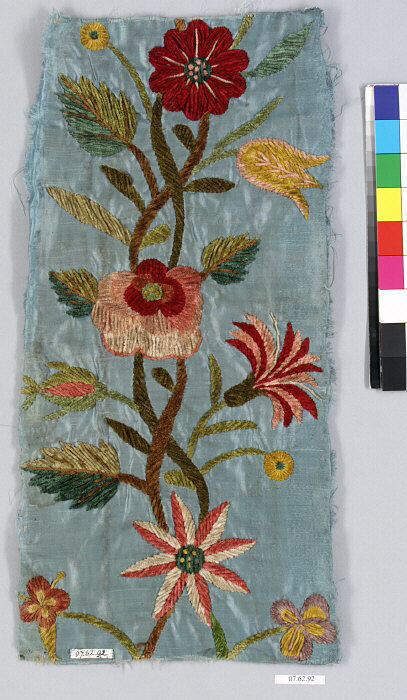
In the rarefied echelons of haute couture, where garment construction often aspires to seamless perfection, Katherine Fashion Lab’s standalone study, “Fragment,” presents a provocative inversion. This piece does not seek to conceal its seams; it celebrates them. Drawing from a deliberately ambiguous Global Heritage—a confluence of Andean textile traditions, Japanese boro mending, and European tapestry techniques—the work interrogates the very notion of completion. Executed in chenille on silk, “Fragment” is not merely a garment but a philosophical proposition: that beauty resides not in the whole, but in the deliberate, curated break.
The Material Dialectic: Chenille’s Tactile Rebellion on Silk
The choice of chenille on silk is the first, most visceral act of subversion. Silk, the archetypal couture substrate, signifies fluidity, luminosity, and aristocratic pedigree. Its surface is a mirror, reflecting light and status. Chenille, by contrast, is a yarn of humble origins—historically derived from waste fibers—characterized by its fuzzy, pile-like texture that absorbs light rather than reflecting it. The juxtaposition is not merely textural but semantic.
Here, the chenille is not applied as an accent but as a structural protagonist. It is woven into the silk ground in irregular, almost geological strata, creating a topography of raised ridges and soft valleys. The tactile dissonance is deliberate: the hand glides over cool, smooth silk before encountering the warm, napped resistance of chenille. This alternation forces a haptic reconsideration of the garment. It is no longer a passive surface to be seen but an active terrain to be felt. The chenille’s pile, when brushed against the silk’s warp, produces a subtle, shifting moiré effect—a visual echo of the fragmentary concept. The material itself becomes a metaphor for memory: the silk is the pristine, continuous past, while the chenille is the textured, interrupted present.
Global Heritage as a Grammar of Rupture
Katherine Fashion Lab’s invocation of Global Heritage is not a superficial pastiche of motifs. Rather, it is a structural appropriation of repair and discontinuity. The chenille segments are arranged in patterns that recall the sashiko stitching of rural Japan, yet they are rendered at a monumental scale, transforming a utilitarian mending technique into an abstract, painterly gesture. Simultaneously, the irregular, feathered edges of the chenille blocks echo the kuna molas of Panama, where layers of fabric are cut away to reveal the strata beneath. The lab has synthesized these disparate traditions into a singular, coherent language of fragmentation.
The result is a garment that speaks to a post-colonial, interconnected world—one where heritage is not a monolithic inheritance but a series of broken, reassembled narratives. The “Fragment” does not attempt to reconcile these global influences into a false harmony. Instead, it allows the seams of cultural influence to remain visible, even exaggerated. The chenille’s edges are left raw, some threads intentionally pulled to create a frayed, almost distressed aura. This is not decay; it is a deliberate archaeology. The wearer is not adorned with a finished story but with a palimpsest of global histories, each layer partially erased and partially legible.
Standalone Study: The Garment as a Closed System
The context of a standalone study is critical to the analysis. Unlike a collection piece, which must converse with other garments, “Fragment” is an autarkic object. It is designed to be viewed in isolation, on a static form or a singular body, without the distraction of accompanying accessories or complementary silhouettes. This isolation amplifies its conceptual weight. The garment becomes a self-contained argument, a thesis on the aesthetics of incompleteness.
In this standalone capacity, the construction logic is laid bare. The silk base is cut in a single, continuous sweep—a kimono-like rectangle that references the zero-waste traditions of pre-industrial tailoring. Upon this pristine ground, the chenille is applied in a series of non-repeating, asymmetrical patches. One patch may cover the left shoulder and cascade down the torso, while another, smaller fragment clings to the hem, creating a gravitational imbalance. This is not random placement; it is a choreographed disruption. The negative space—the exposed silk—is as important as the chenille. The voids between the fragments function as “breathing room,” allowing the eye to rest and the silk’s sheen to assert its quiet luxury.
Structural Draping and the Illusion of Incompleteness
The silhouette of “Fragment” defies conventional categorization. It is neither a dress nor a coat, but a hybrid—an enveloping cocoon that is partially open, partially closed. The silk’s natural fluidity is manipulated through a series of internal, invisible weights and tucks, causing the garment to drape in unexpected, gravity-defying folds. The chenille sections, being heavier and less pliable, act as anchors, pulling the silk into tension. This creates a dynamic interplay between the supple and the stiff, the flowing and the static.
The most arresting feature is the deliberate “unfinished” hemline. In several areas, the silk is cut at a sharp diagonal, while the chenille extends beyond it in ragged, organic tendrils. This is not a flaw but a statement. The garment appears to be in a state of becoming—caught mid-transformation, as if the weaver had been interrupted. This illusion of incompleteness is, paradoxically, the most complete expression of the designer’s intent. It challenges the couture canon’s obsession with finality and polish, proposing that the fragment is a more honest representation of the human condition than the whole.
Conclusion: The Poetics of the Break
In “Fragment,” Katherine Fashion Lab achieves a rare synthesis: a garment that is intellectually rigorous yet viscerally beautiful. The use of chenille on silk is not a gimmick but a profound material dialogue, one that speaks to the tension between permanence and decay, memory and forgetting. The Global Heritage influences are not decorative borrowings but structural principles, embedded in the very logic of the garment’s construction. And the standalone study context elevates the piece from a mere object of attire to a contemplative artifact.
The work ultimately proposes a new couture aesthetic—one where the break, the gap, and the missing piece are not failures but sites of potential. It asks the wearer and the viewer to reconsider what constitutes luxury. Is it the flawless, unbroken surface? Or is it the courage to present a narrative that is honest about its own fractures? “Fragment” answers with a resounding, textured silence. It is a masterclass in negative space, a testament to the power of what is left unsaid, and a compelling argument that in the world of high fashion, sometimes the most complete statement is the one that is deliberately, exquisitely broken.