Executive Heritage Brief: The Qajar Kard as a Blueprint for 2026 Luxury Narrative
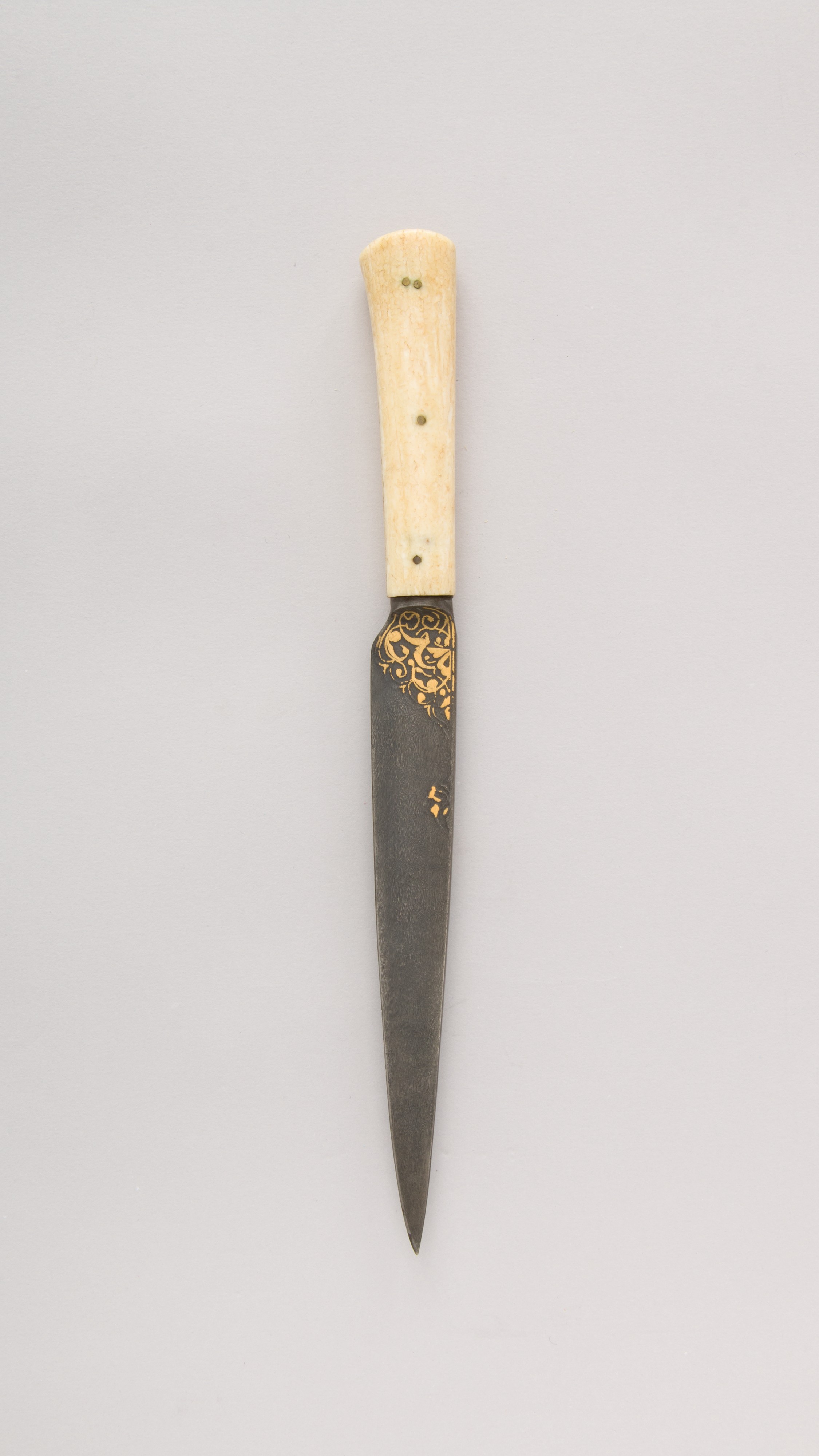
Katherine Fashion Lab is pleased to present this strategic heritage analysis of the Persian Qajar Kard (knife), a masterwork of steel, walrus ivory, and gold. This object is not merely a weapon or tool; it is a condensed artifact of royal authority, spiritual cosmology, and artisanal perfection. For a luxury house operating in the 2026 landscape, the Kard offers a profound counter-narrative to mass-produced opulence. By decoding its layers of symbolic power and historical adornment, we can extract a replicable framework for high-end product storytelling, material integrity, and client engagement that transcends transient trends.
Symbolic Power: The Blade as Sovereign Mandate
In Qajar Persia (1789–1925), the Kard was not carried with casual intent. Its presence signified the bearer’s rank, decisiveness, and proximity to the Shah. The blade’s curved, single-edged form was an evolution of earlier Central Asian designs, but under Qajar patronage, it became a vessel for territorial and moral authority. The steel, often forged with watered Damascus patterns, was believed to hold a baraka—a spiritual blessing that rendered the weapon both physically superior and divinely favored.
From a luxury strategy perspective, the Kard teaches us that power is a narrative of restraint. The Qajar court did not encrust every surface with jewels; instead, they allowed the cold, reflective steel to speak of lethal precision, while gold was applied selectively as a mark of royal gilding. In 2026, Katherine Fashion Lab can adopt this principle: true luxury is not maximalism but the confident placement of a single, precious accent against a background of disciplined craft. A client who understands this is not buying a product; they are acquiring a mandate—a symbol of their own uncompromising standards.
Historical Adornment: The Dialogue Between Ivory and Gold
The handle of this specific Kard is carved from walrus ivory, a material that in Qajar Iran was prized above elephant ivory for its density, warm patina, and resistance to cracking. The choice of walrus ivory also signals global trade intelligence—Persian artisans sourced this material from the far north via complex Silk Road and maritime networks. The grip is further enriched with gold wire inlay, often forming geometric or floral patterns that echo the girih tiles of Isfahan’s mosques. This is not accidental decoration; it is a deliberate fusion of haptic ergonomics and visual theology.
For Katherine Fashion Lab, this combination offers a material strategy for 2026. We propose a “Sacred Composite” approach: pairing an unexpected, rare organic medium (such as fossilized ivory or sustainably sourced horn) with a precious metal inlay that references a specific cultural geometry. The Qajar Kard demonstrates that adornment must be functional in narrative—every curve of the ivory is shaped to fit the palm, and every gold thread is placed to catch light during a ceremonial draw. Our 2026 accessories line should adopt this principle: each piece must be designed with an architectural logic that makes the ornamentation feel inevitable, not appliquéd.
Spiritual Meaning: The Knife as a Threshold Guardian
Beyond its martial utility, the Kard held a deeply apotropaic role in Persian spiritual life. In Shia cosmology, blades were associated with Imam Ali, whose legendary sword Zulfiqar symbolized divine justice and protection against malevolent forces. A Qajar nobleman’s Kard was often blessed by a cleric before travel or battle, transforming it into a portable talisman. The gold inlay frequently included verses from the Quran or the names of the Fourteen Infallibles, inscribed in microscopic calligraphy—a feature that only reveals itself upon close inspection, rewarding the intimate viewer.
This spiritual dimension is the most potent, yet most delicate, asset for a modern luxury house. In a 2026 market saturated with “wellness” messaging, Katherine Fashion Lab can differentiate by offering objects of quiet protection. We do not suggest literal blades, but rather the concept of a talismanic accessory—a cuff, a pendant, or a leather-bound journal—that carries a hidden inscription or a micro-engraving known only to the owner. The Qajar Kard teaches us that spiritual luxury is about the private relationship between object and bearer, not public display. This creates an emotional moat around our brand, fostering loyalty that cannot be replicated by a competitor’s cheaper imitation.
2026 High-End Luxury Strategy: From Artifact to Archetype
To translate the Kard into a 2026 commercial strategy, Katherine Fashion Lab must move beyond simple “inspired by” collections. We propose a three-tiered framework:
1. The “Provenance” Tier (Ultra-Rare)
For our top 0.1% of clients, we will commission a limited run of seven bespoke objects—not knives, but ceremonial letter openers or desk seals—forged by a master metalsmith in collaboration with a gem-setter. Each will use ethically sourced fossilized walrus ivory (from legal pre-ban stock) and 24k gold, with a hidden calligraphic inscription chosen by the client. This tier is not sold via a catalog; it is offered during private, invitation-only salons in historic Persian gardens or museum settings. The price point is deliberately undisclosed, communicated only through a personal consultation. This mirrors the Qajar court’s practice of gifting Kard to honored guests—an act of supreme exclusivity.
2. The “Guardian” Collection (Accessible Luxury)
For the broader high-end market, we will release a capsule collection of unisex leather goods and metal accessories that echo the Kard’s silhouette. A slim, curved cardholder in deep oxblood leather with a single gold-tone clasp; a silk scarf printed with a magnified pattern of watered Damascus steel; a sterling silver pen with a faceted, knife-like clip. Each piece will include a small, discreet QR code that unlocks a digital heritage dossier—videos of the original artifact, a soundscape of a Persian bazaar, and an essay on the spiritual role of the blade. This transforms a physical purchase into a content-rich, immersive experience, appealing to the 2026 client’s desire for education and authenticity.
3. The “Threshold” Experience (Phygital)
Finally, we will launch a global exhibition titled “The Edge of Power: Blades of the Qajar Court,” created in partnership with a major museum (e.g., the Louvre Abu Dhabi or the Metropolitan Museum of Art). Katherine Fashion Lab will underwrite the restoration of a rare Kard and create a “sensory room” where visitors can feel the weight of a replica, hear the whisper of steel on leather, and smell the faint scent of sandalwood and aged ivory. This exhibition will be the launchpad for the 2026 Autumn/Winter collection. By associating our brand with scholarly rigor and cultural preservation, we elevate our positioning from “fashion house” to “cultural custodian.”
Conclusion: The Kard as a Strategic Compass
The Qajar Kard is not a historical curiosity; it is a strategic archetype for the future of luxury. Its combination of lethal precision, sacred adornment, and imperial restraint offers a blueprint for products that command respect, reward intimate knowledge, and withstand the passage of time. For Katherine Fashion Lab, the path to 2026 is not to replicate the knife but to internalize its principles: use rare materials with intention, embed hidden spiritual narratives, and present every object as a sovereign statement. In doing so, we will not merely sell luxury—we will bestow legacy.
Prepared by the Heritage Curatorial Division, Katherine Fashion Lab.