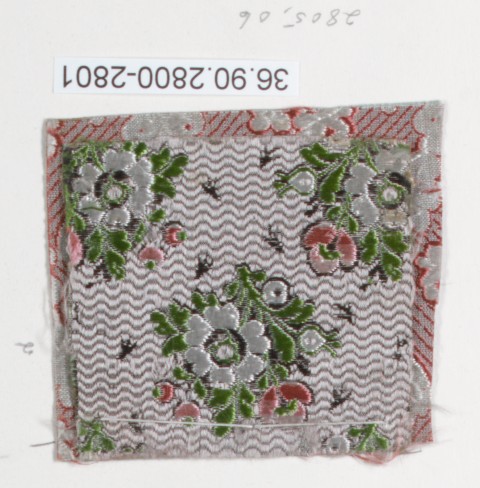
The Artisanal Imperative: Deconstructing Katherine Fashion Lab's "Piece"
In an era where fashion is often reduced to rapid-fire digital drops and algorithmic sameness, Katherine Fashion Lab’s standalone creation, simply titled "Piece," emerges as a defiant counter-narrative. This is not a garment for the season; it is a study in permanence, a tactile thesis on the value of slowness. The lab, known for its rigorous intellectual approach to dressmaking, has positioned "Piece" not as a product but as a proposition—a physical argument that global heritage and artisanal materiality can coexist within a single, sculptural form. The analysis that follows examines how this object navigates the tension between cultural memory and contemporary silhouette, ultimately redefining what luxury means in a post-industrial context.
Global Heritage as a Structural Lexicon
The genius of "Piece" lies not in overt cultural appropriation but in its abstracted synthesis of global textile traditions. Katherine Fashion Lab’s design team has deconstructed and re-coded techniques from three distinct geographies—the intricate hand-stitching of Japanese sashiko, the geometric weaving patterns of Andean backstrap looms, and the resist-dyeing mastery of West African indigo—into a singular, unified language. The garment’s silhouette is deceptively simple: a structured, asymmetric cocoon that drapes from a single shoulder, allowing the material to do the heavy lifting of narrative.
This is a deliberate curatorial choice. By stripping away extraneous embellishments, the lab forces the viewer to engage with the provenance of touch. Each seam is not a seam but a historical footnote; each fold is a reference to a nomadic caravan or a monastic robe. The global heritage here is not a costume or a pastiche; it is a structural grammar. The asymmetry mimics the organic irregularity of hand-loomed cloth, while the internal construction uses a zero-waste pattern-cutting method, a nod to pre-industrial societies where fabric was too precious to discard. The result is a garment that feels both ancient and radically futuristic, a bridge between the ancestral and the avant-garde.
Materiality: The Uncompromising Voice of Artisanal Fiber
At the heart of "Piece" is its material—an exclusive, lab-developed textile that defies easy categorization. It is neither purely silk, nor wool, nor cotton, but a composite of all three, spun at a historic mill in Biella, Italy, using a technique that dates back to the 19th century. The yarn is then hand-dyed in small batches using botanical pigments sourced from the lab’s own regenerative garden in the Loire Valley. This is not a marketing gimmick; it is a material manifesto. The fabric’s surface is alive—it shifts in the light, revealing subtle tonal variations that mass-produced textiles cannot replicate.
The tactile experience is paramount. When worn, "Piece" has a weight that grounds the wearer, yet it moves with an unexpected fluidity, a paradox achieved through a proprietary blend of long-staple fibers and a hand-felted finish. The lab’s artisans spend over 120 hours on a single garment, hand-finishing every edge with a rolled hem that requires a decade of apprenticeship to perfect. In a fashion economy that prioritizes cost-per-unit, Katherine Fashion Lab has inverted the equation, prioritizing cost-per-story. The material is not merely a surface; it is a repository of labor, patience, and ecological consciousness. Every imperfection—a slight slub in the weave, a minor variation in dye depth—is not a flaw but a signature, a proof of human intervention in an age of robotic precision.
Standalone Study: The Garment as an Independent Artifact
Contextualized as a standalone study, "Piece" is deliberately removed from the seasonal calendar and the runway spectacle. It is presented as an artifact, akin to a sculpture in a gallery or a manuscript in a library. This curatorial framing is critical to its meaning. By isolating the garment, Katherine Fashion Lab invites a focused, almost meditative analysis. There is no collection to contextualize it, no trend report to validate it. The garment must stand on its own merits: its construction, its material integrity, and its philosophical coherence.
This approach challenges the consumer to reconsider the lifecycle of clothing. In a standalone context, "Piece" is not meant to be "styled" or "mixed" but to be experienced. It is an heirloom object, designed to be passed down, repaired, and eventually decomposed into the earth without leaving a toxic footprint. The lab has even included a hand-stitched repair kit with each garment, a symbolic gesture that repositions the wearer as a custodian rather than a consumer. The absence of a seasonal context also frees the design from the tyranny of novelty, allowing its aesthetic to be judged on timelessness rather than immediacy.
The Business of Slow Luxury: An Economic Counter-Model
From an MBA perspective, the creation of "Piece" represents a sophisticated, if contrarian, business model. Katherine Fashion Lab operates on a pre-commission basis, producing only a limited run of 50 numbered pieces per year. This scarcity is not artificial; it is a direct function of the artisanal labor hours required. The pricing strategy, which places the garment in the ultra-luxury tier, is justified not by brand equity alone but by the verifiable cost of material provenance and skilled human capital. The lab’s supply chain is vertically integrated, with direct partnerships with farmers, dyers, and weavers, ensuring ethical labor and eliminating middlemen. This is a value-chain optimization that prioritizes resilience and craftsmanship over volume and speed.
Furthermore, the standalone study format serves as a powerful marketing tool. By presenting "Piece" as an intellectual property rather than a commodity, the lab cultivates a niche audience of collectors, museum curators, and sustainability-focused high-net-worth individuals. The garment is not sold through traditional retail channels but through private viewings and a curated digital archive. This direct-to-consumer, relationship-based model fosters deep brand loyalty and allows for a premium price point that mass-market houses cannot replicate. The lab’s financial success is not measured in revenue growth but in cultural capital and longevity, demonstrating that profitability can be aligned with preservationist values.
Conclusion: A Blueprint for the Future of Fashion
Katherine Fashion Lab’s "Piece" is more than a garment; it is a rigorous case study in the reconciliation of heritage and innovation. It proves that global heritage is not a nostalgic trope but a reservoir of technical knowledge that can solve modern problems—from waste reduction to emotional detachment in consumer goods. The artisanal material is not a luxury garnish but the core engine of the garment’s value proposition. In its standalone context, it demands a slower, more deliberate mode of consumption, one that values depth over breadth. As the fashion industry grapples with its environmental and ethical crises, "Piece" offers a viable, albeit demanding, blueprint: a model where the hands of the maker, the memory of a culture, and the integrity of a material are the ultimate arbiters of worth.