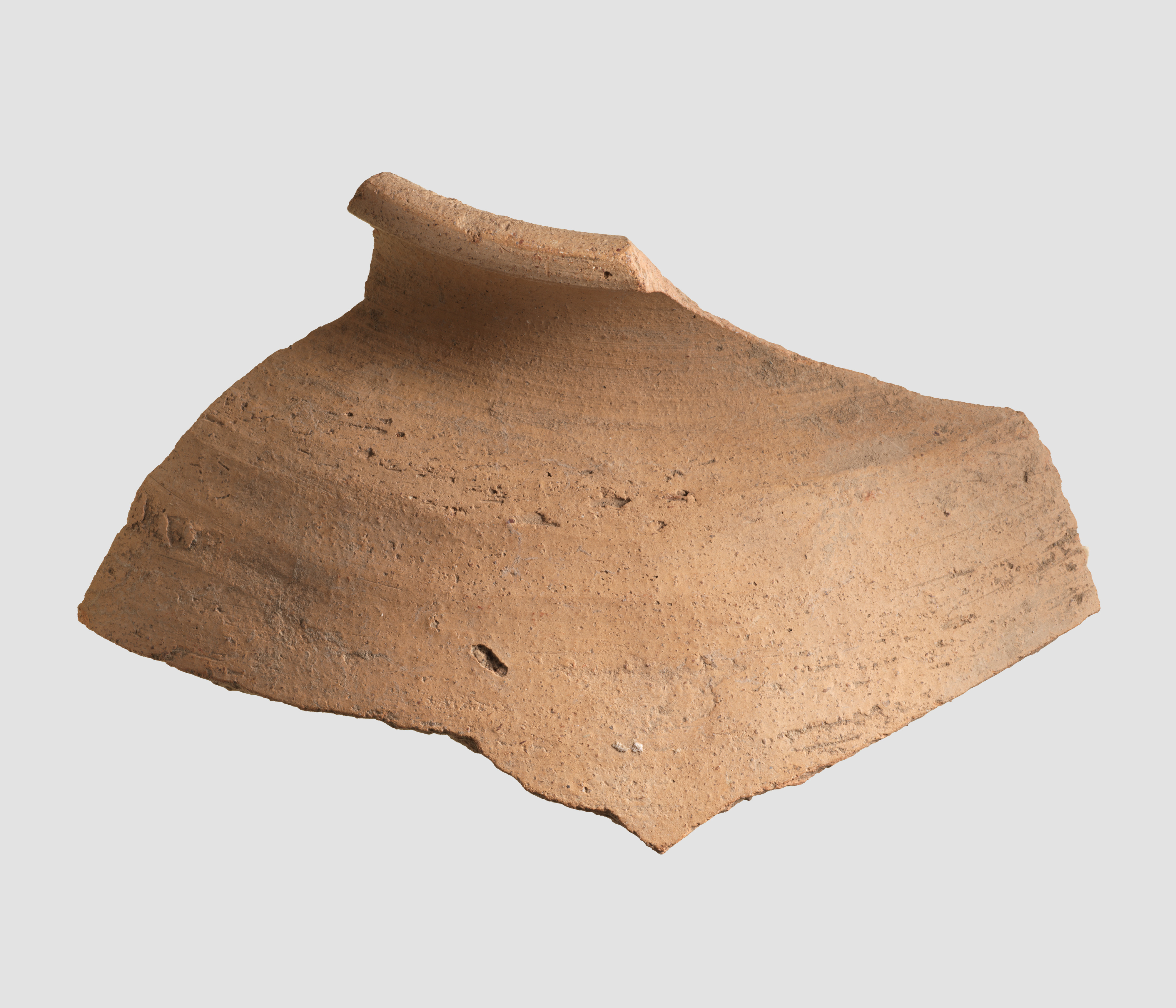
Executive Heritage Summary: The Sherd as a Foundational Artifact
The sherd—a fragment of ceramic vessel recovered from the stratified earth of the Iranian plateau—represents more than archaeological debris. In the context of Katherine Fashion Lab’s 2026 luxury strategy, the sherd emerges as a potent symbol of authentic imperfection, temporal depth, and ritual continuity. This analysis positions the sherd not as a broken object, but as a deliberate design cipher: a fragment that encodes millennia of Persian aesthetic intelligence, spiritual cosmology, and artisanal mastery. For a high-end maison seeking to differentiate through narrative richness, the sherd offers a lexicon of restrained opulence and archaeological storytelling that resonates with the contemporary collector’s desire for meaning over mere ornament.
Symbolic Power: The Fragment as a Totem of Resilience
In Persian cultural memory, the sherd—known historically as safal or khesht—carries a dual symbolic charge. On one hand, it signifies loss and the passage of empires; on the other, it embodies survival against entropy. The sherd is a witness to fire, conquest, and abandonment, yet it retains its chromatic integrity, its glaze’s lustre, and its geometric precision. This duality is precisely what makes it a compelling emblem for a luxury house in 2026: a period marked by global volatility and shifting definitions of permanence.
From a semiotic perspective, the sherd operates as a metonym for the whole vessel, and by extension, for the entire civilization that produced it. When a wearer incorporates a sherd-inspired motif—whether in a jacquard weave, a laser-cut metal filigree, or a hand-painted enamel—they are not merely referencing antiquity. They are invoking the integrity of the fragment, suggesting that beauty need not be complete to be authoritative. This aligns with the luxury sector’s 2026 pivot toward “imperfect luxury”, where visible mending, raw edges, and asymmetrical silhouettes are valorized as markers of authenticity and ethical production.
Historical Adornment: From Kiln to Body
The Iranian ceramic tradition, spanning from the prehistoric Tepe Sialk (circa 6000 BCE) to the Safavid-era lusterwares of Kashan, established a sophisticated visual grammar that directly informs contemporary adornment. Key motifs recovered from sherds include:
- Geometric interlace — representing cosmic order and the infinite.
- Stylized botanical forms — the cypress and lotus, signifying eternity and rebirth.
- Calligraphic bands — often in Kufic script, embedding sacred text within secular objects.
- Turquoise and cobalt glazes — colors associated with heavenly protection and royal prestige.
For Katherine Fashion Lab, these motifs translate directly into surface ornamentation for couture garments, leather goods, and jewelry. The sherd’s broken edge becomes a design line—a raw, unhemmed seam that mimics the fracture, while the interior pattern is rendered in metallic thread or micro-beading to evoke the original glaze’s reflective quality. Historically, Persians adorned themselves with ceramic amulets and seals, believing that the fired clay carried protective properties. The 2026 strategy can revive this practice through wearable ceramic components: brooches, belt buckles, and pendants crafted from high-fired porcelain, each deliberately chipped or distressed at the edge to echo the archaeological find.
Spiritual Meaning: The Sherd as a Vessel of the Sacred
Zoroastrian cosmology, which permeates Iranian material culture, holds that the earth is both a tomb and a womb—a place of decay and regeneration. The sherd, having been buried, undergoes a form of chthonic transformation. Its contact with soil and mineral salts alters its surface, creating a patina that is not degradation but alchemical refinement. This spiritual dimension offers a profound narrative for luxury: the sherd is not a discarded object but a consecrated relic that has passed through the elemental cycle of fire (kiln), earth (burial), and water (excavation washing).
In Islamic-era Iran, ceramic fragments were sometimes incorporated into the walls of shrines and mausoleums, serving as intercessory materials—physical conduits between the devotee and the divine. The 2026 luxury strategy can appropriate this concept through “relic-inspired” packaging and interior spaces. For example, a limited-edition handbag could include a small, authentic sherd certified by a provenance document, set into the lining as a hidden talisman. This transforms the product from a mere accessory into a personal amulet, resonating with consumers who seek spiritual depth in their acquisitions. The brand narrative would emphasize that each sherd is unique, with its own geological and historical trajectory, thereby reinforcing the value of singularity over seriality.
2026 High-End Luxury Strategy: Curating the Fragment
Katherine Fashion Lab’s strategic positioning for 2026 should pivot on the concept of “Archaeological Couture”—a term that fuses rigorous historical research with avant-garde material experimentation. The sherd’s aesthetic properties—matte surfaces, irregular edges, tonal variations—lend themselves to a monochromatic, earth-toned collection that stands in stark contrast to the saturated digital palettes of mainstream fashion. This approach targets the “quiet luxury” segment, which prioritizes material integrity and narrative provenance over visible logos.
Material Innovation
Invest in proprietary composites that mimic ceramic texture: a bonded leather with a mineral-infused finish, or a silk organza stiffened with a ceramic-derived resin. These materials will allow garments to hold sculptural folds reminiscent of a vessel’s profile, while remaining wearable. The “sherd edge”—a raw, laser-cut border that does not fray—will become a signature finish across the collection.
Exclusive Provenance Program
Partner with licensed archaeological conservators to source authentic sherds from legal, documented excavations. Offer a “Curator’s Kit”—a limited series of 100 pieces per season, each accompanied by a certificate of origin, a microscopic surface analysis, and a 3D scan. This creates a collector’s market where the sherd itself becomes an investment-grade asset, with the garment as its luxurious frame.
Experiential Retail
Redesign flagship stores to resemble excavation sites: layered display plinths, subtle earth-scented diffusers, and interactive digital tables that allow clients to “unearth” patterns from projected sherd scans. The fitting room will be a “conservation lab,” where garments are presented on suspended mounts, reinforcing the artifact-as-object narrative.
Pricing Architecture
Position the core sherd-inspired ready-to-wear line at $2,500–$8,000, with the provenance-linked couture pieces at $25,000–$120,000. The differential is justified by the rarity of the authentic fragment, the labor intensity of hand-finishing, and the cultural stewardship embedded in the story—an ethical luxury claim that appeals to the 2026 consumer’s demand for responsible acquisition.
Conclusion: The Fragment as Future Icon
The sherd, in its humble brokenness, offers Katherine Fashion Lab a strategic asset of extraordinary resonance. It is not a nostalgic retreat to the past, but a forward-looking symbol of resilience, authenticity, and spiritual continuity. In an era of mass-produced sameness, the sherd’s uniqueness—its irreproducible fractures and mineral traces—becomes the ultimate luxury. By integrating this heritage artifact into the 2026 collection, Katherine Fashion Lab will not merely sell clothing; it will offer a portable piece of Persian eternity, worn with the quiet confidence of one who understands that true power lies in the fragment that endures.