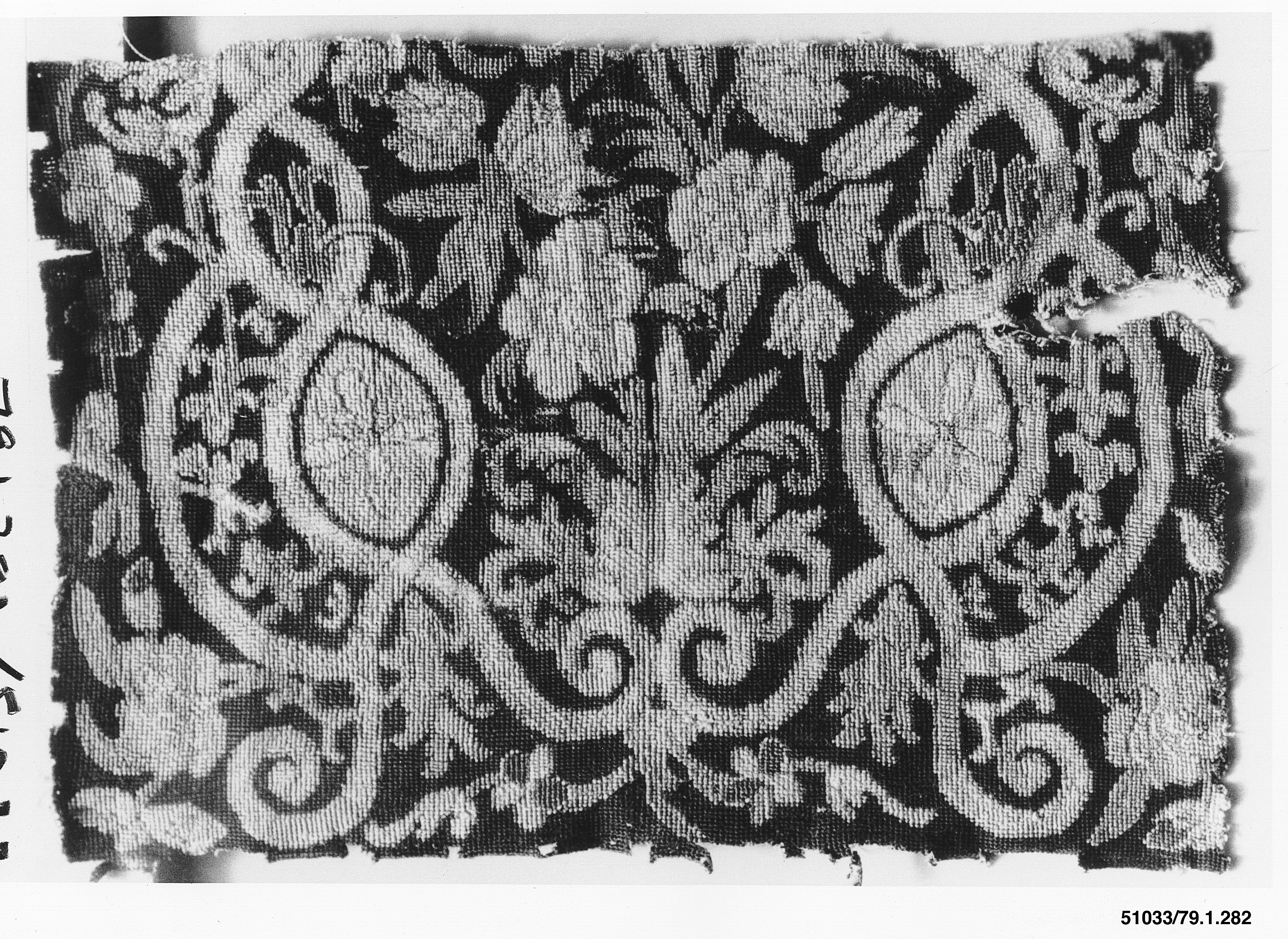
Deconstructing the Fragment: A Study in Global Heritage and Material Memory
In the rarefied echelons of contemporary couture, where novelty often masquerades as innovation, Katherine Fashion Lab’s latest standalone study—simply titled Fragment—offers a profound recalibration. This is not a collection in the traditional sense, but a singular, immersive investigation into the poetics of incompleteness. By isolating a single garment, constructed from heritage-sourced silk and grounded in a philosophy of global patrimony, the Lab has produced a work that functions less as clothing and more as a three-dimensional thesis on the nature of memory, loss, and cultural synthesis. The piece is a masterclass in restraint, proving that the most potent narratives in fashion are often those left partially untold.
The Semiotics of the Incomplete
The conceptual anchor of Fragment is its deliberate embrace of the partial. In an industry obsessed with totalizing visions—head-to-toe looks, complete collections, and seamless digital campaigns—Katherine Fashion Lab posits that the fragment is a more honest metaphor for our contemporary relationship with heritage. A fragment is not a failure; it is a survivor. It is what remains after the passage of time, after the upheavals of migration, after the erosion of cultural boundaries. The garment, a deconstructed bias-cut gown, is cut away in strategic swaths, leaving raw, unfinished edges that are meticulously hand-rolled into delicate, almost invisible hems. This is not careless deconstruction; it is a surgical curation of absence.
The silhouette is a study in suspended animation. A single shoulder is draped in a cascade of silk that mimics the fall of classical statuary, while the opposite side is stripped bare, revealing a complex interior structure of silk organza and micro-sutured seams. This asymmetry is not merely aesthetic; it is a philosophical statement. It suggests that our understanding of global heritage is inherently fragmented—we see the remnants of a whole, we intuit the missing parts, but we can never fully reconstruct the original context. The gown becomes a wearable palimpsest, with layers of fabric and meaning that invite the viewer to complete the narrative in their own mind.
Silk as a Conduit of Global Memory
Materiality is the linchpin of this study. The choice of silk is far from arbitrary. Silk is the original global commodity, a fiber that has traversed continents for millennia, carrying with it the aesthetics, techniques, and economies of the East, the Middle East, and Europe. Katherine Fashion Lab has sourced this particular silk from a heritage mill in Como, Italy, but the thread itself is spun from mulberry cocoons originally cultivated in the Jiangsu province of China. This provenance is not a marketing detail; it is intrinsic to the work’s meaning. The gown is literally woven from global heritage, its very fibers a testament to the interconnectedness of human craftsmanship.
The fabric’s treatment further amplifies its narrative weight. The Lab has employed a technique of selective devoré, where a chemical paste dissolves portions of the silk’s pile, leaving behind a ghostly, skeletal pattern that evokes the faded motifs of ancient Central Asian ikats. In some areas, the silk is left lustrous and smooth, catching the light with a liquid sheen; in others, it is matte and slightly puckered, reminiscent of fabric that has been buried and unearthed. This tactile contrast is a deliberate strategy to engage the sense of touch as a form of historical inquiry. The wearer and the viewer are invited to feel the difference between preservation and decay, between the polished surface of curated heritage and the raw, uneven texture of lived history.
Technical Mastery and the Art of the Unfinished
From a purely technical standpoint, Fragment is a tour de force of couture atelier skill. The difficulty in creating a garment that appears unfinished lies in the fact that every "accidental" edge must be deliberately engineered. The raw seams, for instance, are not left to fray; they are stabilized with a micro-thin layer of silk gomma, a traditional adhesive that prevents unraveling while maintaining a soft, pliable drape. The internal structure is a marvel of invisible architecture, with a corset-like base made of hand-cut horsehair braid and silk tulle, which supports the heavy fall of the outer silk without distorting its fluidity.
The embroidery, where present, is executed in a technique known as point de Paris, a delicate lace stitch that is itself a fragment of a larger, lost pattern. The threads are a blend of antique silver and raw silk, creating a subtle shimmer that does not compete with the fabric’s inherent luminosity. This is couture at its most intellectual—every stitch is a decision, every omission a choice. The Lab’s atelier team, working under the direct supervision of the lead designer, spent over 400 hours on this single piece, a testament to the belief that true luxury is not in abundance but in the meticulous refinement of a singular idea.
Contextualizing the Standalone Study
Placing Fragment within a broader fashion context is instructive. In an era of "see-now-buy-now" and rapid trend cycles, the standalone study is a radical act of resistance. It rejects the relentless pace of the industry in favor of a slower, more contemplative mode of creation. This is not a garment designed for a red carpet or a social media moment; it is a piece designed for a museum vitrine, a private archive, or a collector’s wardrobe. Its value lies not in its wearability but in its capacity to provoke thought.
Furthermore, the piece engages with a critical discourse on cultural appropriation versus appreciation. By drawing from a "global heritage" that is deliberately non-specific—echoing motifs from Persian, Chinese, and Ottoman sources without directly copying any single one—the Lab avoids the pitfalls of tokenism. Instead, it creates a composite, a fragment of a global visual language that belongs to no one and therefore can be shared by all. It is a bold statement that heritage is not a static artifact to be owned, but a living, evolving dialogue to be joined.
Conclusion: The Fragment as a Complete Statement
In the final analysis, Katherine Fashion Lab’s Fragment is a paradox: a work of profound incompleteness that feels utterly whole. It is a garment that speaks to the fractured nature of identity in a globalized world, where our cultural inheritances are often partial, hybrid, and filtered through layers of mediation. By using silk as a metaphor for this interconnectedness, and by elevating the fragment to a position of aesthetic and philosophical primacy, the Lab has created a piece that transcends fashion. It is a meditation on what we preserve, what we lose, and what we choose to carry forward. This standalone study does not ask to be completed; it asks to be contemplated. And in that contemplation, it achieves a rare and enduring completeness.