The Anatomy of Influence: Deconstructing the Fasciculo di Medicina
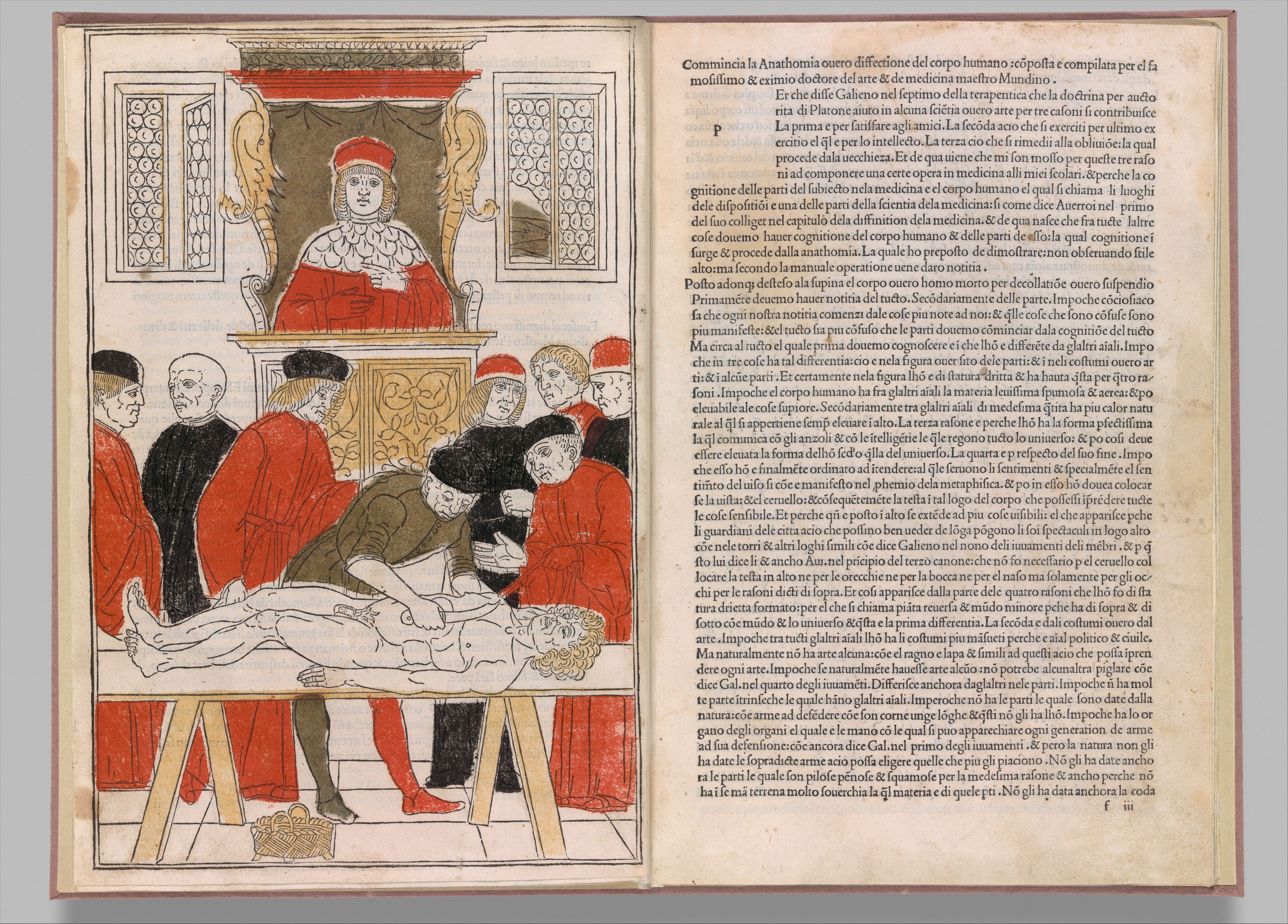
In the rarefied echelons of haute couture, where innovation often masquerades as novelty, Katherine Fashion Lab has consistently distinguished itself through a rigorous, almost archaeological approach to design. The maison’s latest offering, a standalone study inspired by the *Fasciculo di Medicina*, is not merely a collection; it is a thesis on the intersection of medieval epistemology and contemporary sartorial structure. By drawing from the 1494 Venetian incunable—a landmark of printed medical knowledge—the Lab transcends the superficiality of trend, engaging instead with the very grammar of human anatomy and the aesthetics of revelation.
This analysis dissects the collection’s conceptual architecture, material execution, and its profound commentary on the body as both a biological entity and a canvas for cultural expression. The *Fasciculo*, with its iconic woodcut illustrations of zodiacal man and dissected figures, serves not as a literal template but as a foundational text—a palimpsest upon which the Lab has inscribed a new language of draped complexity and engineered precision.
I. The Epistemological Shift: From Medical Chart to Garment Blueprint
The genius of this study lies in its translation of didactic imagery into three-dimensional form. The original *Fasciculo* was a practical manual, designed to democratize medical knowledge for the barber-surgeon and the scholar alike. Its woodcuts were stark, functional, and brutally honest in their depiction of the human interior. Katherine Fashion Lab seizes upon this utilitarian honesty, stripping away the decorative excess of contemporary fashion to reveal a structural core. The garments do not mimic the illustrations; they *embody* the process of dissection itself—the peeling back of layers, the exposure of underlying frameworks, and the meticulous mapping of connective tissues.
The collection’s silhouettes are predicated on the concept of the "flayed garment." Outer shells in heavy, uncompromising wool or technical silk are cut with deliberate asymmetry, creating apertures that reveal an inner stratum of contrasting texture—perhaps a lattice of leather mimicking the fascial planes of muscle, or a sheer mesh printed with the delicate tracery of the circulatory system. This is not a gesture of provocation but one of intellectual curiosity. The viewer is invited to perform a visual vivisection, to understand the garment as a composite of systems rather than a monolithic surface. The strategic placement of seams—often running along the anatomical lines of the wearer’s own body—reinforces this dialogue, suggesting that the clothing is not an imposition on the form but an exoskeleton that delineates and honors its internal logic.
II. Materiality as a Scholarly Pursuit: The Woodcut Aesthetic
Central to the collection’s intellectual rigor is its material treatment, which pays direct homage to the woodcut medium. The woodcut is an art of reduction and resistance; the artist carves away the block to leave a raised surface for ink. The Lab translates this subtractive process into fabric via a series of pioneering textile manipulations. Heavy jacquards are woven with a deliberate, almost pixelated irregularity, mimicking the grain of the wood block. The color palette is similarly restrained and scholarly: the deep, viscous black of printer’s ink, the warm, unbleached tone of aged vellum, and the muted, sanguine red of the anatomical illustrations’ rubrication.
Furthermore, the Lab employs a technique best described as "negative-space embroidery." Rather than adding thread to build a pattern, the artisans cut away and distress the fabric’s surface, creating recessed channels that echo the gouged lines of the original woodcuts. This is a slow, deliberate process, one that demands an almost monastic patience. The resulting textural relief is not merely decorative; it casts subtle shadows that shift with the wearer’s movement, making the garment a living, dynamic diagram. The choice of materials—from the rigidity of horsehair canvas to the fluidity of washed cupro—is never arbitrary. Each fabric is selected for its ability to hold a sculptural line or to drape with the limp weight of a historical specimen, ensuring that the material itself contributes to the narrative of historical gravitas.
III. The Architecture of Revelation: Silhouette and Structure
Katherine Fashion Lab’s mastery is most evident in its handling of volume and restraint. The *Fasciculo* collection eschews the bombast of exaggerated shoulders or the tyranny of the hourglass. Instead, the silhouettes are architectural and grounded, drawing inspiration from the anatomical fugitive sheets—those flap-anatomy prints that allowed the viewer to lift layers of paper to reveal the organs beneath. This interactive quality is translated into garments with detachable panels, strategic hook-and-eye closures, and hidden plackets that allow the wearer to alter the garment’s topography.
A signature piece is the "Zodiac Overcoat," a floor-length, double-faced wool creation. On its exterior, it is a monument of monastic severity. Yet, a concealed magnetic seam running along the spine allows the wearer to fold back the entire left panel, revealing an interior lining of hand-painted silk that charts the twelve signs of the zodiac upon a stylized human form. This is not a hidden print for a private moment; it is a deliberate act of controlled disclosure. The wearer becomes a curator of their own visibility, choosing when to reveal the astrological and anatomical map that governs their being. This structural duality is the collection’s core thesis: that clothing, like the body, is a system of surfaces and depths, and that true luxury lies in the mastery of that transition.
IV. A Standalone Study: Context and Commentary
Presented as a standalone study, deliberately detached from the seasonal fashion calendar, this collection asserts its identity as a work of scholarship. It is a deliberate provocation against the relentless churn of fast fashion and the ephemeral nature of the trend cycle. By framing the collection as a "study," the Lab elevates its garments to the status of artifacts, objects to be examined, debated, and preserved. This curatorial framing invites a slower, more contemplative engagement with the clothing, aligning with the values of a clientele that seeks meaning and permanence in their acquisitions.
The cultural commentary is equally potent. In an era of medical transparency, genetic sequencing, and digital body scans, the *Fasciculo* study reminds us of a time when the body’s interior was a profound mystery, explored through the twin lenses of faith and empirical observation. The collection does not advocate for a return to pre-modern ignorance but rather celebrates the enduring human drive to understand and represent our own physicality. It questions the sterile, airbrushed perfection of contemporary body imagery, instead offering a vision of the body as a complex, layered, and even messy system—one that is worthy of respect and meticulous sartorial articulation.
In conclusion, Katherine Fashion Lab’s *Fasciculo di Medicina* study is a landmark achievement in conceptual fashion. It demonstrates that couture can be a vehicle for intellectual discourse without sacrificing aesthetic beauty or technical mastery. By reinterpreting a 15th-century medical text through the lens of contemporary material science and structural design, the Lab has created a collection that is both historically resonant and profoundly forward-thinking. It is a powerful reminder that the most innovative design often comes from a deep and respectful engagement with the past, and that the human body remains our most enduring and complex source of inspiration. This is not merely clothing; it is a wearable dissertation, a testament to the power of fashion to think, to question, and to reveal.