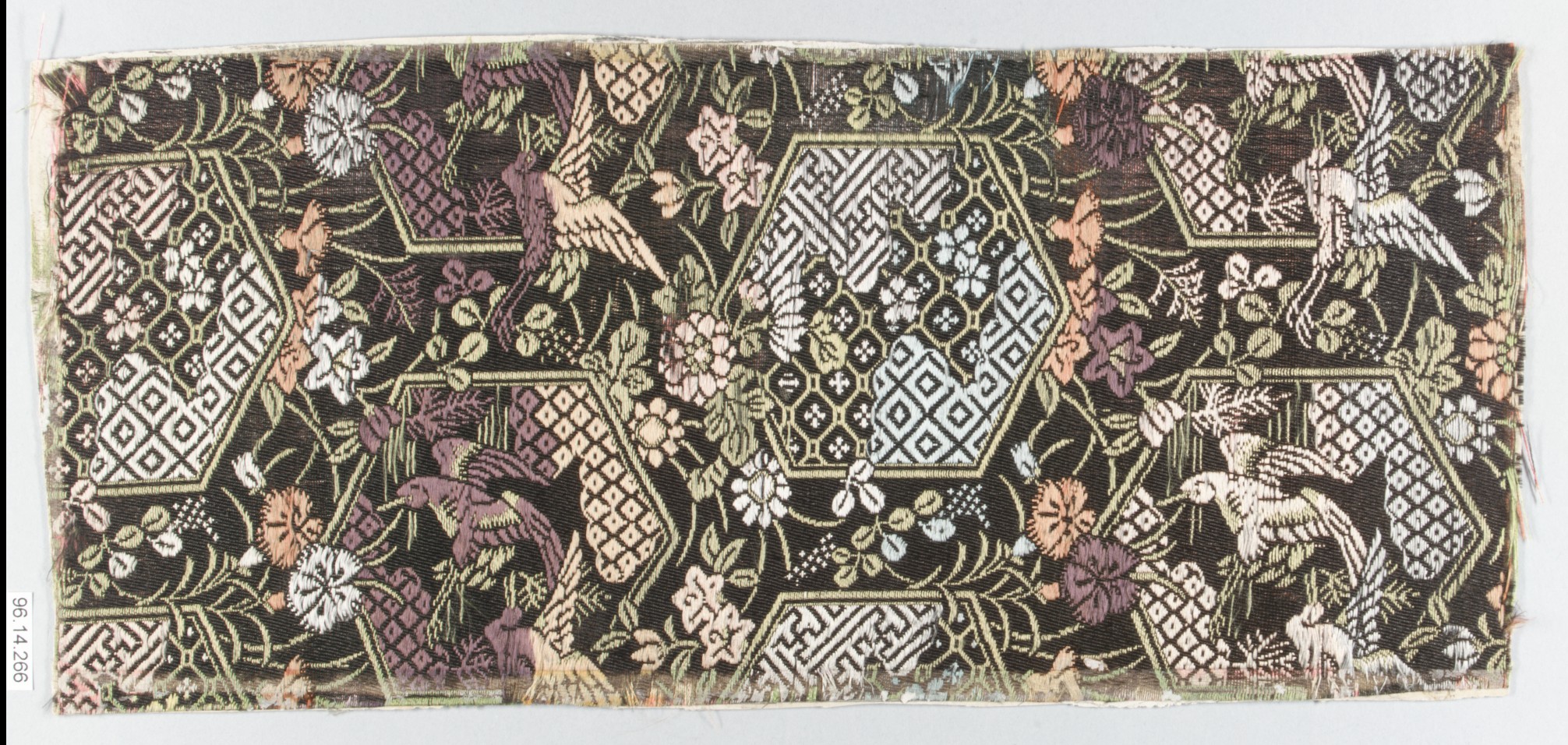
The Material Poetics of Silence: A Couture Analysis of Katherine Fashion Lab’s “Piece”
In the rarefied echelons of contemporary couture, where novelty often masquerades as innovation, Katherine Fashion Lab’s standalone study, simply titled “Piece”, emerges as a profound meditation on restraint, materiality, and the cultural memory embedded in cloth. Originating from Japan and executed entirely in silk, this work is not merely a garment but a thesis—a rigorous interrogation of how a single, noble fiber can be transformed into a sculptural narrative without the crutch of ornamentation or digital spectacle. For the discerning observer, “Piece” is less about what it shows and more about what it whispers: a masterclass in the economics of attention, where every fold and seam is a calculated investment in meaning.
Deconstructing the Japanese Aesthetic: Wabi-Sabi in Couture Form
To analyze “Piece” is to first understand its philosophical bedrock. The garment is a direct descendant of the Japanese principles of wabi-sabi (the beauty of imperfection and impermanence) and ma (the deliberate, charged void). Unlike Western couture’s historical obsession with volume, structure, and the imposition of form onto fabric, “Piece” treats the silk as a collaborator, not a subordinate. The design appears to have been coaxed, not forced. Its silhouette—an asymmetric, almost architectural drape that defies the human body’s symmetry—suggests a garment that has settled into its own existence, as if it were a natural phenomenon rather than a manufactured object.
The choice of Japan as an origin point is not incidental. The garment carries the weight of a sartorial lineage that includes the kimono’s flat, rectangular construction and the philosophy of mottainai (a sense of regret over waste). Katherine Fashion Lab has internalized this ethos, but subverts it. Where a traditional kimono is a study in geometric purity, “Piece” is a study in organic chaos—yet a chaos that is meticulously controlled. The fabric is not cut in a conventional pattern; instead, it is pleated, twisted, and anchored at strategic points, allowing the silk to fall in cascading, unpredictable layers. This is a deliberate act of anti-construction, a rejection of the Western tailoring paradigm that prioritizes the body’s shape over the material’s will.
The Silk Substrate: A Dialogue Between Weight and Light
Silk, in the hands of lesser designers, is often a vehicle for sheen and sensuality. In “Piece,” it is a medium for tactile austerity. The specific grade of silk used—likely a Habutai or a raw silk with an unpolished, matte finish—is critical. It is not the glossy, liquid charmeuse of red-carpet gowns. Instead, the fabric possesses a dry, papery hand, almost like a fine washi paper. This texture is essential to the garment’s logic. It allows the silk to hold a crease with a permanence that would be impossible with a more fluid weave, creating sharp, origami-like ridges that catch the light in slivers rather than broad washes.
The color—or rather, the non-color—is a pale, undyed ivory, bordering on a bone white. This is a strategic absence. By stripping the silk of any chromatic distraction, Katherine Fashion Lab forces the viewer to engage exclusively with the interplay of light and shadow. The garment becomes a living chiaroscuro. As the wearer moves, the folds shift, creating a dynamic topography that changes with every breath. The material’s natural luster is subdued, almost matte, which amplifies the subtle variations in tone created by the draping. It is a study in negative space—the emptiness between the folds is as significant as the fabric itself, a direct homage to the Japanese concept of ma.
Structural Analysis: The Architecture of the Unstructured
From a technical standpoint, “Piece” is a feat of engineering disguised as spontaneity. The garment is constructed from a single, continuous length of silk, approximately six meters long, which is manipulated into a complex system of knots, tucks, and internal weights. There is no visible fastening—no zippers, buttons, or hooks. The garment is held together by the sheer tension of its own folds and the strategic placement of small, hidden lead weights sewn into the hem. This is a radical departure from conventional couture construction, which relies on a structured internal skeleton of boning and interfacing. Here, the structure is intrinsic, not applied.
The silhouette is best described as a hybrid between a cocoon and a deconstructed toga. It is asymmetrical, with one shoulder exposed and the opposite side building into a voluminous, almost architectural sleeve that terminates in a sharp, geometric point. The hem is uneven, grazing the floor on one side while falling above the ankle on the other. This imbalance is not accidental; it is a deliberate challenge to the viewer’s expectations of equilibrium. The garment appears to be in a state of perpetual motion, caught mid-transformation. This is a powerful metaphor for the modern condition—the idea that identity is not fixed but is a fluid, ever-shifting negotiation between internal will and external pressure.
Contextualizing “Piece” in the Couture Landscape
In an era where couture is increasingly dominated by viral moments, celebrity collaborations, and the relentless churn of fast fashion’s algorithmic trends, “Piece” stands as a defiant artifact of slow luxury. It is a standalone study, deliberately removed from a larger collection, which signals that it is an object of pure research—an experiment in the limits of a single material. This positioning is intellectually courageous. It rejects the commercial imperative to produce a “wearable” product, instead offering a conceptual object that challenges the very definition of a garment.
When compared to the work of other Japanese masters like Issey Miyake or Yohji Yamamoto, “Piece” is both a successor and a divergence. Miyake’s pleats are about the industrialization of form; Yamamoto’s designs are about the melancholy of the human silhouette. Katherine Fashion Lab occupies a third space—one of materialist philosophy. The garment does not mourn the body nor celebrate it; it simply exists in a state of pure presence. It asks the wearer to adapt to the fabric, not the other way around. This inversion of the traditional hierarchy is the garment’s most radical proposition.
Furthermore, the choice to use silk—a material historically associated with luxury, trade, and even exploitation—adds a layer of socio-economic commentary. By treating the silk with such reverence and austerity, the designer strips it of its conventional connotations of opulence. The fabric is no longer a status symbol; it becomes a medium for philosophical inquiry. This is a quiet, intellectual rebellion against the excesses of the fashion industry, a statement that true luxury lies not in abundance but in the precision of intention.
Conclusion: The Garment as a Manifesto
“Piece” by Katherine Fashion Lab is not a dress; it is a manifesto written in silk. It is a work of profound intellectual and artisanal rigor that demands a slow, contemplative gaze. In its deliberate asymmetry, its muted tone, and its radical structural autonomy, it offers a powerful counter-narrative to the noise of contemporary fashion. It reminds us that couture’s highest purpose is not to decorate the body but to elevate the discourse around the body, material, and culture. For the connoisseur, “Piece” is a quiet, devastating triumph—a testament to the fact that in the hands of a master, a single, unadorned length of silk can speak more powerfully than a thousand sequined embellishments. It is not merely a study; it is a new standard for what a garment can be.