An Exegesis in Thread: Deconstructing Hebrew Ritual Lace as a Couture Proposition
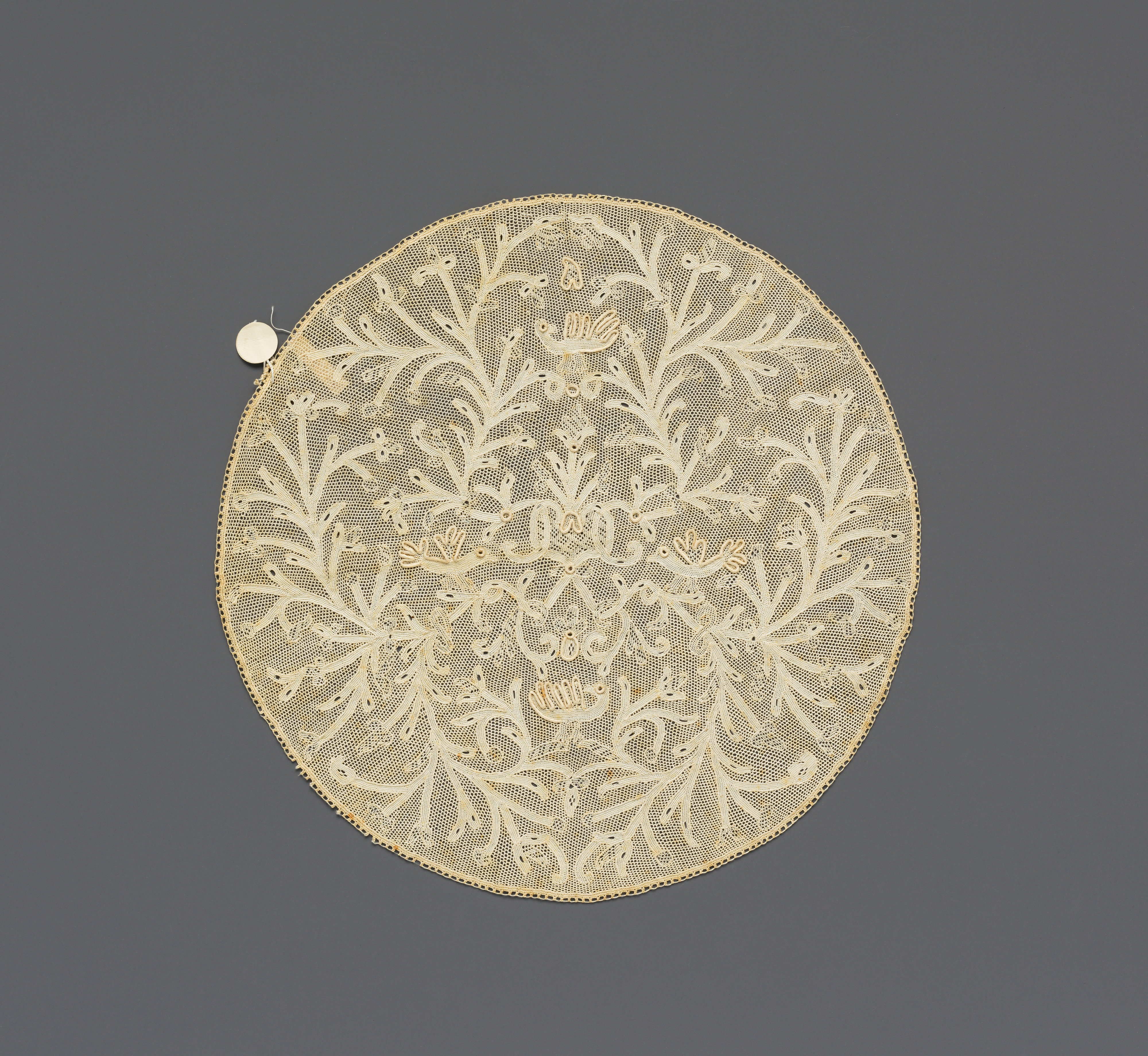
Within the hallowed archives of global heritage textiles, few artifacts possess the layered semiotics of Hebrew ritual lace. As a standalone study for Katherine Fashion Lab, this analysis transcends mere aesthetic appreciation to engage in a rigorous deconstruction of its form, function, and profound narrative potential. This is not simply lace; it is a tangible theology, a geometric dialogue with the divine, and a formidable blueprint for avant-garde couture. Crafted traditionally in silk via the exacting technique of needle lace—a method privileging the single needle and thread over faster, more mechanical alternatives—these pieces embody a paradox of fragility and enduring strength, of intricate beauty serving a purpose far beyond adornment.
Materiality & Technique: The Sanctity of Silk and the Discipline of the Needle
The foundational choice of silk is our first hermeneutic key. More than a luxurious fiber, silk in Jewish ritual contexts carries connotations of purity, distinction, and the sacred. Its luminous sheen is often associated with the divine presence, while its strength under tension mirrors the resilience of the traditions it garments. The needle lace technique, or *punto in aria* ("stitches in air"), is particularly revelatory. This is a constructive process, building fabric from nothing but thread, a metaphor for creation ex nihilo. Each stitch is a deliberate, meditative act, resulting in a structure that is inherently architectural. The resulting lace is not an embellishment applied to a ground; it *is* the ground. This technique demands and exemplifies a core couture principle: the structural integrity of the piece is born from its ornamentation. For the Lab, this presents a radical design directive: what if a garment's entire architecture emerged from such a disciplined, constructed lace, where void and solid, transparency and opacity, are in constant, calculated negotiation?
Motif & Symbolism: A Non-Figurative Language of the Sacred
Hebrew ritual lace, particularly that used for Torah ark covers, binder strips (*wimpels*), or prayer shawl (*tallit*) corners, operates within a strict visual lexicon that rejects figurative representation in adherence to religious law. This constraint births extraordinary abstract innovation. The design language is one of geometric precision and symbolic inference.
Primary motifs include:
Interlacing Grids and Lattices: These represent interconnectedness, the weaving of human life with divine law, and the structured nature of study and community. In a couture context, this translates to explorations of modular construction, paneling, and garments that question where the body ends and the surrounding space begins.
Floral and Botanical Forms, Highly Stylized: Pomegranates (symbolizing fertility and wisdom), vines (the people of Israel), and the Tree of Life are rendered not as naturalistic illustrations but as distilled, rhythmic patterns. This offers a masterclass in abstraction, guiding the Lab to consider how to capture the essence of an organic form through pure geometry and negative space, rather than literal replication.
Architectural Elements: Columns, gates, and crowns (*atarot*) evoke the Temple in Jerusalem, framing the sacred text or act. This directly inspires structural couture—bodices as porticos, sleeves as colonnades, silhouettes that echo sacred geometry and monumental forms.
This symbolic vocabulary provides a rich, non-literal narrative toolkit. A Katherine Fashion Lab creation informed by this study would not "look Jewish" in a stereotypical sense; instead, it would embody the conceptual rigor, the dialogue with absence and presence, and the encoded meaning inherent in the source material.
Couture Translation: From Ritual Object to Radical Silhouette
The translation of this study into a couture proposition hinges on moving beyond appliqué and into the realm of deep structural metaphor. We propose three core investigative pathways:
Pathway 1: The Constructed Lace Architecture
Here, the garment is conceived as a single, expansive piece of constructed lace, grown from a single thread of thought. Using silk gimps and fils coupé techniques, the entire silhouette—a columnar gown, a sculptural jacket—would be built using the needle lace method. Areas of dense stitching would define support and opacity (mapping to the body's architecture), while openwork lattices would suggest translucency and release. The garment has no lining; its structure is its beauty. This approach honors the artifact's "stitches in air" origin, resulting in a piece that is both monumental and ethereal.
Pathway 2: The Dialogic Silhouette: Solid and Void
This pathway focuses on the philosophical interplay between the textile and what it covers. Ritual lace often frames a sacred object. How can a garment frame, reveal, and honor the human form with similar intentionality? Imagine a severe, minimalist wool crepe column dress, interrupted by a precise, geometric "window" on the torso or spine, filled with a panel of custom silk needle lace. The contrast between the solid fabric and the lace is not decorative but dialogic, creating a narrative of revelation and concealment, strength and delicacy, the modern and the eternal. The lace becomes a glimpse into an inner architecture, a personal ritual space.
Pathway 3: Modern Talismans: Micro-Architecture on the Body
Finally, we consider the scale of the talisman. Small lace pieces, like those from a *tallit*, are worn close to the body. This inspires a focus on micro-couture—extraordinarily detailed, lace-based closures, collars, or back pieces that function as self-contained works of art. A severe leather jacket might fasten not with a zipper, but with two panels of intricate, contrasting silk lace that interlock like a puzzle or a covenant. A gown's spine is traced by a vertical column of lace, acting as a structural keystone and a symbolic backbone. These elements carry the weight of meaning, becoming modern, secular talismans of craftsmanship and identity.
Conclusion: A Legacy of Structured Meaning
This standalone study of Hebrew ritual lace reveals an object where material, technique, and symbol are inextricably fused in the service of profound meaning. For Katherine Fashion Lab, it offers far more than a pattern to copy. It provides a methodology for meaningful construction. It champions discipline as a catalyst for beauty, abstraction as a language of depth, and structure as the carrier of narrative. The resulting couture proposition would not be a costume or a pastiche. It would be a contemporary analogue: a garment born of the same principles of sacred intentionality, where every stitch, every void, and every silhouette speaks to a legacy of structured meaning, re-engineered for the architecture of the modern body and mind. The heritage is not in the motif alone, but in the mindset—a mindset where craft is prayer, geometry is law, and beauty is a deliberate, thoughtful creation.