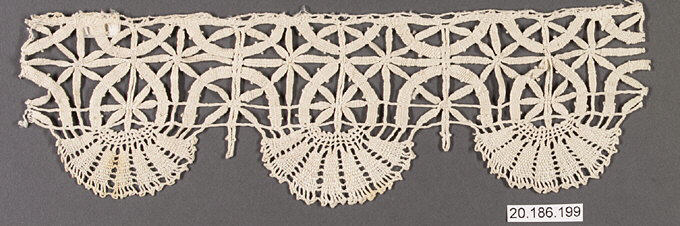
Edging as Architecture: Deconstructing the Bobbin Lace Narrative
In the rarefied echelons of haute couture, the term “edging” is often relegated to the status of a finishing detail—a discreet afterthought that delineates a hem or a collar. Yet, within the conceptual framework of Katherine Fashion Lab’s latest standalone study, edging is elevated to a primary structural and philosophical element. This analysis dissects the Lab’s radical reinterpretation of bobbin lace, a material steeped in Global Heritage, and posits that the collection’s true innovation lies not in the lace itself, but in the recalibration of the edge as the epicenter of garment architecture. The study eschews the conventional garment silhouette in favor of a fragmented, almost cartographic exploration of boundary, tension, and negative space.
The Material Dialectic: Bobbin Lace Beyond the Victorian Trope
Bobbin lace, historically a craft of painstaking manual dexterity originating in 16th-century Europe and flourishing across Flanders, France, and Italy, carries with it a heavy semiotic weight of domesticity and ornament. Katherine Fashion Lab’s intervention is to strip this material of its nostalgic veneer, treating it not as a delicate textile but as a structural mesh with tensile properties akin to modern engineering composites. The Lab sources heritage-grade linen and silk threads, yet the application is anything but traditional. The lace is not laid flat; it is manipulated, stretched, and molded into three-dimensional reliefs that function as load-bearing elements.
Deconstructing the Grid: Tension and Release
The technical mastery of bobbin lace lies in its grid—the systematic crossing and twisting of threads over a pillow. Katherine Fashion Lab exploits this grid’s inherent logic to create a study in topological tension. Garments are constructed as asymmetrical panels where the lace’s openwork is strategically densified or rarefied. In one piece, a voluminous cape is constructed entirely from a single, unbroken sheet of hand-made lace, its edges left raw and unhemmed. This is a deliberate act of subversion: the edge, typically the locus of finishing, is here presented as a frayed, organic terminus, suggesting an ongoing process of becoming rather than a completed object. The raw edge becomes a philosophical statement on impermanence, contrasting sharply with the lace’s intricate, deliberate interior.
Global Heritage as a Lexicon of Boundaries
The “Global Heritage” origin is not a mere marketing tagline; it is a curatorial principle that informs the collection’s chromatic and textural palette. The Lab draws from disparate traditions—the geometric precision of Spanish encaje de bolillos, the floral exuberance of French dentelle du Puy, and the geometric boldness of Ottoman-era Smyrna lace. This synthesis is not a pastiche but a dialogic engagement with the concept of the border—both in the geopolitical and the sartorial sense. Each garment is a map of intersecting cultural frontiers, where a dense Flemish motif may abruptly transition into an open, airy Maltese ground. The edge, in this context, is the line where these cultural dialogues meet, clash, and ultimately negotiate a new form.
The Edge as a Site of Resistance
In a fashion landscape dominated by seamless, bonded, and laser-cut finishes, the hand-rolled and picot-edged bobbin lace stands as a form of quiet resistance. The Lab’s study foregrounds the labor-intensive nature of the craft, making visible the hours of human handwork through the irregularity of the thread tension. One jacket, for instance, features a lapel that is entirely encased in a three-inch-wide band of dense, unyielding lace, functioning less as a trim and more as a corset-like armature that dictates the garment’s drape. This is edging as control, a structural exoskeleton that challenges the wearer’s posture and, by extension, their presence in space.
Standalone Study: The Garment as a Specimen
The “standalone study” framing is crucial. These are not pieces designed for commercial rotation; they are investigative artifacts, each one a hypothesis tested in thread. The collection comprises twelve distinct looks, each isolated in a stark, gallery-like presentation. This curatorial choice removes the noise of the runway, forcing the viewer to confront the edge as the primary subject. A floor-length gown, for example, is constructed with a vertical seam that runs not down the side but directly down the center front, and this seam is not sewn but laced together with a continuous, hand-knotted cord of silk. The resulting gap—the negative space between the two lace panels—is the garment’s defining feature. It is an edge that invites, yet prohibits, full closure.
Negative Space and the Invisible Line
The most intellectually provocative piece in the study is a minimalist bodice that appears, at first glance, to be a solid sheath. Upon closer inspection, the entire garment is a micro-engineered lattice of bobbin lace with a density gradient. At the shoulders, the weave is almost impermeable; at the waist, it dissolves into a whisper of threads. The edge of the garment is not a hem but a fade to zero, where the structural integrity of the lace gives way to nothingness. This is edging as a gradient, a blurring of the boundary between the material and the immaterial, the dressed and the undressed. It is a masterclass in the power of restraint, where the designer’s hand is most evident in what is left out.
Conclusion: A New Canon for the Periphery
Katherine Fashion Lab’s standalone study on edging is a formidable intellectual and technical achievement. It successfully dismantles the hierarchical binary between the garment’s center and its periphery, asserting that the edge is not where the garment ends, but where its meaning begins. By harnessing the structural potential of bobbin lace and infusing it with a global, cross-cultural sensibility, the Lab has produced a body of work that is simultaneously a tribute to heritage craft and a radical proposition for the future of sculptural fashion. The study demands a slow, deliberate gaze, rewarding the viewer with a profound meditation on the nature of boundaries, the value of labor, and the artistry inherent in the deliberate, beautiful act of finishing—or, in this case, of never quite finishing at all. This is not merely edging; it is edge-work of the highest order, a new canon for the periphery that will undoubtedly influence the discourse on materiality in couture for seasons to come.