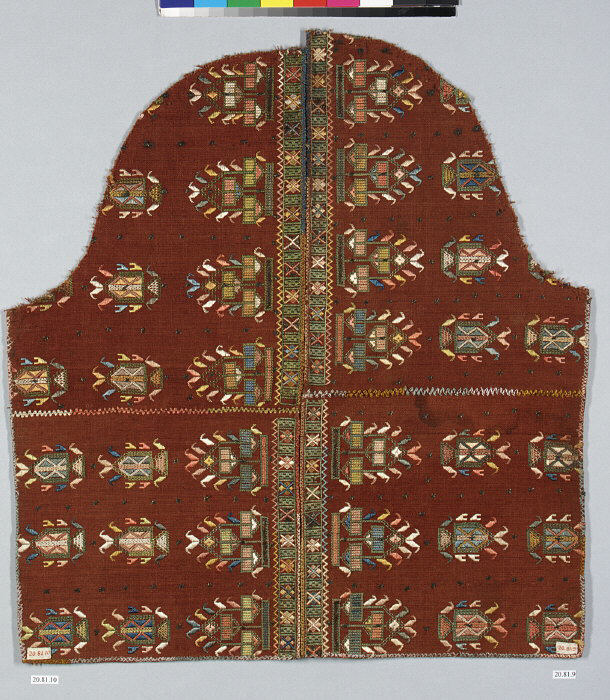
The Anatomy of Air: A Couture Analysis of Sleeve Construction at Katherine Fashion Lab
In the rarefied echelons of haute couture, the sleeve is rarely a mere appendage. It is a declaration of intent, a sculptural dialogue between the body and the garment’s architecture. At Katherine Fashion Lab, the latest standalone study—titled Sleeves: A Global Heritage in Silk and Metal—elevates this humble limb-covering to a masterclass in material alchemy and cross-cultural synthesis. The collection, devoid of full garments, presents sleeves as autonomous artifacts, each one a distilled thesis on drape, tension, and historical memory. This analysis deconstructs the technical virtuosity and conceptual rigor underpinning this remarkable body of work.
Material Dialectics: The Unlikely Marriage of Silk and Metal
The foundational genius of this study lies in its material pairing. Silk, with its inherent fluidity and lustrous sheen, is a medium of movement; metal thread (likely gilded or silver-plated) introduces rigidity, weight, and a reflective counterpoint. The resulting textile is not a simple blend but a tensioned composite—a fabric that behaves as both supple skin and structural armor. On a linen ground, chosen for its matte, absorbent neutrality, the silk and metal create a chiaroscuro effect: light catches the metallic filaments, tracing the path of every seam and fold, while the linen’s subtle tooth prevents the composition from becoming ostentatious.
This is not decorative embroidery in the conventional sense. Rather, the metal thread functions as an exoskeletal ribbing, strategically placed along stress points—the cap, the underarm, the cuff—to dictate the sleeve’s silhouette. In one piece, a bishop sleeve is allowed to billow in silk, but its volume is abruptly cinched by a cuff of tightly woven metal thread, creating a flared, almost baroque profile. In another, a tailored sleeve is entirely covered in a lattice of metal thread, transforming it into a rigid, almost medieval vambrace. The dialectic is clear: softness is only meaningful when juxtaposed with hardness, and movement is only perceptible against stillness.
Global Heritage: A Cartography of Cuts
The study’s subtitle, Global Heritage, is not a marketing flourish. It is a precise curatorial lens through which each sleeve is read. Katherine Fashion Lab has eschewed the Eurocentric canon of couture, instead drawing from a vast repository of global sleeve traditions. We see the puffed and slashed sleeves of 16th-century Ottoman kaftans, reinterpreted with a modern, minimalistic seam reduction—the slashes now mere slits through which a whisper of silk escapes. The hanging, wing-like sleeves of Mughal court attire (the jama) are reconstructed not as a separate piece but as a continuous extension of the shoulder, using a bias cut that allows the fabric to fall in a gravity-defying arc.
Further, the collection nods to the rigid, bell-shaped sleeves of Japanese furisode, but with a crucial inversion: instead of a single, wide opening, the sleeve is pleated horizontally, allowing the metal thread to hold each pleat in place, creating a fan-like structure that opens and closes with the wearer’s gesture. The narrow, embroidered sleeves of Eastern European folk costume are also present, though their dense floral motifs are abstracted into geometric, almost architectural patterns of metal thread, echoing the region’s vernacular textile traditions while propelling them into a futuristic idiom. This is not appropriation; it is translation—a rigorous study of silhouette, proportion, and function, then re-synthesized through the lab’s unique material vocabulary.
Technical Mastery: The Couture Imperative
From a purely technical standpoint, the execution is flawless. The hand-sewn seams are invisible, even where the metal thread is densely packed. The silk is pre-shrunk and stabilized to prevent puckering against the linen, while the metal thread is applied using a technique reminiscent of passementerie, yet adapted for a flat, two-dimensional surface. The result is a textile that is remarkably durable—a crucial consideration for a standalone study meant for repeated handling and close inspection.
One piece deserves particular mention: a pagoda sleeve (flared, open at the wrist) that incorporates a hidden internal structure of fine whalebone (now substituted with a flexible, spring-steel alloy) beneath the linen. This allows the sleeve to project outward from the body at a 45-degree angle, creating a dramatic, almost theatrical volume, while the silk and metal outer layer floats freely over the structure. The effect is one of controlled chaos—the metal thread catching the light as the sleeve moves, yet the silhouette remaining utterly precise. This is the hallmark of true couture: the ability to make the impossible appear effortless.
Standalone Study: The Sleeve as a Complete Object
By isolating the sleeve from the garment, the lab forces a radical re-evaluation of its role. A sleeve is no longer a component of a dress; it is a sculptural object, a wearable (or displayable) artifact that speaks of the arm’s potential. The presentation—each sleeve mounted on a slender, invisible armature, floating in a white gallery space—reinforces this. The viewer is invited to circle each piece, observing the interior seam allowances, the weight of the metal, the way the silk pools at the cuff. This close reading reveals the intentionality of every stitch.
Moreover, the standalone format allows for a focused study of ergonomics. Each sleeve is designed to be functional—the arm can be raised, lowered, and rotated—yet the constraints imposed by the metal thread create a deliberate resistance. This resistance is not a flaw but a feature: it forces the wearer to move with consciousness, to become aware of their own physicality. In an era of fast fashion and disposable garments, this study is a meditation on slowness, on the value of a single, perfectly executed element.
Conclusion: A New Lexicon for the Arm
Katherine Fashion Lab’s Sleeves: A Global Heritage in Silk and Metal is more than a technical exercise; it is a philosophical proposition. It argues that the sleeve is a microcosm of couture itself—a space where tradition meets innovation, where material constraints are transformed into creative catalysts, and where the human body is both honored and challenged. The use of silk and metal on linen is not merely a material choice but a narrative device, telling stories of trade routes, of imperial courts, of peasant craftsmanship, all filtered through the lab’s uncompromising modernist lens.
For the discerning collector or the student of fashion history, this study offers a rare opportunity to witness the essence of haute couture—not in a full gown, but in the precise, poetic articulation of a single, crucial element. It is a reminder that in the hands of a master, even the most ordinary part of a garment can become a vessel for extraordinary artistry. The sleeve, here, is not just a covering; it is a statement of intent, a silent but eloquent argument for the enduring power of handcraft and the limitless potential of a well-considered fold.