The Étui as Archetype: Symbolic Power, Historical Adornment, and 2026 Luxury Strategy
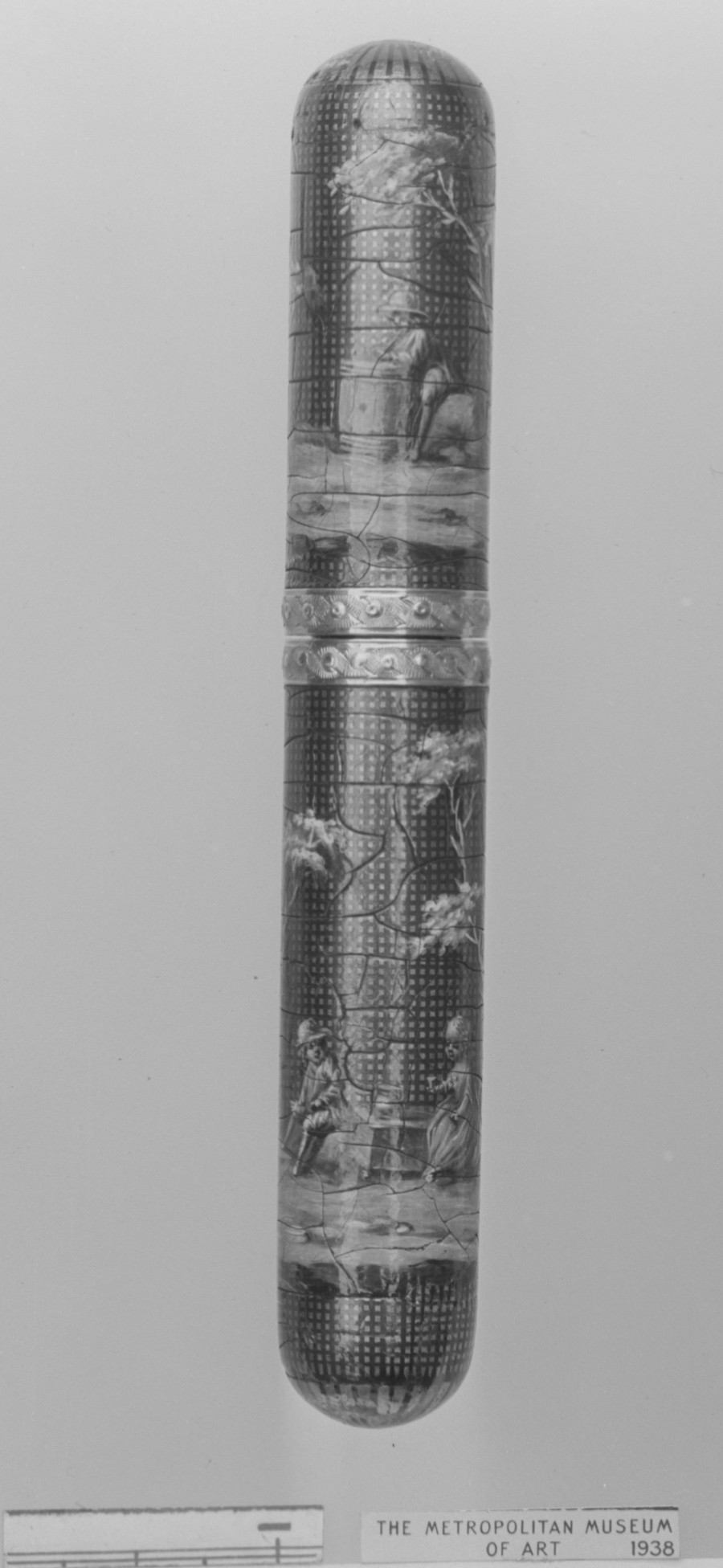
Within the pantheon of historical adornment, the étui—a small, often ornate case designed to hold needles, scissors, or other personal instruments—occupies a uniquely potent position. Far from being a mere utilitarian object, the étui functioned as a microcosm of cultural values, a portable talisman of status, and a vessel for spiritual and personal meaning. For Katherine Fashion Lab, a strategic examination of the étui’s ancient lineage offers a compelling blueprint for 2026 high-end luxury positioning. By decoding its symbolic power and material language, the brand can transcend transient trends and anchor its identity in a narrative of enduring, curated significance.
Origins and Material Semiotics: The Ancient Civilization Context
The étui’s genesis lies not in European salons, but in the practical and ceremonial life of ancient civilizations. In Egypt, Mesopotamia, and the Indus Valley, small containers for cosmetics, writing implements, and sacred tools were crafted with reverence. These were not disposable items; they were extensions of the self, often buried with their owners to accompany them into the afterlife. The choice of materials—gold, wood, tortoiseshell, and later vernis Martin—was never accidental. Each substance carried a distinct semiotic weight, communicating wealth, cosmic alignment, and personal virtue.
Gold: The Immutable and the Divine
Gold, in ancient contexts, was the metal of the sun and the gods. Its incorruptibility signified eternal life and divine favor. An étui adorned with gold was not merely expensive; it was a declaration of the owner’s proximity to the sacred. For Katherine Fashion Lab, gold remains the ultimate signifier of immutable value. In a 2026 market saturated with ephemeral digital goods, physical gold—whether in clasps, inlay, or filigree—offers a tactile anchor of permanence. The strategic implication is clear: use gold not as a trend accent, but as a foundational element that communicates the maison’s commitment to objects that outlive seasons and generations.
Wood and Tortoiseshell: The Organic and the Rare
In contrast to gold’s celestial permanence, wood introduced an organic, terrestrial warmth. Exotic woods—ebony, sandalwood, or thuya—were prized for their grain, fragrance, and rarity. Tortoiseshell, with its translucent, mottled amber patterns, added a layer of exoticism and vulnerability. In antiquity, the shell of the hawksbill turtle was a luxury import, signifying access to distant trade networks and a cosmopolitan worldview. The material’s inherent fragility paradoxically enhanced its prestige; it required careful handling, thereby imposing a slower, more deliberate mode of interaction. For Katherine Fashion Lab, this duality is crucial. A 2026 strategy should juxtapose the warmth of organic materials with the rigor of metalwork, creating a sensory tension that invites touch, contemplation, and ritualized use—a direct counterpoint to the frictionless, disposable culture of the modern consumer.
Vernis Martin: The Art of Simulated Opulence
The inclusion of vernis Martin—a high-gloss, lacquered finish developed in 18th-century France to imitate Asian lacquer—introduces a fascinating layer of intellectual sophistication. It represents the art of simulation and mastery. While gold and tortoiseshell were inherently precious, vernis Martin demonstrated that skill, innovation, and artistic execution could elevate humble materials to the status of luxury. This is a powerful metaphor for Katherine Fashion Lab’s 2026 positioning. It suggests that true luxury is not solely defined by raw material cost, but by the alchemical transformation performed by the artisan. The vernis Martin finish—often painted with pastoral scenes, floral motifs, or mythological figures—turned the étui into a miniature canvas, a private gallery for the owner’s taste and intellectual cultivation.
Symbolic Power and Spiritual Meaning: The Étui as a Personal Reliquary
The spiritual dimension of the étui cannot be overstated. In many ancient cultures, the act of carrying a small case was akin to carrying a personal reliquary. The objects within—a needle for mending, a stylus for writing, a vial for scent—were tools of agency and creation. To possess them was to hold the means of self-sufficiency and transformation. The étui, therefore, became a symbol of inner readiness and discreet power. It was not worn for overt display, as a crown or scepter might be, but for the quiet confidence of the bearer. This is a profound differentiation for modern luxury. In an era of logos and loud branding, the étui represents introverted luxury—a private, intimate form of adornment whose significance is known only to the wearer and a select circle of connoisseurs.
The Ritual of Unfolding
Furthermore, the étui’s design often involved a sequential opening—a clasp, a hinge, a nested compartment. This imposed a ritual of unfolding, a momentary pause that transformed a mundane action into a ceremony. In spiritual terms, this pause can be interpreted as a form of mindfulness, a conscious engagement with one’s tools and intentions. For Katherine Fashion Lab, this ritualistic quality is a strategic goldmine. The 2026 consumer, overwhelmed by digital noise, craves moments of analog focus. By designing products that require deliberate, tactile interaction—a slow reveal, a satisfying click, a hidden compartment—the brand can offer a form of secular meditation. The product becomes an instrument of well-being, not just an accessory.
Strategic Application: 2026 High-End Luxury Strategy
To translate this heritage into a forward-looking 2026 strategy, Katherine Fashion Lab must adopt a three-pillar approach: Narrative Curation, Material Authenticity, and Ritualized Engagement.
Narrative Curation: The Object as a Story
Each new étui-inspired piece should be launched with a provenance narrative that connects its design to a specific ancient civilization or symbolic archetype. For example, a collection inspired by Egyptian cosmetic cases could emphasize the theme of protection and rebirth, using gold and lapis lazuli. A line referencing Greek writing cases could focus on intellectual power and civic participation. This is not mere historical pastiche; it is a sophisticated form of storytelling that lends psychological depth to the product. The client is not buying a container; they are acquiring a fragment of a timeless myth, a piece of personal mythology.
Material Authenticity: The Anti-Trend Position
In 2026, the luxury market will be bifurcated between hyper-synthetic products and authentic, natural artifacts. Katherine Fashion Lab must unequivocally position itself in the latter camp. This means a renewed commitment to ethically sourced tortoiseshell alternatives (such as bio-resin with a hand-painted tortoiseshell effect) and certified exotic woods. The use of vernis Martin should be revived as a signature technique, presented as a heritage craft requiring hundreds of hours of labor. The strategy is to make the process as visible and valuable as the product. Marketing collateral should feature artisans at work, emphasizing the human hand and the impossibility of mass production.
Ritualized Engagement: From Product to Experience
The final pillar involves transforming the purchase into a ritual. The unboxing experience should mimic the étui’s sequential unfolding: a heavy outer box, a silk-wrapped interior, a final reveal of the object accompanied by a signed certificate of origin and a small, illustrated booklet explaining the symbolic meaning of the piece. This transforms the transaction into a ceremonial acquisition. Furthermore, Katherine Fashion Lab could offer a “Personalization Atelier” where clients select the materials, motifs, and internal compartments, effectively co-creating their own talismanic object. This bespoke service elevates the brand from a purveyor of goods to a curator of personal legacy.
Conclusion: The Enduring Power of the Small
In a world obsessed with scale and spectacle, the étui offers a counter-narrative of intimacy, precision, and depth. Its ancient origins remind us that true luxury has always been about the relationship between the object, the maker, and the wearer. For Katherine Fashion Lab, the étui is not merely a historical artifact to be studied; it is a living archetype to be re-embodied. By weaving together the symbolic power of gold, the organic soul of wood, the exotic allure of tortoiseshell, and the artistic genius of vernis Martin, the brand can create objects that are not just worn, but inhabited. The 2026 strategy is thus not about chasing the future, but about mining the past for timeless principles—principles that will resonate profoundly with a discerning clientele seeking meaning, permanence, and quiet power in an increasingly transient world. The étui, in all its smallness, holds a vast strategic lesson: less is never less, when it is imbued with more.