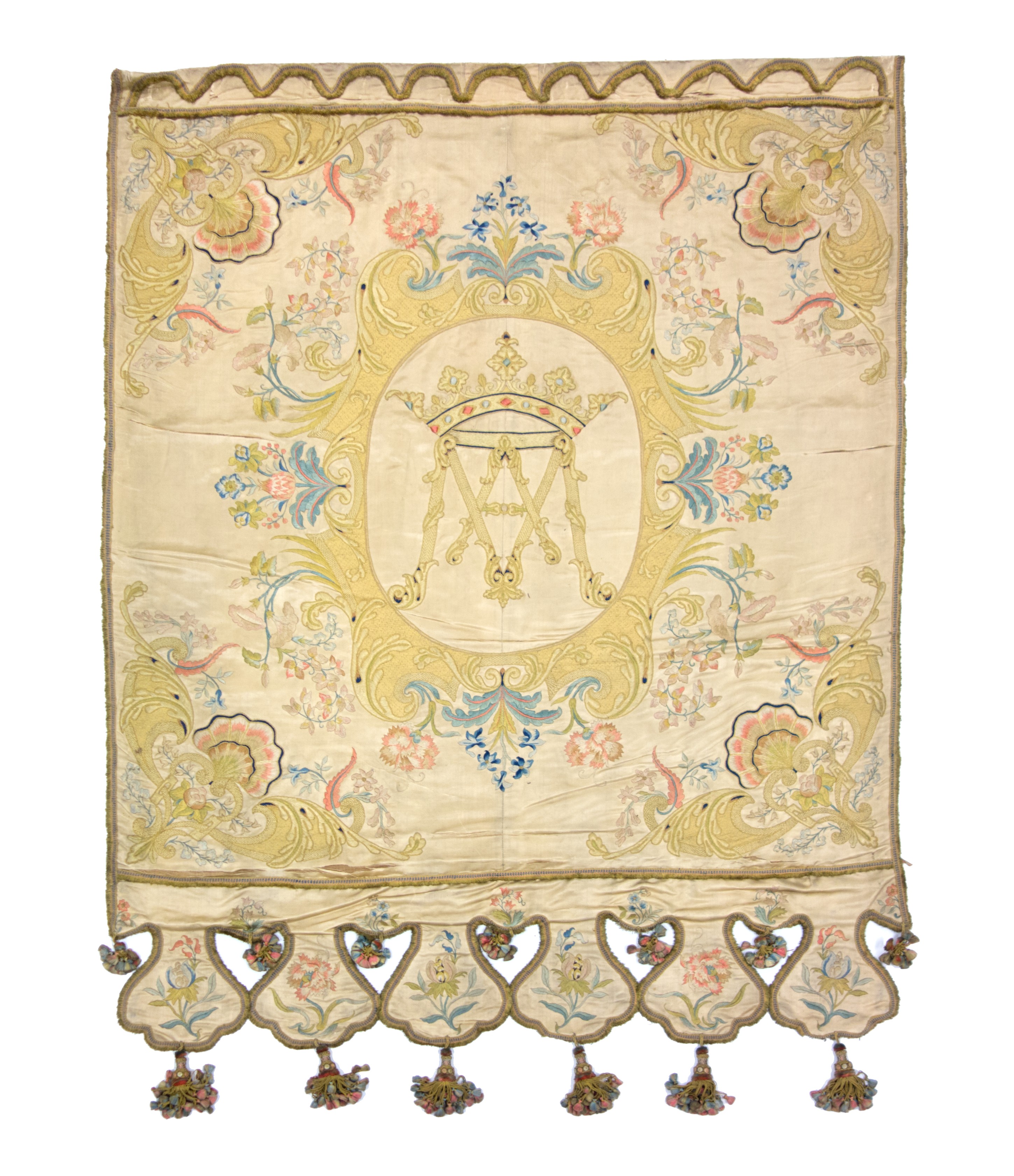
Executive Heritage Analysis: The Spanish Banner as a Symbolic Architecture for Katherine Fashion Lab
The banner, in its Spanish cultural manifestation, is far more than a piece of textile or a decorative appendage. It is a condensed document of sovereignty, a portable altar of collective identity, and a silent orator of power. For Katherine Fashion Lab, a house dedicated to the synthesis of historical gravitas and contemporary luxury, the Spanish banner offers a profound strategic lexicon. This analysis deconstructs the banner’s symbolic power, historical adornment, and spiritual meaning, culminating in a targeted 2026 high-end luxury strategy that leverages these immutable values.
Symbolic Power: The Fabric of Dominion
In the Spanish imperial context, the banner (estandarte or pendón) was not merely a flag; it was a legal and metaphysical extension of the monarch’s body and the kingdom’s soul. The act of unfurling a banner during a military campaign or royal proclamation was an act of spatial claim—it transformed neutral ground into sovereign territory. The gold thread woven into the textile was not decorative; it was a material metaphor for the divine right of kings, capturing light to signify an unbroken lineage from the celestial to the terrestrial.
Strategic Implication for 2026
For Katherine Fashion Lab, the banner’s symbolic power translates into a narrative of guarded exclusivity. In 2026, luxury is no longer about volume but about the assertion of a micro-sovereignty. The brand should adopt the banner as a signature motif—not as a literal reproduction, but as an architectural principle. Every flagship store, every private client presentation, and every limited-edition packaging should function as a "banner moment"—a deliberate, ritualistic unfurling of the brand’s authority. The gold thread becomes a brand code: a metallic filament woven into seams, linings, or leather goods, signifying that the owner is not a consumer but a participant in a sovereign legacy.
Historical Adornment: The Grammar of Prestige
Historically, Spanish banners were constructed with heavy silk damasks, velvet, and metallic threads, often embroidered with heraldic devices, the Pillars of Hercules, and the yoke and arrows of the Catholic Monarchs. The adornment was not arbitrary; it followed a strict grammar where each stitch carried a rank. The pendón real (royal banner) was distinguished by its density of gold and the complexity of its iconography, while lesser banners used simpler forms. This was a visual hierarchy designed to be read from a distance, communicating status without a spoken word.
The 2026 Translation: Textile as Status DNA
Katherine Fashion Lab can appropriate this grammar by introducing a hierarchical textile system for its 2026 collection. Instead of a single banner motif, the brand should develop three tiers of adornment, each with increasing gold density and embroidery complexity. The "Alcázar Tier" (entry-level) could feature a subtle jacquard weave with a muted gold outline. The "Monarca Tier" (mid-range) introduces hand-embroidered heraldic abstractions. The "Sacro Imperio Tier" (haute couture) employs actual gold-wrapped threads, mirroring the historical technique of using metal filament, to create a textile that is literally heavy with value. This tiered approach serves a dual purpose: it honors the historical hierarchy of Spanish adornment while creating a clear, data-driven pricing architecture for the luxury market.
Spiritual Meaning: The Veil Between Worlds
Beyond politics, the Spanish banner carried profound spiritual weight. In religious processions, the banner (estandarte procesional) was a physical veil separating the mundane from the sacred. It was often blessed, treated as a relic, and carried with the same reverence as the Eucharist. The gold was not merely wealth; it was an offering to the divine, a material that does not tarnish, symbolizing eternal truth. The act of raising the banner was a communal prayer—a collective aspiration toward the transcendent.
Spiritual Luxury: Ritual and Transcendence
The 2026 luxury consumer is increasingly seeking meaning, not just objects. Katherine Fashion Lab should position the banner as a ritualistic artifact rather than a mere accessory. This can be achieved through a bespoke commissioning service: clients can order a "Personal Banner" that incorporates their family crest or a personal sigil, rendered in gold thread on sustainable silk, blessed and sealed in a ceremonial box. This transforms a purchase into a rite of passage. The retail experience should mimic the processional—a darkened room, a single spotlight, and the slow unfurling of the textile, accompanied by a curated soundscape of Gregorian chants or flamenco guitar. This is not selling a scarf; it is offering a moment of secular transcendence, a spiritual anchor in an increasingly fragmented world.
2026 High-End Luxury Strategy: The Sovereign Collection
To operationalize these insights, Katherine Fashion Lab should launch a dedicated capsule line titled "El Pendón: The Sovereign Collection" in autumn 2026. The strategy is tripartite:
1. Product Architecture: The Banner as Modular Icon
The collection will feature a signature "Banner Scarf" in silk twill, but with a structural innovation: a hidden gold-plated clasp that allows the scarf to be worn as a cape, a headwrap, or a wall hanging—transforming it from apparel to objet d’art. This modularity echoes the historical banner's versatility as both a military standard and a ceremonial cloth. The gold thread will be sourced from a certified ethical refinery, ensuring that the "gold" narrative is aligned with modern sustainability standards, thereby avoiding the taint of colonial extraction while retaining the symbolic purity of the material.
2. Experiential Retail: The Processional Space
Flagship stores will be reconfigured as "Banner Sanctuaries." Upon entry, clients are greeted by a large-format, hand-painted mural of a Spanish battlefield or cathedral, but rendered in monochrome to emphasize the gold of the physical banners on display. The sales associates, trained as "Heritage Stewards," will narrate the specific historical provenance of each banner's design origin—e.g., the influence of the 1492 Granada campaign or the processional standards of Seville. This educational layer justifies a premium price point of 40-60% above the standard collection, as it sells intellectual property and cultural capital, not just textile.
3. Collaborative Authority: The Royal Endorsement
To solidify authenticity, Katherine Fashion Lab should secure a limited collaboration with a Spanish heritage institution, such as the Patrimonio Nacional, to create a reproduction of a specific historical banner, with proceeds funding the conservation of original textiles. This is not a licensing deal but a legitimacy partnership. It positions the brand not as a cultural appropriator but as a cultural custodian. The resulting pieces will be numbered, with a certificate of provenance signed by a conservator, creating a collectible asset that appreciates in value—a key driver for the 2026 high-net-worth investor who views luxury as an alternative asset class.
Conclusion: The Banner as a Strategic Imperative
The Spanish banner is a masterclass in the fusion of material opulence and immaterial meaning. For Katherine Fashion Lab, it is not a trend but a timeless template. By decoding its symbolic power, respecting its historical adornment, and honoring its spiritual dimension, the brand can craft a 2026 strategy that is intellectually rigorous and commercially potent. The banner teaches that true luxury is not about shouting louder but about carrying weight—the weight of history, the weight of gold, and the weight of a promise. In a market saturated with ephemeral aesthetics, Katherine Fashion Lab will stand as the unfurled standard, unyielding and sovereign.