DNA COLOR: #2729F1
ARCHIVE: DEEPSEEK-V4.5-CLEAN // RESEARCH UNIT
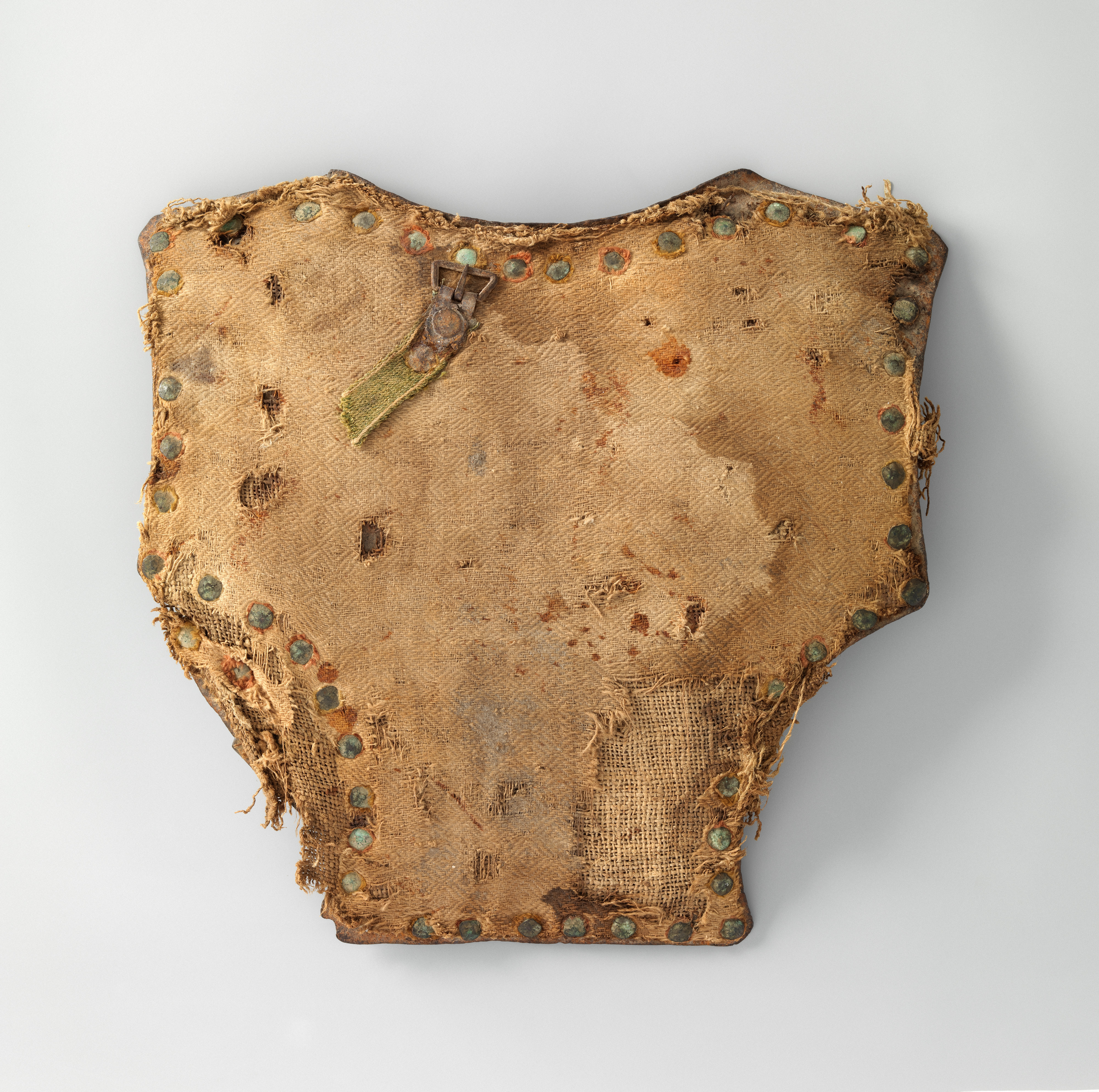
Couture Research: Backplate from a Brigandine
The Architecture of Defense: A Couture Analysis of the Italian Brigandine Backplate
In the rarefied atmosphere of haute couture, where silhouette is sovereign and structure is sacrosanct, the study of historical armor offers an unexpected yet profound lexicon. At Katherine Fashion Lab, we do not merely observe garments; we dissect the engineering of presence. Our current subject—a standalone Italian backplate from a brigandine, circa late 15th to early 16th century—is a masterclass in the fusion of ergonomic intelligence and aesthetic restraint. Constructed from steel, brass, leather, and a composite of hemp, cotton, and silk, this object transcends its martial function to become a foundational text on the articulation of the human torso. It is not armor as costume; it is armor as second skin, a precursor to the modern corsetry and sculptural tailoring that define our atelier’s ethos.
Deconstructing the Silhouette: The Back as a Canvas
Contemporary fashion often prioritizes the frontal plane—the lapel, the placket, the décolletage. The brigandine backplate inverts this hierarchy, treating the dorsal surface as the primary site of architectural expression. Unlike the rigid, one-piece cuirass of earlier periods, this backplate is a marvel of segmented articulation. Overlapping steel plates, or lames, are riveted to a resilient textile foundation, creating a flexible yet unyielding carapace. This is not a shell; it is a kinetic system.
In couture terms, we analyze this as a series of horizontal godets or boned seams. Each lame acts as a structural insert, allowing for the natural flexion of the scapulae and the lateral bending of the spine. The result is a silhouette that is simultaneously imposing and fluid—a paradox that defines high fashion. The backplate does not flatten the back; it *celebrates* its topography. The subtle convexity over the shoulder blades creates a powerful, almost equestrian stance, while the flared lower lames mimic the bell of a tailored coat, providing room for the hips without sacrificing the defined waist. This is the blueprint for a modern power suit: a garment that imposes posture through structural dialogue, not brute force.
Material Poetry: Steel, Brass, and the Textile Substrate
The material hierarchy of this piece is a lesson in functional luxury. The primary steel plates, likely low-carbon for malleability, are not polished to a mirror finish. Instead, they retain a subtle, muted patina—a deliberate choice that speaks to a non-reflective, tactical application. This matte finish is the antithesis of the gaudy parade armor of the period; it is a whisper, not a shout. Yet, against this utilitarian ground, the brass rivets and edge bindings provide a counterpoint of warm, golden light. These are not mere fasteners; they are jewels in a setting, strategically placed to catch the eye along the spine and shoulders, creating a visual rhythm that guides the gaze downward.
The true innovation, however, lies in the substrate. The base layer is a dense hemp canvas, chosen for its tensile strength and resistance to moisture. Upon this, a layer of cotton wadding provides cushioning and impact absorption—the original performance padding. But it is the final layer, the silk lining, that elevates this from mere protection to couture. Silk against the skin is not a practical choice; it is a sensual one. It acknowledges that even in the heat of conflict, the wearer is a person of distinction. This layering—rough hemp, soft cotton, luxurious silk—is a direct analogue to the modern couture sandwich of canvas, horsehair, and silk charmeuse. It is a hierarchy of touch, where the unseen is as meticulously considered as the exposed surface.
The Couture Construction: Rivets as Stitches, Leather as Seams
Examining the construction is to witness a pre-industrial sewing machine. The steel lames are attached to the textile base via leather straps and brass rivets, a technique that allows for micro-adjustments and even replacement of individual plates—a modular design philosophy that modern luxury brands are only now rediscovering. Each rivet is a stitch; each strap is a seam. The spacing is not random. The rivets are clustered at stress points—the center spine, the lateral waist—while sparser along the shoulder blades, allowing for maximum flexibility where the body demands it most.
This is the DNA of tailored construction. In our atelier, we use boning channels and floating linings to achieve a similar effect. The backplate’s internal structure, with its vertical spine of overlapping plates, prefigures the central seam of a corset, providing rigid support while the side panels, with their smaller, more numerous lames, function like bias-cut panels, draping and flexing with the body’s motion. The leather edging, rolled and stitched, is the ancestor of our piped seams, offering a clean, durable finish that prevents chafing and fraying. It is a garment built to be repaired, not replaced—a direct challenge to the disposable ethos of fast fashion.
Standalone Study: The Object as Artifact and Inspiration
To study this backplate in isolation, divorced from its full brigandine, is to appreciate its sculptural autonomy. It is a freestanding piece of wearable art, akin to a modern bustier or a high-fashion moto jacket. The absence of the front plate invites a dialogue about vulnerability and protection—what is hidden and what is revealed. In a contemporary context, this translates to the high-low hemline, the cutout, the sheer panel. The backplate suggests that true power is not about covering everything but about controlling what is seen.
For Katherine Fashion Lab, this artifact informs our current exploration into exoskeletal tailoring. We are translating its principles into a capsule collection of evening wear: a silk velvet gown with a structural, corseted back that mimics the lames’ articulation; a tailored blazer with brass hardware that echoes the rivet placement; a leather jacket with a hidden hemp-cotton core for structure. The backplate teaches us that strength is not rigid. It is a dynamic, responsive system that must move with grace under pressure.
The Italian brigandine backplate is not a relic; it is a thesis. It argues that the most profound innovation in dress is the silent, unseen engineering that allows the wearer to move with authority. Its legacy lives on in every perfectly boned bodice, every meticulously constructed shoulder, every garment that feels like armor but moves like silk. In this piece, we find the eternal truth of couture: that true luxury is not in ornamentation, but in the perfection of structure.
Katherine Studio Insight
Katherine Lab: Steel, brass, leather, textile (hemp, cotton, silk) integration for FW26.