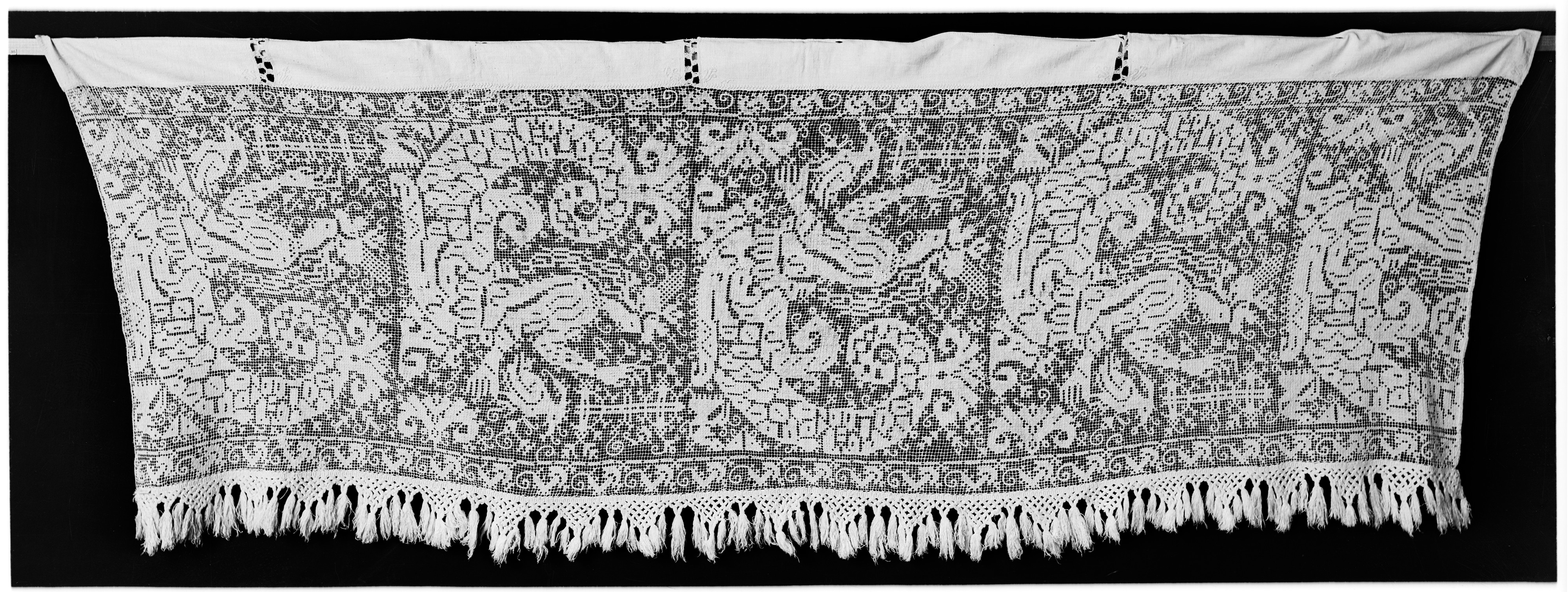
The Dialectics of Suspension: A Couture Analysis of Katherine Fashion Lab’s “Hanging”
In the rarefied echelons of haute couture, where garment construction transcends mere utility to become a form of sculptural philosophy, Katherine Fashion Lab’s latest standalone study, titled “Hanging,” presents a compelling thesis on the dialectics of suspension. This is not a garment designed for the pedestrian rhythms of daily life; it is a meditation on weight, gravity, and the delicate tension between structure and dissolution. By deliberately isolating this piece from a broader collection, the Lab positions “Hanging” as a pure, unadulterated investigation into material memory and artisanal technique. The result is a work that demands not just visual appreciation but intellectual engagement, challenging the viewer to reconsider the very essence of what it means for a fabric to exist in space.
The title itself, “Hanging,” is deceptively simple, yet it operates on multiple semiotic levels. On the surface, it refers to the garment’s physical state—a suspended form, perhaps from the shoulders or a structural under-corset, that defies the natural pull of terrestrial forces. But more profoundly, it evokes a state of liminality, of being caught between completion and unraveling. This is a garment that hangs in the balance, both literally and metaphorically, between the rigidity of couture tradition and the fluidity of contemporary artistic expression. The Lab’s decision to present this as a standalone study—unmoored from the narrative of a seasonal collection—amplifies this sense of existential pause, allowing the piece to exist as a pure object of contemplation rather than a commodity for consumption.
Material Alchemy: The Intersection of Embroidered Net and Punto Tecnica
The material palette of “Hanging” is where Katherine Fashion Lab’s intellectual rigor becomes most apparent. The primary substrate is an embroidered net, a foundation that is itself a paradox. Netting, by its very nature, is a structure of voids—a grid of absence that defines presence. To embroider upon this open weave is to engage in a dialogue with emptiness, to impose solidity upon a field of potential nothingness. The Lab’s artisans have executed this with a precision that borders on the obsessive, using thread to trace arabesques of flora and abstract geometry that seem to float, unanchored, upon the translucent base. The effect is one of architectural fragility, where each stitch is a deliberate act of defiance against the fabric’s inherent tendency to collapse into formlessness.
Yet, the true mastery lies in the integration of two specific Italian needlework traditions: punto à tela and punto à rammendo. Punto à tela, or “canvas stitch,” is a counted-thread technique that produces a dense, woven-like surface, often used to create geometric patterns with a remarkable structural integrity. In “Hanging,” this technique is deployed strategically at stress points—the shoulders, the waist, the hem—to create a hidden exoskeleton that supports the garment’s ethereal form. The contrast is stark: the open, breathable net versus the impenetrable, tapestry-like density of the punto à tela. This is not merely decorative; it is a functional engineering decision that allows the piece to hold its shape against gravity while maintaining a visual weightlessness.
In stark opposition, punto à rammendo—literally “darning stitch”—is a mending technique, historically used to repair worn or torn fabric by recreating the original weave. In the hands of Katherine Fashion Lab, this humble restorative practice is elevated to a form of artistic subversion. The Lab employs punto à rammendo not to repair damage, but to create it—to introduce deliberate, ghostly patches of re-weaving that disrupt the smooth surface of the net. These areas appear as spectral scars, suggesting a garment that has been broken and healed, or perhaps one that is in the process of decomposing and being reborn. This use of a restorative technique for destructive, or at least transformative, purposes is a bold conceptual move. It forces the viewer to question the value we place on perfection and originality, suggesting that beauty may reside in the traces of intervention, in the visible hand of the maker who has chosen to unmake and remake.
Global Heritage and the Cartography of Craft
The designation of “Global Heritage” as the origin is a crucial framing device. It signals that the techniques employed are not the proprietary inventions of the Lab, but rather the accumulated wisdom of diverse cultures, passed down through generations of anonymous artisans. Punto à tela and punto à rammendo are deeply rooted in European, particularly Italian, textile traditions, yet the embroidered net evokes the intricate latticework found in Eastern European folk dress, Middle Eastern meshwork, and even the delicate fishnet constructions of South American indigenous weaving. By synthesizing these geographically disparate influences, Katherine Fashion Lab creates a garment that is a cartography of human ingenuity, a wearable map of global craft heritage.
This is not cultural appropriation but cultural homage, executed with the reverence of a scholar and the skill of a master. The Lab does not simply borrow motifs; it internalizes the logic of each technique, understanding how the tension of the thread, the spacing of the stitches, and the choice of fiber all contribute to the final expression. The result is a piece that feels both ancient and hyper-modern, as if it has been excavated from a future archaeological site where the boundaries between cultures have dissolved into a unified, transcendent language of form.
Structural Poetry: The Contradiction of Weight and Air
From a structural perspective, “Hanging” is a masterclass in the manipulation of gravitational perception. The garment appears to be in a state of constant, graceful fall, yet it is held aloft by an invisible network of internal supports, likely a combination of boned corsetry and the rigid, canvas-like panels of punto à tela. This creates a profound tension: the eye reads the flowing, translucent layers as weightless, while the mind understands the immense labor and material density required to achieve such an illusion. The silhouette is neither strictly A-line nor columnar; it is organic, almost geological, with strata of net and embroidery that build and recede like sediment layers in a cliff face.
The hem, where the garment meets the void, is particularly telling. Here, the punto à rammendo becomes more prevalent, causing the fabric to fray and dissolve into a fringe of loose threads and broken loops. This is the garment’s point of maximum entropy, where the meticulously constructed structure begins to surrender to chaos. It is a powerful metaphor for the passage of time, for the inevitable decay that awaits all material objects, yet it is rendered with such deliberate artistry that it feels like a choice, not an accident. The garment is not falling apart; it is choosing to disintegrate, to return to the raw threads from which it was born. This is the ultimate expression of “Hanging”—not as a static state, but as a process, a continuous act of becoming and unbecoming.
Conclusion: A Standalone Manifesto
In the context of contemporary fashion, where speed and disposability often reign supreme, Katherine Fashion Lab’s “Hanging” stands as a defiant manifesto for slowness, for material intelligence, and for the profound emotional resonance of handcraft. As a standalone study, it eschews the commercial pressures of a runway show, allowing the viewer to engage with the piece on its own terms, to trace the intricate paths of its threads, and to contemplate the philosophical questions it raises about permanence, repair, and the beauty of imperfection.
This is not a garment to be worn; it is a garment to be experienced. It hangs in the gallery of the mind, a suspended question about the nature of creation itself. The embroidered net is a sieve for light, the punto à tela a fortress of tradition, and the punto à rammendo a whisper of mortality. Together, they form a cohesive, breathtaking whole that reaffirms couture’s highest potential: not to clothe the body, but to elevate the spirit, to make tangible the intangible forces of gravity, time, and human will. Katherine Fashion Lab has not simply created a dress; it has created a philosophical object of rare and enduring power.