Executive Heritage Analysis: The Shabti of Yuya
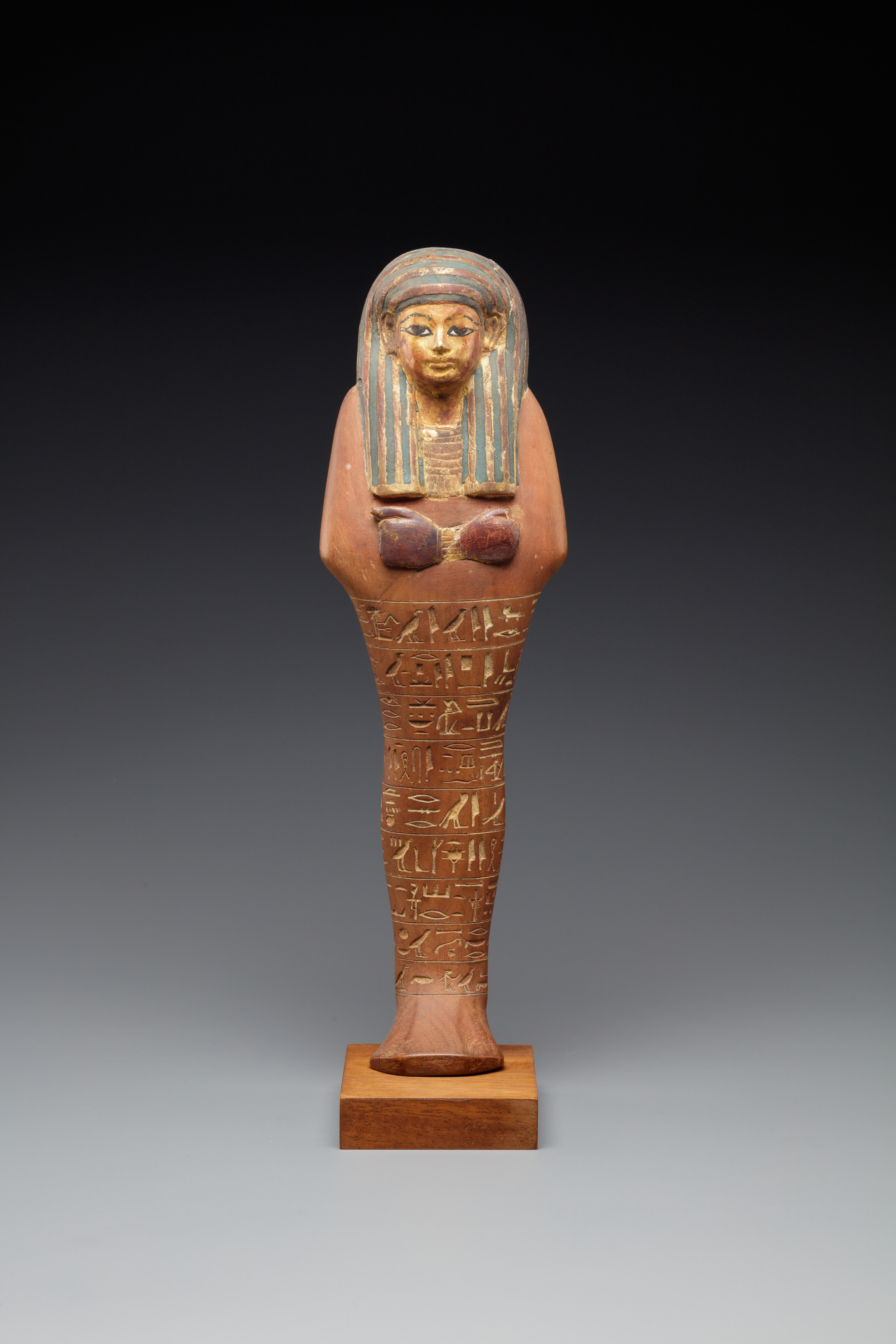
Katherine Fashion Lab presents this strategic heritage analysis of the Shabti of Yuya, a singular artifact from the 18th Dynasty of ancient Egypt (circa 1390–1352 BCE). Discovered in the tomb of Yuya, a powerful courtier and father-in-law of Pharaoh Amenhotep III, this shabti is not merely a funerary object but a profound expression of status, spiritual insurance, and material mastery. For a luxury house operating in 2026, this artifact offers an indispensable lexicon of symbolic power and historical adornment—one that can be translated into a high-end strategy rooted in cultural authenticity, material rarity, and metaphysical storytelling.
Symbolic Power: The Servant-Function as Ultimate Luxury
The shabti (or ushabti) was a funerary figurine designed to perform manual labor on behalf of the deceased in the afterlife. The word itself derives from the ancient Egyptian šbt, meaning "to answer," reflecting the figurine’s role as a responsive servant. In the case of Yuya, however, the shabti transcends its utilitarian function. Crafted from cedar—an imported, resin-rich wood—and adorned with gold leaf and polychrome paint, this object signals not just readiness for eternal service but the power to command service. In a 2026 luxury context, this inversion is critical: true luxury is not the ability to possess objects but the ability to delegate the mundane, leaving the owner free for the transcendent. A Katherine Fashion Lab collection inspired by this shabti should therefore emphasize effortless authority—garments and accessories that convey control without visible labor, using materials that whisper of distant origins and complex supply chains.
Hierarchy Encoded in Material
The choice of cedar is deliberate. Lebanon’s cedar was a diplomatic and commercial import, reserved for temples, royal barges, and elite funerary goods. Its scent—persistent, aromatic, and associated with preservation—imbued the shabti with an olfactory dimension of sanctity. Gold, meanwhile, was considered the flesh of the gods, a metal that did not tarnish and thus symbolized eternal radiance. The paint, typically in hues of ochre, blue, and green, was not decorative but ritually activated: each pigment carried protective and regenerative properties. For Katherine Fashion Lab, this triad—rare wood, divine metal, and ritual color—offers a material strategy for 2026: sourcing certified ancient-forest woods, using recycled or lab-grown gold with a documented provenance narrative, and developing pigment-based dyes that reference Egyptian mineral palettes. The result is a collection where every material choice is a claim to historical depth and spiritual resonance, not mere aesthetic preference.
Historical Adornment: The Body as a Vessel of Eternity
Yuya’s shabti is not worn on the body, but it is an extension of the body’s journey. Its mummiform shape—wrapped, arms crossed, holding implements—mirrors the deceased’s own mummified form, creating a prosthetic self that continues existence beyond death. This is adornment at its most existential: not covering the skin but replacing the self. In ancient Egyptian culture, adornment was never superficial; it was a technology of transformation. The shabti’s painted details—the false beard, the headdress, the crook and flail—are not costume but codified insignia of rank and divine alignment. For a luxury house, this suggests a 2026 strategy that treats every garment as a transformative shell, not a seasonal trend. Structured silhouettes that evoke the mummiform line, yet are engineered for modern movement, can carry this heritage without descending into costume. The adornment should be architectural, framing the wearer as a monument in motion.
Color as Spiritual Technology
The polychrome paint on Yuya’s shabti is a lesson in chromatic symbolism. Blue (Egyptian blue, faience-like) represented the Nile, fertility, and rebirth. Green symbolized the regenerative powers of vegetation. Black (often used for the skin of Osiris) denoted fertility and the fertile silt of the Nile, while white stood for purity and the sacred. Gold, of course, was the color of the sun god Ra. In a 2026 high-end strategy, Katherine Fashion Lab can deploy this palette not as a "theme" but as a semantic system. A capsule collection could assign specific spiritual benefits to each colorway: blue for clarity and renewal, green for growth and resilience, black for grounding and authority. The marketing narrative would not be "inspired by Egypt" but rather "activated by Egyptian color theory," offering clients a form of wearable intentionality. This moves beyond mere heritage appropriation into a respectful, scholarly recontextualization that adds value to the wearer’s daily ritual.
Spiritual Meaning: The Afterlife as a Client Journey
The shabti of Yuya embodies a core Egyptian belief: that death is not an end but a passage requiring preparation, provision, and protection. The figurine was placed in the tomb as a guarantee of continued existence. For a luxury brand in 2026, this translates into a powerful client experience model. The purchase of a high-end item should be framed as an investment in a permanent self, not a disposable acquisition. Katherine Fashion Lab can introduce a "Legacy Atelier" service, where clients commission bespoke pieces—perhaps a tailored coat or a ceremonial gown—that are documented, numbered, and stored in a climate-controlled archive, akin to a tomb deposit. The client receives a "Book of the Dead"-inspired certificate, not as a gimmick but as a serious legal and emotional document affirming the piece’s place in their personal history. This strategy leverages the shabti’s spiritual function: the object is not for the present moment but for the eternal client.
Ritual in Production
Ancient Egyptian artisans did not separate craft from ritual. The creation of a shabti involved prayers, incantations, and precise timing relative to celestial events. For a 2026 luxury strategy, this suggests a return to slow, ritualized production. Katherine Fashion Lab could adopt a "ritual calendar" for its flagship collections, releasing pieces on solstices or equinoxes, aligning with ancient Egyptian festivals. Each garment could be blessed or "consecrated" by a modern artisan in a brief, documented ceremony, with the process filmed for digital storytelling. This is not cultural appropriation but cultural homage, executed with academic rigor and transparency. The spiritual meaning becomes a tangible differentiator in a market saturated with fast fashion and faster communication.
2026 High-End Luxury Strategy: From Artifact to Aesthetic Authority
Integrating the Shabti of Yuya into Katherine Fashion Lab’s 2026 strategy requires a three-pillar approach: Provenance as Narrative, Material as Metaphor, and Client as Pharaoh.
Pillar One: Provenance as Narrative
In 2026, the luxury consumer is increasingly educated and skeptical. Generic "inspired by ancient Egypt" claims will fail. Instead, Katherine Fashion Lab should partner with Egyptologists and museums to produce a verifiable heritage dossier for the collection. This dossier would trace the shabti’s iconography, material sourcing, and funerary context, presented in a beautifully bound volume or an interactive digital archive. The collection’s name—perhaps "The Answering Servant" or "Yuya’s Charge"—should be trademarked and explained. This transforms the artifact from a decorative reference into a brand asset with legal and cultural weight.
Pillar Two: Material as Metaphor
The shabti’s cedar, gold, and paint are not just materials; they are metaphors for endurance, divinity, and intention. For 2026, Katherine Fashion Lab should source cedar from certified sustainable groves, use recycled or fair-mined gold, and develop a proprietary "Nile Pigment" line using natural ochres and minerals. Each material’s story—its origin, its transformation, its symbolic load—should be printed on the garment’s interior label, turning the act of dressing into a conscious ritual. This aligns with the 2026 consumer’s demand for sustainability and traceability, but elevates it from mere compliance to spiritual ecology.
Pillar Three: Client as Pharaoh
The shabti served a pharaoh’s father-in-law; its purpose was to ensure his eternal comfort. Katherine Fashion Lab’s 2026 strategy should position the client as the pharaoh—the singular authority for whom the entire house works. This is expressed through a private client program that offers not just products but existential services: bespoke fittings conducted in a "temple-like" atelier, personal stylists trained in Egyptian symbolism, and a "Legacy Wardrobe" that is photographed, archived, and passed down to heirs. The client is not buying a dress; they are commissioning a funerary monument for their living self. This psychological positioning is rare and powerful, creating deep loyalty and word-of-mouth among high-net-worth individuals who seek meaning beyond material.
Conclusion: The Shabti as a Strategic Mirror
The Shabti of Yuya is a masterpiece of functional art, but its deeper value lies in its philosophy: that preparation, material integrity, and symbolic clarity confer immortality. For Katherine Fashion Lab in 2026, this artifact is not a nostalgic relic but a strategic mirror. It reflects a future where luxury is measured by resonance—cultural, spiritual, and material—rather than volume or visibility. By adopting the shabti’s principles of delegated power, transformative adornment, and ritualized production, the house can offer its clients not just clothing but a raison d’être. The result is a brand that does not follow trends but sets a standard for how high-end fashion can honor the past while defining the future. This is not heritage marketing; it is heritage governance—a disciplined, scholarly, and aspirational approach that positions Katherine Fashion Lab as the arbiter of eternal elegance.