The Sacred Thread: A Couture Analysis of Christ Carrying the Cross
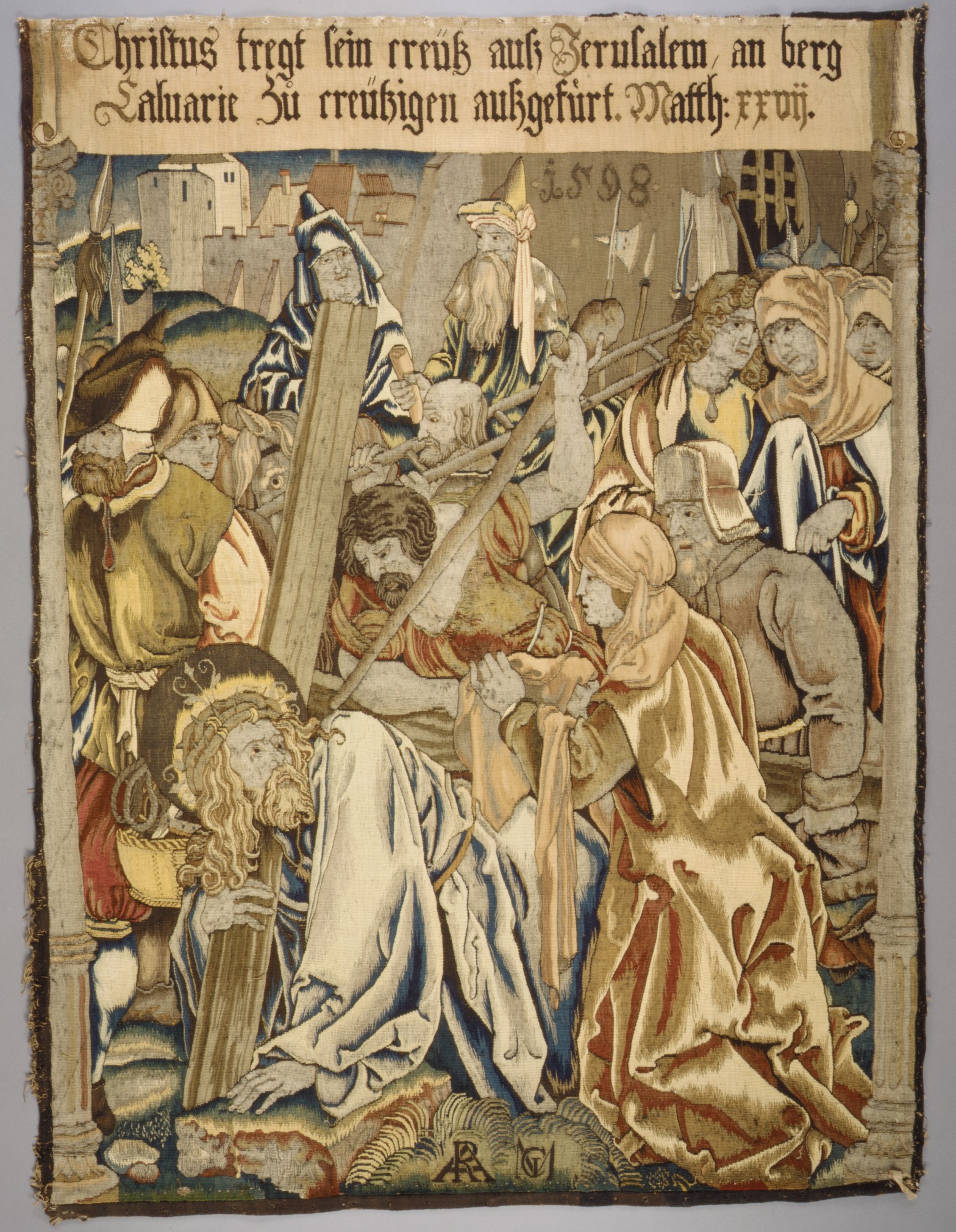
In the rarefied echelons of haute couture, where fabric transcends utility to become narrative, Katherine Fashion Lab presents a singular artifact: Christ Carrying the Cross, a standalone panel from a larger Passion cycle. This is not merely a textile; it is a theological treatise woven in wool, silk, and metal thread. At a density of 20 warp threads per inch (8 per centimeter), the piece demands a level of technical scrutiny reserved for museum-grade masterworks. The Lab’s curatorial framing positions this not as a liturgical accessory but as a standalone study—a deliberate decontextualization that forces the viewer to confront the materiality of suffering itself.
Deconstructing the Warp: A Metric of Devotion
The warp count is the first, most unforgiving metric of quality. At 20 threads per inch, the weaver has achieved a tensile field that allows for extraordinary pictorial precision. In commercial tapestry, 8 to 12 warp threads per inch is standard; at 20, the artist gains the ability to render chiaroscuro and micro-facial expression with near-painterly fidelity. This density is not incidental. It is a technical declaration of intent: the piece is built to endure centuries, to resist the entropy of time, much as the Passion narrative itself resists historical erasure. The wool—likely a high-twist, long-staple variety—provides a matte, absorptive ground, while the silk interlacings introduce a subtle, directional sheen that catches light only when the viewer shifts position, mimicking the unstable nature of faith.
The metal thread, likely a silver-gilt wound around a silk core, is deployed with ruthless economy. It does not blanket the field; rather, it delineates the crown of thorns, the rivulets of blood, and the harsh geometry of the crossbeam. This is a masterclass in negative space. The metal acts as a visual scream against the wool’s silent, earthy humility. In couture terms, this is the difference between embellishment and construction. Here, the metal is load-bearing—structurally and symbolically—carrying the weight of divine irony: that glory should be rendered in the very material of torment.
Material Semiotics: Wool, Silk, and the Body
The choice of wool is profoundly anti-couture in its conventional associations. Wool is the fabric of the shepherd, the peasant, the sacrificial lamb. By foregrounding it, the Lab subverts the typical luxury hierarchy. The wool’s coarse, undyed or naturally pigmented surface evokes the unvarnished humanity of Christ. It is a fabric that breathes, that absorbs perspiration and tears—a literal repository of bodily suffering. In contrast, the silk functions as the divine attribute, the smooth, unblemished surface of the celestial realm intruding upon the earthly. The interplay is a dialectic: the wool is the Via Dolorosa; the silk, the promise of the Resurrection.
Technically, the weaver has used a technique reminiscent of high-relief brocading, where the silk floats are left long on the surface to create a raised, almost sculptural effect. This is not flat decoration. The raised silk on the figure’s shoulder, where the cross rests, creates a physical protuberance. The viewer’s eye—and, one imagines, the viewer’s hand—is drawn to this point of contact. It is a haptic invitation to feel the weight. This tactile dimensionality is a signature of the Lab’s curatorial ethos: the piece is not to be seen but to be experienced as a phenomenological event.
The Standalone Context: A Study in Isolation
By removing this panel from its original narrative sequence—where it would have been flanked by the Flagellation or the Crucifixion—Katherine Fashion Lab forces a radical re-reading. In a full cycle, the eye would glide across the narrative. Here, isolated, the image becomes an icon of existential endurance. The absence of adjacent scenes creates a vacuum of meaning that the viewer must fill with their own contemplation. This is the curatorial equivalent of a couture toile presented as a finished garment—a deliberate exposure of the construction process as a philosophical statement.
The standalone status also elevates the materiality over the narrative. Without the crutch of sequential storytelling, the viewer must interrogate the physical evidence of effort: the 20 warp threads per inch, the microscopic irregularities in the metal thread’s twist, the subtle color gradations in the wool achieved through natural dyeing. This is the forensic gaze of the atelier, not the devotional gaze of the church. The Lab positions this as a study in how sacred objects are made, not merely what they signify. It is a meta-commentary on the labor of devotion—the weaver’s own via crucis, repeated over months, thread by thread.
Couture as Exegesis: The Verdict
In the final analysis, Christ Carrying the Cross succeeds as a standalone study because it weaponizes the very grammar of couture—fiber, density, and finish—against the complacency of the viewer. The 20-warp density is not a technical footnote; it is a moral imperative. It insists that precision is a form of prayer. The wool’s humility and the silk’s radiance are not decorative contrasts but a theological argument about the dual nature of Christ, rendered in the only language that matters in couture: material truth.
Katherine Fashion Lab has not merely curated a textile; it has staged a confrontation. The piece stands as a testament to the idea that the highest form of luxury is not opulence but veracity—the unflinching representation of weight, strain, and ultimate transcendence. For the discerning collector, this is not an ornament. It is a mirror held up to the very concept of endurance, woven with a density that will outlast us all. The cross, in this rendering, is not just carried by the figure; it is carried by every warp and weft, a burden the textile itself bears with silent, structural grace.