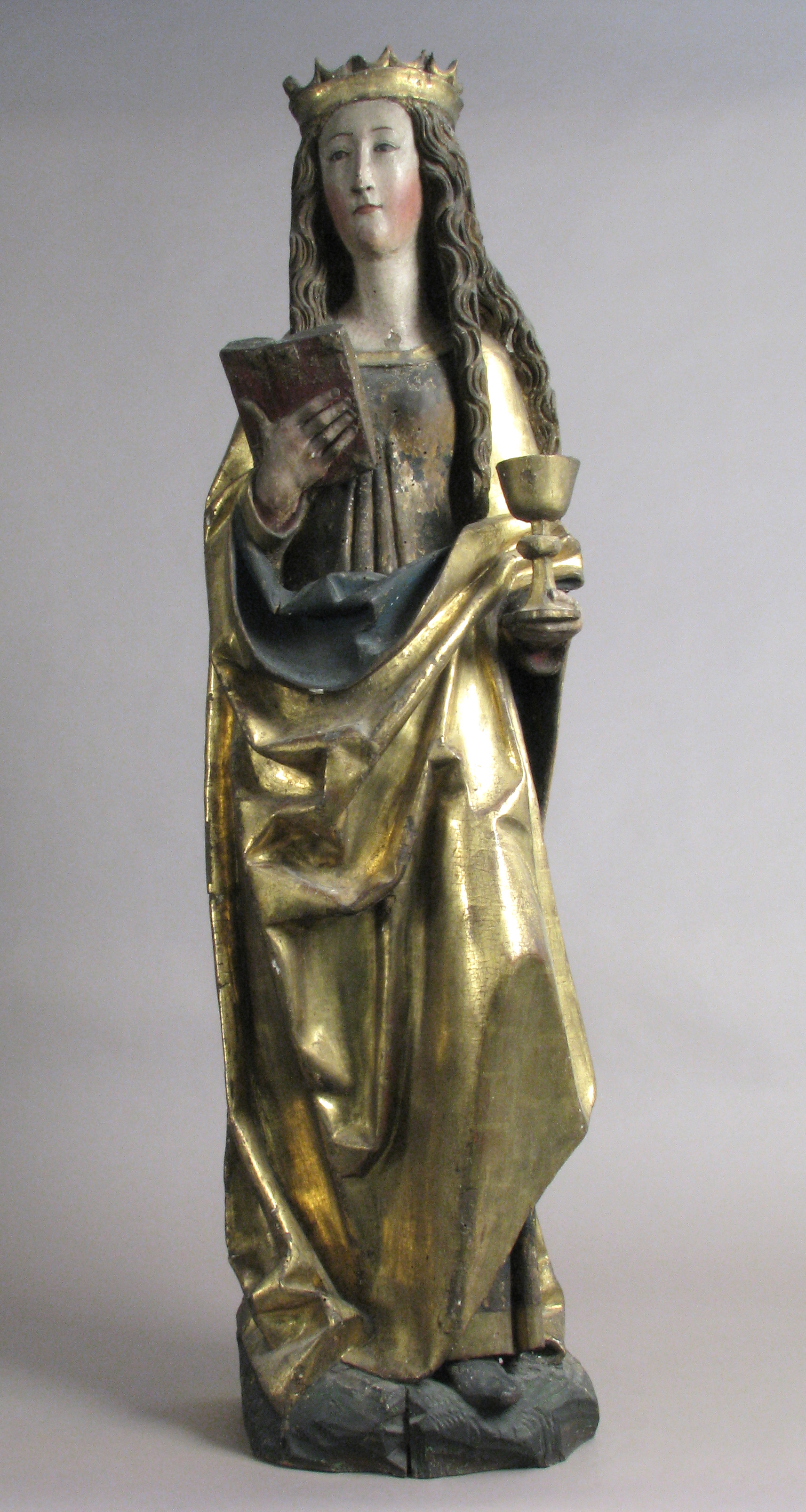
Saint Barbara in Limewood: A Heritage Analysis for Katherine Fashion Lab
The veneration of Saint Barbara, particularly within the Germanic artistic tradition, offers a profound case study in the intersection of spiritual iconography and material culture. For Katherine Fashion Lab, the analysis of a 15th-century limewood sculpture—painted and gilded—transcends mere art historical appreciation. It serves as a strategic blueprint for translating sacred symbolism into a 2026 high-end luxury language. This analysis deconstructs the object’s symbolic power, historical adornment, and spiritual meaning to propose a coherent, market-ready heritage strategy.
Symbolic Power: The Tower as a Brand Archetype
The dominant iconographic attribute of Saint Barbara is the tower, typically rendered with three windows. In the German sculptural tradition, this is not a passive backdrop but a structural and psychological anchor. The tower symbolizes refuge, intellectual fortitude, and the sanctity of a secluded inner life. For a luxury maison, the tower represents the ultimate verticality of aspiration—a private, unassailable space of self-cultivation. The three windows are allegorically interpreted as the Holy Trinity, but in a secular luxury context, they signify a tripartite brand philosophy: Heritage, Craft, and Transcendence.
Strategically, this symbol offers a potent counter-narrative to the contemporary noise of fast fashion. The 2026 consumer is not merely purchasing a garment or accessory; they are acquiring a sanctuary of identity. Katherine Fashion Lab can leverage the tower motif as a recurring geometric signature—in hardware, jacquard weaving, or architectural cut—to communicate a fortress-like commitment to quality and privacy. The gilded edges of the sculpture, catching light to delineate the tower’s contours, translate into metallic piping or threadwork that defines the silhouette, creating a visual metaphor of inner strength made externally radiant.
Historical Adornment: Limewood, Paint, and Gilding as Material Narrative
The choice of limewood (linden) is not incidental. In Germanic workshops, limewood was favored for its soft, fibrous grain, allowing for intricate undercutting and expressive, lifelike drapery. This material speaks to a philosophy of responsive malleability—the wood yields to the artist’s intent, yet retains a structural integrity that endures for centuries. For Katherine Fashion Lab, this translates to a textile strategy centered on fluid yet structured fabrics—heavy silk duchesse, bonded cashmere, or technical crepe—that drape with sculptural precision while maintaining a rigid, architectural form.
The painted and gilded surface is a study in layered opulence. The polychromy, often in deep madder reds and verdant greens, provides a chromatic foundation, while the gold leaf (gilding) is reserved for the most sacred elements—the tower’s windows, the saint’s hair, and the hem of her mantle. This hierarchy of adornment is a critical lesson in luxury restraint. The 2026 strategy should adopt a selective gilding approach: not a wholesale application of metallic lamé, but a deliberate placement of gold-toned embroidery, hand-painted enamel buttons, or metallic leather trim at strategic points—the cuff, the neckline, the waist—to draw the eye to the wearer’s power zones. This mimics the medieval gaze, which moved from the humble wood base to the divine golden accents, creating a sensory pilgrimage for the viewer.
Spiritual Meaning: The Chalice and the Palm of Martyrdom
Beyond the tower, Saint Barbara holds two secondary attributes: the chalice (often with a host) and the palm branch. The chalice represents the ultimate sacrifice and the promise of redemption—a deeply spiritual symbol of transformation. The palm, conversely, signifies victory over temporal death. In the German interpretation, these objects are rendered with the same meticulous realism as the saint’s face, grounding the divine in the tangible. For a heritage brand, this duality is essential. The chalice becomes a metaphor for transformative craftsmanship—the raw material (limewood, raw silk) is sanctified through human skill into an object of veneration. The palm is the triumph of longevity, a nod to timeless design that outlives seasonal trends.
Katherine Fashion Lab’s 2026 collection can embed this spiritual meaning through a narrative of sacramental making. Each piece should be positioned not as a product but as a relic of the atelier’s devotion. This is achieved through visible hand-stitching, irregular artisan-dyed finishes, and the inclusion of a signed, numbered interior label—akin to a relic’s authentication. The spiritual resonance is not overtly religious but ritualistic; the act of dressing becomes a meditative ceremony, aligning the wearer with a lineage of strength and sacrifice.
2026 High-End Luxury Strategy: From Relic to Runway
Translating this heritage analysis into a commercial strategy requires a disciplined, three-pillar approach for the 2026 fiscal year.
Pillar One: The "Fortress" Capsule
Develop a limited-edition capsule of 12 outerwear pieces, directly inspired by the tower’s architectural silhouette. Structured, oversized shoulders with a cinched waist, rendered in double-faced wool and accented with gunmetal or antique-gold hardware shaped as miniature tower windows. The interior lining will feature a bespoke jacquard depicting the Saint Barbara iconography, discreetly placed for the wearer’s private enjoyment—a nod to the saint’s secluded tower. Pricing will reflect scarcity and artisanal labor, positioning this capsule as an investment piece.
Pillar Two: The "Gilded Sacrament" Accessory Line
Leverage the gilding technique through a line of leather goods and footwear. Using a vegetable-tanned leather base (the "limewood"), artisans will apply a hand-patinated, gold-leaf finish to the edges and clasps. The signature motif will be the chalice and palm, embossed in a subtle, tonal deboss rather than a loud print. This encourages a closer inspection, rewarding the discerning client with a tactile discovery. The marketing narrative will focus on the process—releasing a documentary short film showing the slow, deliberate application of gold leaf, emphasizing patience as the ultimate luxury.
Pillar Three: The "Cult of the Private" Client Experience
The spiritual meaning of Saint Barbara—her withdrawal into the tower—informs a new retail concept. Launch a private, appointment-only salon within the flagship store, designed as a modern interpretation of a medieval scriptorium. Dark wood, soft candle-like lighting, and a single, dramatic display case for the museum-quality replica of the limewood sculpture. Here, clients are invited to engage in a "material communion," handling the fabrics and examining the gilded details under magnification. This experience is not a sales pitch but a heritage immersion, building brand loyalty through exclusivity and education. The 2026 client is not buying a product; they are acquiring a piece of a venerated narrative.
Conclusion: The Enduring Currency of Sacred Craft
The German limewood Saint Barbara is more than a historical artifact; it is a masterclass in the strategic use of material, symbol, and restraint. For Katherine Fashion Lab, the path forward is not to copy the iconography but to internalize its principles. By adopting the tower’s architectural strength, the gilding’s selective opulence, and the chalice’s transformative narrative, the brand can offer a luxury experience that is both intellectually rigorous and emotionally resonant. In a 2026 market saturated with transient trends, the heritage of Saint Barbara provides a permanent foundation—a fortress of meaning that elevates adornment to the level of the sacred.