The Architectural Paradox of Reveal: A Couture Analysis of “Strip”
In the rarefied echelons of haute couture, where fabric is not merely material but a vocabulary of power, sensuality, and restraint, Katherine Fashion Lab’s standalone study, “Strip,” emerges as a masterclass in controlled transgression. At first glance, the title suggests a gesture of removal, a shedding of layers toward vulnerability. Yet, upon rigorous analysis, “Strip” inverts this expectation: it is not an act of unmaking, but a deliberate, surgical reconstruction of the gaze. The garment does not reveal the body; it reveals the idea of the body, filtered through the lens of global heritage and executed with the precision of a master tailor. This is not a dress; it is a thesis on the dialectic between concealment and exposure, rendered in silk, metal, and the profound artistry of voided velvet.
Material Dialectics: The Physics of Luxury
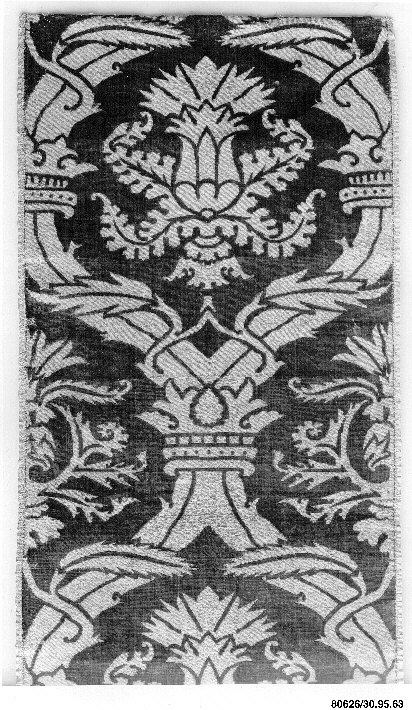
The material composition of “Strip” is its first intellectual provocation. The primary substrate is a cut and voided velvet, a technique with roots in Renaissance Italy and later perfected in the workshops of Lyon, where artisans would meticulously shear away pile to create a dimensional contrast between lustrous surface and matte ground. In Katherine Fashion Lab’s hands, this historical technique is not an homage but a weapon. The velvet’s plush, tactile depth is systematically “voided”—not to create a pattern, but to create a topography of absence. The resulting negative spaces are not random; they are architecturally plotted to follow the body’s kinetic lines—the iliac crest, the scapular wing, the lumbar curve—suggesting a cartography of intimacy that is never fully disclosed.
Juxtaposed against this dense, absorbent texture is the second protagonist: silk metal-wrapped thread. This is not a subtle accent. The thread, wound with a fine gauge of metallic alloy, is used to construct a secondary lattice that hovers above the velvet’s surface. This floating filigree acts as a structural exoskeleton, catching ambient light with a cold, precise shimmer that contrasts violently with the velvet’s warm, nocturnal absorption. The tension is palpable: the soft, yielding past versus the rigid, unyielding present. The metal thread does not decorate; it disciplines the fabric, imposing a geometric order upon the organic fluidity of the silk. This is a deliberate dialogue between heritage craft and futuristic materiality, a negotiation that defines the garment’s ethical and aesthetic stance.
Deconstructing the Gaze: The “Strip” as a Device
The titular “Strip” is not a single cut, but a series of strategic, engineered apertures. In conventional couture, a slit is a functional concession for movement. Here, the apertures are conceptual devices. They operate on a principle of delayed revelation. The eye is invited to trace the metal-thread lattice, which acts as a guide, leading the observer’s gaze along the velvet’s surface toward a voided section where the fabric gives way to a whisper of underlayer—perhaps a sheer silk organza or a nude-toned mesh that is never quite visible.
The genius lies in the misdirection of scale. The voids are not large; they are narrow, elongated strips that run vertically along the torso or diagonally across the hip. Yet, because they are framed by the rigid metal thread, they read as monumental. The garment creates a paradox of perception: the body is simultaneously present and absent. The physical form is occluded by the velvet’s pile, but the imagination is provoked by the metallic outlines. Katherine Fashion Lab understands that in couture, the most erotic zone is not the exposed flesh, but the perceptual gap between what is shown and what is suggested. The “Strip” is thus a mechanism for controlling narrative—the wearer does not expose skin; they expose a concept of skin, a digital-age abstraction rendered in analog luxury.
Global Heritage as a Structural Grammar
The “Global Heritage” origin is not a superficial pastiche of motifs. It is a structural grammar that informs the garment’s architecture. One can discern the influence of Japanese Boro stitching in the way the metal thread is applied—not as a continuous line, but as a series of deliberate, almost mended interruptions that speak to the beauty of repair and the value of time. Simultaneously, the verticality of the strips evokes the Mughal jali screens of India, where perforated stone creates intricate patterns of light and shadow, filtering the outside world into a sacred interior. The voided velvet, in this context, becomes a textile jali—a filter for the modern gaze.
Furthermore, the use of metal-wrapped thread recalls the soumak weaving of the Caucasus, where metallic threads were used not for ostentation but for protective talismanic power. In “Strip,” the metal serves a similar apotropaic function—it shields the wearer from the vulgarity of complete exposure, offering a suit of armor against the commodification of the female form. This is a global conversation, not a cultural appropriation. The garment synthesizes these disparate traditions into a new, coherent language that speaks to a contemporary, borderless elite. It is heritage as process, not heritage as ornament.
Standalone Study: The Garment as a Monograph
The context of a “standalone study” is crucial to interpreting this work. This is not a piece designed for a collection, where it would enter into dialogue with other garments. It is an isolated artifact, a sui generis object meant to be examined with the intensity of a museum exhibit. This isolation amplifies its intellectual weight. Without the distraction of a runway narrative or a seasonal theme, “Strip” must stand on its own merits—as a pure exploration of form, material, and concept.
In this vacuum, the garment becomes a philosophical instrument. It asks the wearer and the observer to reconsider the very definition of couture. Is it about the perfection of the silhouette? Here, the silhouette is deliberately irregular, broken by the voids. Is it about the opulence of fabric? Yes, but the opulence is used to create absence, not presence. The standalone context forces a confrontation with the garment’s negative space as a positive design element. The empty areas are not failures of coverage; they are the raison d’être. They are the “strips” of reality that puncture the illusion of perfection, reminding us that true luxury is not about seamless totality but about the confident, deliberate management of fracture.
Conclusion: The Power of the Unfinished Gesture
Katherine Fashion Lab’s “Strip” is a triumph of intellectual couture. It defies the binary of modesty and exhibitionism, offering instead a third path: curated revelation. The garment is a testament to the idea that the most powerful statement in fashion is not what is added, but what is strategically removed. Through the masterful interplay of voided velvet and metal-wrapped silk, it honors a global lineage of textile artistry while propelling it into a future where the body is a site of negotiation, not display.
Ultimately, “Strip” is a study in restraint—a lesson in the profound eloquence of the unfinished gesture. It does not shout; it whispers with metallic precision. It does not expose; it suggests with the depth of velvet shadow. In a world saturated with visual noise, this garment is a quiet, devastatingly intelligent argument for the power of the strategic gap. It is not a dress to be worn; it is a thesis to be inhabited.