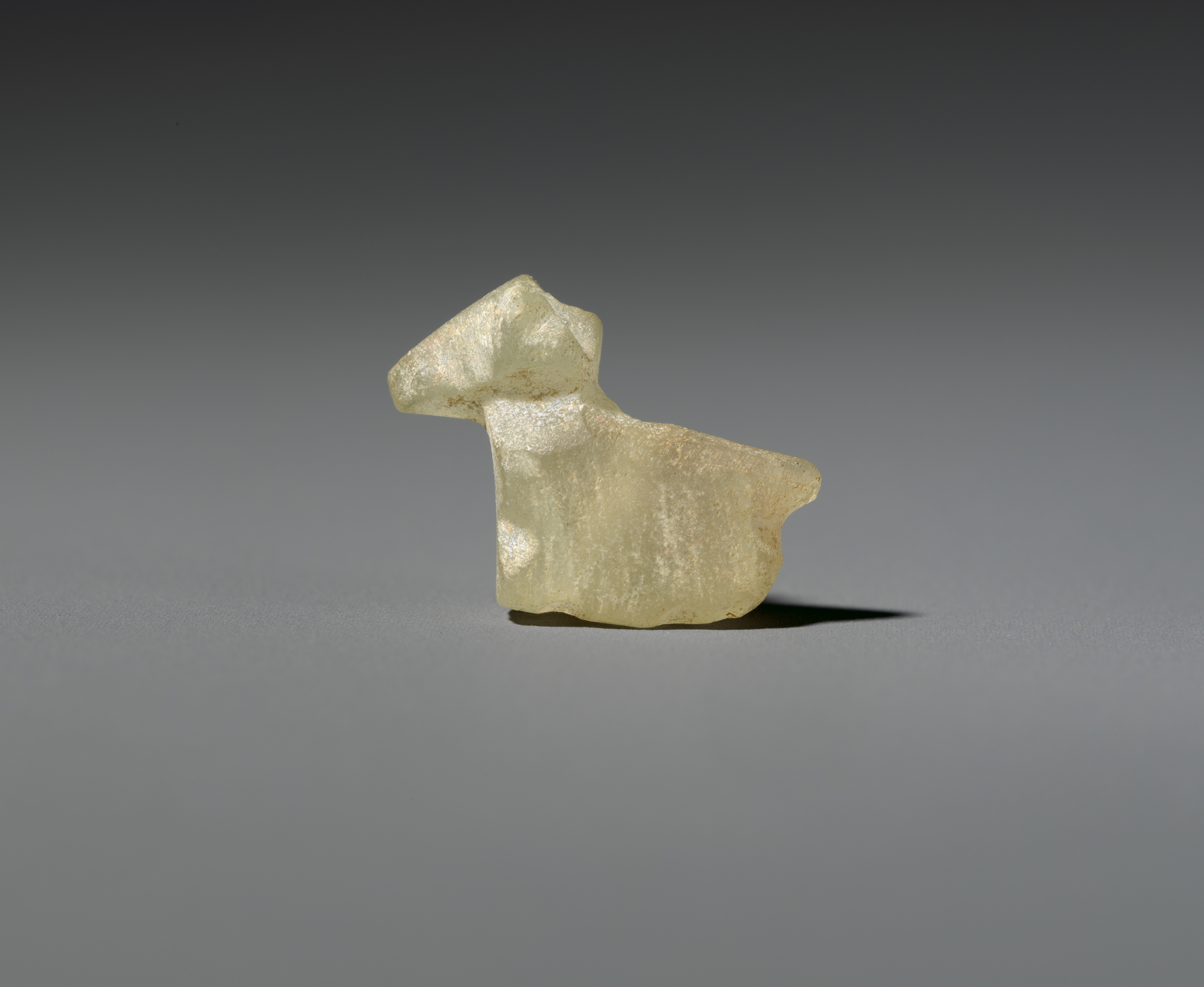
Executive Heritage Analysis: The Sumerian Cow Amulet
This standalone research paper, commissioned by Katherine Fashion Lab, presents a strategic heritage analysis of a Sumerian cow amulet, provisionally identified as carved from quartzite. The analysis is structured to serve dual purposes: first, to establish a rigorous historical and cultural foundation for the artifact’s symbolic power; second, to translate these findings into a coherent, high-end luxury strategy for the 2026 collection cycle. The amulet is not merely a decorative relic but a sophisticated emblem of fertility, divine protection, and economic abundance—attributes that align with the aspirational values of contemporary luxury consumers seeking authenticity and deeper meaning.
Historical Provenance and Material Significance
The Sumerian civilization, flourishing in Mesopotamia between 4500 and 1900 BCE, produced a rich corpus of votive and amuletic objects. The cow, specifically the wild aurochs and domesticated cattle, occupied a central role in agrarian economy and religious cosmology. The choice of quartzite as a medium is notable. Quartzite, a metamorphic rock prized for its hardness and durability, was not the most common material for small amulets—steatite and lapis lazuli were more frequent. However, its use here signals intentionality. The stone’s natural translucence and granular sparkle would have evoked the life-giving properties of water and grain, reinforcing the amulet’s association with agricultural fecundity. For Katherine Fashion Lab, this material provenance offers a compelling narrative of enduring strength and earthy luminosity, differentiating the piece from more conventional gold or gemstone ornaments.
Iconographic Decoding: The Cow as Divine Intermediary
In Sumerian iconography, the cow was intrinsically linked to the goddess Ninhursag, the mother goddess of the mountains and fertility, and later to Inanna, goddess of love and war. The cow amulet functioned as a portable shrine, a microcosmic vessel for divine presence. Its primary symbolic power lay in protective maternity. The cow’s role as a provider of milk, the primary source of life for infants, translated into a talisman for nursing mothers and for the protection of the household. Furthermore, the amulet was believed to ward off evil spirits, particularly those associated with disease and miscarriage. This dual function—nurturing and defensive—makes the amulet a potent archetype for modern luxury, where consumers increasingly seek objects that offer both emotional security and assertive personal expression.
Spiritual and Socio-Economic Dimensions of Adornment
Historical adornment in Sumer was never purely aesthetic. Amulets were worn on the body—suspended from necklaces, pinned to garments, or attached to belts—as a form of embodied theology. The wearer did not simply display wealth; they displayed a relationship with the divine. The cow amulet, in particular, served as a status marker for elite women and priestesses, signifying their role as intermediaries between the earthly realm and the temple economy. The temple herds were the economic engine of Sumerian city-states, and the cow was a direct symbol of capital—both living and symbolic. Thus, wearing a cow amulet was a sophisticated declaration of one’s participation in the sacred economy of abundance.
For a contemporary luxury house, this historical context is invaluable. The amulet is not a sentimental token but a strategic asset that communicates an understanding of heritage as a form of intellectual capital. The spiritual meaning—protection, fertility, and prosperity—transcends religious boundaries, resonating with a global audience that values mindfulness and intentionality in their acquisitions.
2026 High-End Luxury Strategy: Translating Heritage into Brand Equity
Katherine Fashion Lab’s 2026 strategy should leverage this amulet as a narrative anchor for a capsule collection titled “Ninhursag’s Vow.” The following strategic pillars are recommended based on this analysis.
Strategic Pillar One: Material Reinterpretation as Signature
Rather than replicating the amulet in quartzite, the Lab should commission a limited series of amulets in high-polish blackened silver with a matte quartzite inlay. This juxtaposition respects the artifact’s material integrity while elevating it into a modern luxury idiom. The blackened silver offers a contemporary, architectural edge, while the quartzite inlay provides the historical touchpoint. This dual-material approach creates a unique tactile experience, positioning the amulet as a collectible object rather than a mass-produced accessory. The production run should be capped at 500 units, each with a certificate of provenance and a digital heritage passport.
Strategic Pillar Two: The “Protective Capital” Positioning
Marketing narratives for 2026 should move beyond generic descriptions of “ancient charm.” The Lab should position the amulet as “Protective Capital”—a term that encapsulates both spiritual safeguarding and financial acumen. This resonates with high-net-worth individuals who view their purchases as investments in personal resilience. Campaign imagery should juxtapose the amulet with modern symbols of stability—architectural concrete, raw silk, and softly lit interiors—to create a visual language of quiet power. The amulet should be presented not as a relic of the past, but as a forward-looking talisman for navigating an uncertain future.
Strategic Pillar Three: Experiential Heritage Programming
To deepen consumer engagement, Katherine Fashion Lab should host exclusive “Heritage Dialogues” in key markets—New York, Dubai, and Shanghai. These invitation-only events would feature a Mesopotamian art historian and a contemporary jeweler discussing the interplay of protection and adornment. Attendees would be offered a bespoke commissioning service, allowing them to select specific stone variations (e.g., rose quartzite or smoky quartzite) and have a personal inscription added in cuneiform-inspired script. This transforms the amulet from a standalone product into a personalized ritual object, reinforcing the Lab’s commitment to bespoke luxury.
Conclusion: A Blueprint for Meaningful Luxury
The Sumerian cow amulet, in its quartzite form, is a masterclass in symbolic economy. It demonstrates that true luxury is not the accumulation of rare materials, but the layering of meaning—spiritual, economic, and personal. For Katherine Fashion Lab, this artifact offers a strategic blueprint for 2026: one that honors historical depth while projecting contemporary relevance. By adopting a material reinterpretation, a “Protective Capital” narrative, and experiential programming, the Lab can position itself not merely as a fashion house, but as a custodian of enduring cultural values. The amulet’s power lies not in what it was, but in what it can become in the hands of a discerning modern clientele—a symbol of strength, abundance, and intentional legacy.