Introduction: The Cross as a Cultural Artifact
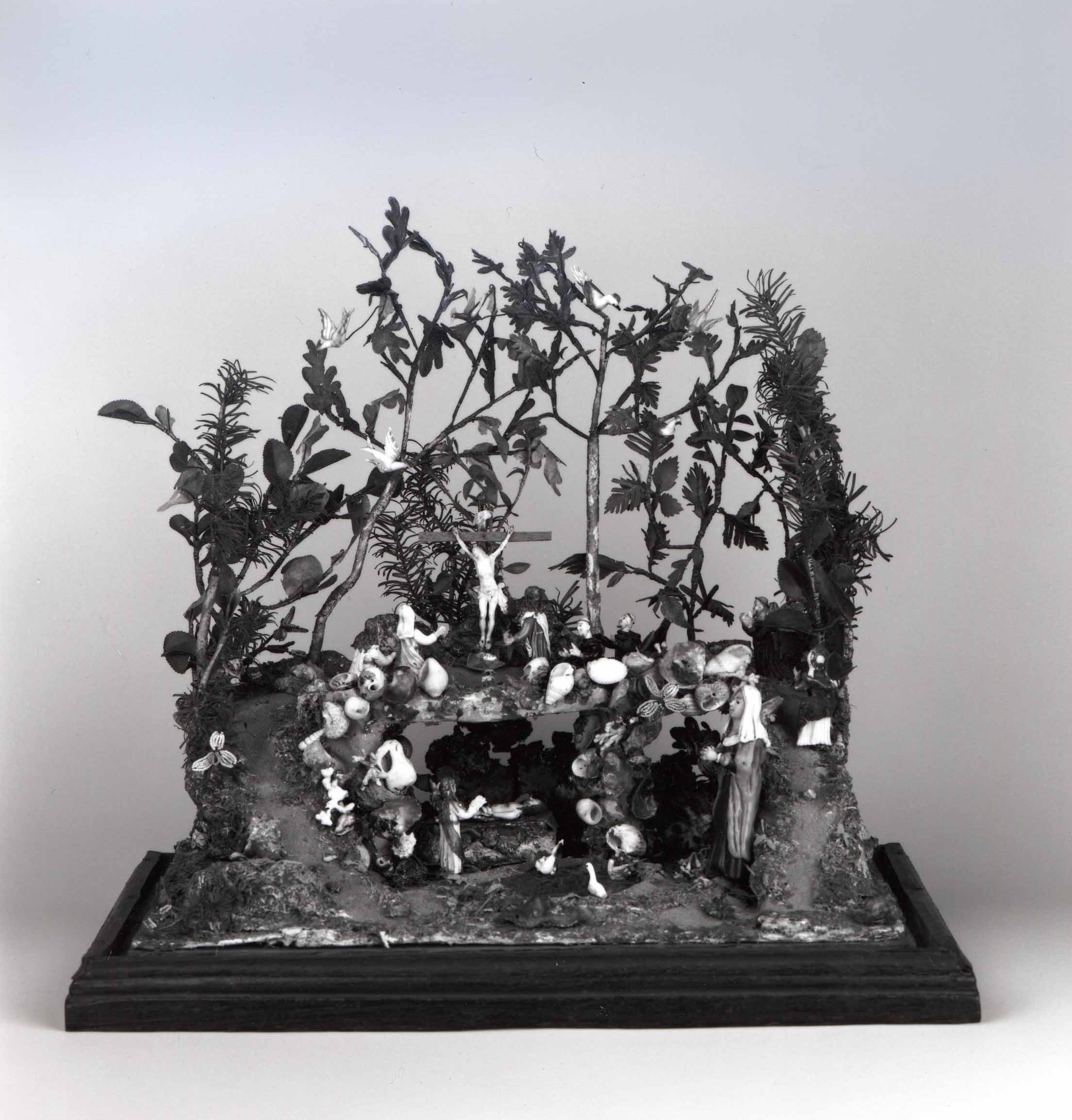
The Crucifixion and the Entombment, attributed to French artisans in Nevers, represents a singular convergence of vernacular piety, material opulence, and theatrical storytelling. Assembled from lampworked glass, papier-mâché, shell, and mirror plate, this object is not merely a devotional relic; it is a strategic testament to how historical adornment encoded spiritual authority through material hierarchy. For Katherine Fashion Lab, this artifact offers a profound blueprint for 2026 luxury strategy—one that moves beyond surface aesthetics into the realm of symbolic permanence, emotional resonance, and ritualized ownership.
Material Symbolism: The Language of Light and Shadow
Lampworked Glass as Divine Luminescence
The use of opaque white, black, red, yellow, and gold aventurine glass in the figures is not arbitrary. In medieval and early modern Christian iconography, glass—particularly lampworked—signified the incorruptible soul, the fragility of mortal flesh, and the transformative power of divine light. The gold aventurine, with its metallic shimmer, evokes the celestial realm, while the deep blues and greens anchor the scene in earthly sorrow. This deliberate chromatic palette functions as a visual theology: each color is a coded message of sacrifice, royalty, and resurrection.
For a 2026 luxury house, this teaches a critical lesson: materials are not passive; they are active narrators. Katherine Fashion Lab should adopt a "chromatic doctrine" where each collection's palette is tied to a spiritual or emotional archetype—not trend-driven, but mythologically anchored. The consumer of 2026 will not buy color; they will buy meaning.
Mirror Plate and the Gaze of the Divine
The inclusion of a glass mirror plate within the assembly is a masterstroke of historical psychology. Mirrors in devotional contexts were not for vanity; they were instruments of introspection, forcing the viewer to see themselves within the Passion narrative. The mirror reflects the viewer into the scene of the Entombment, collapsing the distance between the sacred and the profane. This is an early form of immersive experience—a luxury strategy that contemporary brands only now are rediscovering through augmented reality and interactive retail.
Katherine Fashion Lab's 2026 strategy should integrate "reflective storytelling" in physical spaces—whether through mirrored surfaces in flagship stores, or through digital filters that place the wearer into a curated narrative. The goal is not to display product, but to situate the consumer within a mythic frame, making them a participant rather than an observer.
Historical Adornment: The Body as a Reliquary
Shells, Seed Beads, and the Economics of Devotion
The use of shells and glass seed beads—materials of both pilgrimage and peasant craft—reveals a sophisticated layering of social strata. Shells evoke Santiago de Compostela, the pilgrimage of penance, while seed beads speak to the meticulous labor of anonymous women and men who transformed humble materials into objects of awe. This is not a contradiction; it is a strategic juxtaposition. The artifact democratizes sanctity: the poor man's shell and the rich man's gold aventurine coexist in a single narrative of salvation.
For high-end luxury in 2026, this suggests a new model of "inclusive exclusivity." Katherine Fashion Lab can pioneer a strategy where each garment or accessory incorporates a "pilgrim element"—a small, hand-finished component sourced from artisan communities, documented and certified. This is not corporate social responsibility as an afterthought; it is material provenance as spiritual capital. The consumer is not buying a dress; they are acquiring a fragment of a larger, redemptive story.
Papier-Mâché and the Paradox of Preciousness
Papier-mâché, a material of ephemerality and cheapness, is here elevated to the level of sacred sculpture. This is a radical inversion of material hierarchy—a proto-Duchampian gesture that predates modern conceptual art by centuries. The Nevers artisans understood that sanctity is not inherent in material but conferred by context and intention. This is the essence of luxury: not rarity alone, but the deliberate elevation of the ordinary through ritual and narrative.
Katherine Fashion Lab's 2026 strategy should embrace "deliberate fragility." In an era of mass production and digital copies, the hand-finished, the imperfect, and the deliberately ephemeral will become the ultimate markers of authenticity. By introducing a line of "ritual wear" that uses unconventional materials—recycled glass, hand-pressed paper, bio-resins—the brand can redefine luxury as intentional vulnerability, a counterpoint to the cold perfection of machine-made goods.
Spiritual Meaning and the Architecture of Grief
The Entombment as a Strategy of Anticipation
The scene of the Entombment is not an ending; it is a pause before resurrection. This is a masterclass in narrative tension. The artifact does not depict the triumph of Easter Sunday; it dwells in the sorrow of Saturday, the liminal space of waiting. For a luxury brand, this is a powerful lesson in seasonal storytelling. The 2026 consumer is fatigued by constant novelty and instant gratification. Katherine Fashion Lab can differentiate by creating "sabbath collections"—limited releases that deliberately hold back, that celebrate the unfinished, the anticipated, and the contemplative.
This is not a marketing gimmick; it is a spiritual architecture. The brand would offer a "Lent" of exclusivity, where products are released in stages, each stage deepening the narrative. The consumer is not buying a product; they are entering a covenant of patience and reward.
The Cross as a Symbolic Infrastructure
The cross itself, as the central organizing symbol, is a prototype for brand identity. It is simultaneously a historical fact, a cosmic archetype, and a personal invitation. It carries contradiction—death and life, shame and glory—without collapsing into confusion. This is the model for a 2026 luxury brand identity: a core symbol that is polyvalent yet coherent, capable of absorbing multiple meanings across cultures and generations.
Katherine Fashion Lab should develop a "house symbol" that is not a logo but a symbolic infrastructure—an abstract device that can be rendered in precious metal, in embroidery, in architectural detail, or in digital code. This symbol must be capable of carrying the weight of personal meaning for each consumer, much as the cross does for each believer. It is not a trademark; it is a talisman.
2026 Luxury Strategy: From Adornment to Sacrament
The Ritual of Acquisition
The historical artifact was not mass-produced; it was commissioned, blessed, and displayed in a specific liturgical context. Its value was inseparable from its ritual use. For 2026, Katherine Fashion Lab should reintroduce the concept of the ritual purchase. This involves not just the product, but a ceremony of acquisition: a private viewing, a narrative consultation, a moment of reflective silence, and a documented provenance. This transforms the transaction into a rite of passage.
The luxury consumer of 2026 is not seeking to own; they are seeking to become. The brand must provide the robes, the symbols, and the story for that transformation.
Strategic Standalone Research: The Artifact as a Living Brief
This analysis is not a historical exercise; it is a strategic brief. The Crucifixion and the Entombment demonstrates that the most powerful luxury objects are those that integrate material mastery, narrative depth, and spiritual utility. The Nevers artisans did not choose between beauty and meaning; they fused them into an inseparable whole. Katherine Fashion Lab's 2026 strategy must do the same.
In a market saturated with noise, the brand that offers silence will win. In a culture obsessed with speed, the brand that celebrates waiting will endure. In an economy of distraction, the brand that provides focus—sacred, unbroken focus—will command loyalty. The cross and the tomb are not symbols of death; they are symbols of patient, inevitable renewal. That is the ultimate luxury.
Conclusion: The Tomb as a Foundation
The Crucifixion and the Entombment from Nevers is a masterpiece of symbolic engineering. It teaches that materials are voices, that color is theology, that mirrors are portals, and that the most profound luxury is the ability to hold space for meaning. For Katherine Fashion Lab, the 2026 strategy should not chase the future; it should excavate the past to find the timeless structures of human desire—for redemption, for belonging, for transformation. The tomb is empty, but its lesson is full: true luxury is the art of making the invisible visible, and the ephemeral eternal.