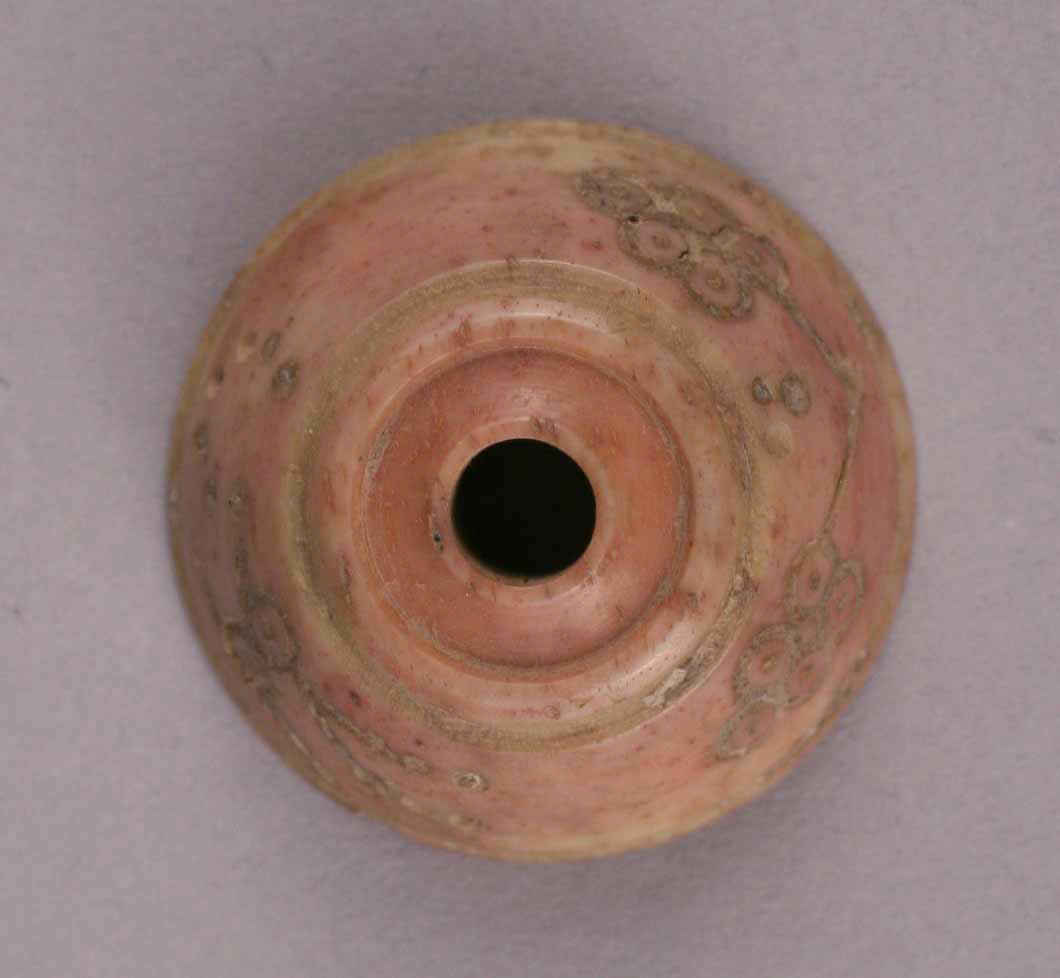
The Bone Button and the Bead: A Heritage Analysis for Katherine Fashion Lab
Introduction: The Micro-Object as Macro-Narrative
In the lexicon of luxury, scale often belies significance. The humble button and the singular bead, particularly when rendered in bone and adorned with pigment, transcend their functional roles to become potent carriers of cultural memory. For Katherine Fashion Lab, a strategic examination of these ancient artifacts from a pre-dynastic or early dynastic context—where bone was tinted, incised, and inlaid with paint—reveals a profound blueprint for 2026 high-end positioning. This analysis argues that the bone button and bead are not mere fasteners or ornaments but are micro-architectures of symbolic power, spiritual protection, and social stratification. By decoding their heritage, we can forge a luxury strategy rooted in authenticity, ritual, and the tactile poetry of materials.
Historical Adornment: The Body as a Canvas for Status
In ancient civilizations—from the Nile Valley to the Indus region—adornment was not an afterthought but a primary language of identity. The bone button, often perforated and sewn onto garments, served as a discreet yet deliberate marker of status. Unlike shell or precious metal, bone was accessible yet required significant skill to carve, incise, and tint. The act of applying pigment—ochre, malachite, or lapis-derived blue—transformed a utilitarian object into a chromatic statement. The incised lines were not random; they often mimicked textile weaves or natural elements, establishing a visual rhythm that connected the wearer to the cosmos.
The bead, conversely, was the more democratic yet equally potent medium. String together, beads formed necklaces, belts, and amuletic nets. In bone form, they were lightweight, durable, and capable of holding intricate dye. Their cylindrical or disc shapes, when inlaid with paint, created a shimmering effect under torchlight, suggesting an otherworldly glow. For the ancient elite, the quantity, color, and incised pattern of their beads directly correlated with their rank. This was a pre-literate society’s way of recording biography—each bead a syllable in a silent poem of power.
Symbolic Power and Spiritual Meaning: Beyond the Physical
The spiritual dimension of these objects is where their heritage value intensifies. Bone, as a medium, was intrinsically liminal. It was the last remnant of a living creature, a repository of life force. To wear bone was to absorb the vitality of the animal—often an ox, ibis, or antelope—and to channel its protective instincts. The tinting process was likely ritualistic; pigments were not merely cosmetic but sacral. Red ochre symbolized blood and rebirth; blue-green (Egyptian faience-like) signified fertility and the Nile’s regenerative flood. When these pigments were inlaid into incised grooves, they created a micro-relief that caught light and shadow, turning the object into a talisman that warded off evil spirits.
The button, in particular, held a specific symbolic charge. Placed at the neck or cuff, it guarded the body’s thresholds—the apertures where the soul was most vulnerable. A carved, tinted bone button was a protective seal, a physical manifestation of the wearer’s pact with the divine. The bead, when worn close to the heart or stomach, was believed to balance the humors. In burial contexts, these items were placed with the deceased to ensure safe passage, indicating that their spiritual power was not extinguished upon death but transformed into a guide for the afterlife. Thus, the heritage of these objects is not merely decorative; it is deeply esoteric, rooted in the human need to control fate through material intervention.
Strategic Application for 2026: The Luxury of Sacred Minimalism
For Katherine Fashion Lab, the 2026 luxury landscape demands a departure from overt logomania toward a quieter, more resonant form of value. This heritage analysis provides a strategic pillar: Sacred Minimalism. The ancient bone button and bead offer a template for creating high-end pieces that are simultaneously understated and deeply meaningful. The strategy should focus on three core pillars: Material Provenance, Ritualistic Craft, and Narrative Scarcity.
The 2026 Strategy: Material Provenance and Ritualistic Craft
Material Provenance is the first strategic lever. In 2026, the luxury consumer is increasingly educated about sourcing. However, unlike the current emphasis on ethical mining or vegan leather, we propose a return to biogenic heritage. Sourcing bone as a byproduct of high-altitude, ethically raised livestock—perhaps from Tibetan yak or Scottish deer—allows us to claim a lineage of strength and resilience. The material becomes a metaphor for the modern individual’s endurance. The tinting process, using natural plant-based dyes and mineral pigments, must be elevated to a proprietary art. We will develop a signature palette—"Ochre Dawn," "Nile Indigo," and "Burial Green"—that references the ancient palette while remaining contemporary. This is not about imitation but about channeling the same chromatic energy.
Ritualistic Craft is the second pillar. The incised lines and inlaid paint of the ancient artifacts were not mass-produced. Each piece was a meditation. For 2026, we will revive this by limiting production to a dedicated atelier of master carvers, each piece taking a minimum of 48 hours. The incising will be performed with hand-forged tools, and the paint inlay will be applied in a multi-layer process, then burnished to a smooth, glass-like finish. This is not craft for craft’s sake; it is a strategic differentiator against machine-perfect, soulless luxury. We will offer a "Ritual Commission" service, where clients can choose the specific symbolic incisions—be it a protective geometric motif or a personal sigil—transforming the button or bead into a bespoke amulet. This elevates the product from an accessory to a personal artifact, a modern heirloom with spiritual resonance.
Narrative Scarcity and the 2026 Collection
Narrative Scarcity is the final strategic component. The ancient bead was valuable because its meaning was exclusive. We will apply this by creating a limited series of High Priestess and Warrior-Chief capsule collections. Each collection will be accompanied by a digital provenance ledger—a "heritage passport"—that traces the specific bone’s origin, the artisan’s name, and the symbolic meaning of the incisions. This is a form of authenticated storytelling that satisfies the 2026 consumer’s desire for transparency and depth. The button will not be a fastening; it will be a closure for a garment that is itself a ceremonial piece. The bead will not be a necklace accent; it will be the centerpiece of a "Talisman Necklace" that retails at a premium, justified by its spiritual and historical weight.
In terms of product architecture, we propose a Heritage Matrix collection where a single, large bone bead is paired with contemporary technical fabrics (recycled cashmere, bio-based silk). The contrast between the ancient, tactile bone and the modern, fluid textile will create a powerful aesthetic tension—a dialogue between epochs. The button will be oversized, used as a dramatic closure on structured outerwear, its tinted surface acting as a subtle pop of color against monochrome palettes. This is not costume jewelry; it is wearable anthropology.
Conclusion: The Future is Fossilized
In conclusion, the bone button and bead of ancient civilization are not archaeological curiosities; they are strategic assets. Their heritage—rooted in symbolic power, spiritual protection, and social demarcation—offers Katherine Fashion Lab a clear, differentiated path for 2026. By embracing the material’s biogenic provenance, the ritualistic nature of its craft, and the narrative scarcity of its symbolism, we can create high-end objects that satisfy a deeper consumer need: the desire for meaning in a transient world. The luxury of 2026 is not about louder logos but about deeper resonance. The ancient artisan who tinted a bone bead with ochre understood this intuitively. Our strategy is to translate that ancient intuition into a modern, commercially viable language of sacred minimalism. The bone is not dead; it is merely waiting to be reanimated by our vision.