The Tea Urn as Sovereign Vessel: A Heritage Analysis for Katherine Fashion Lab
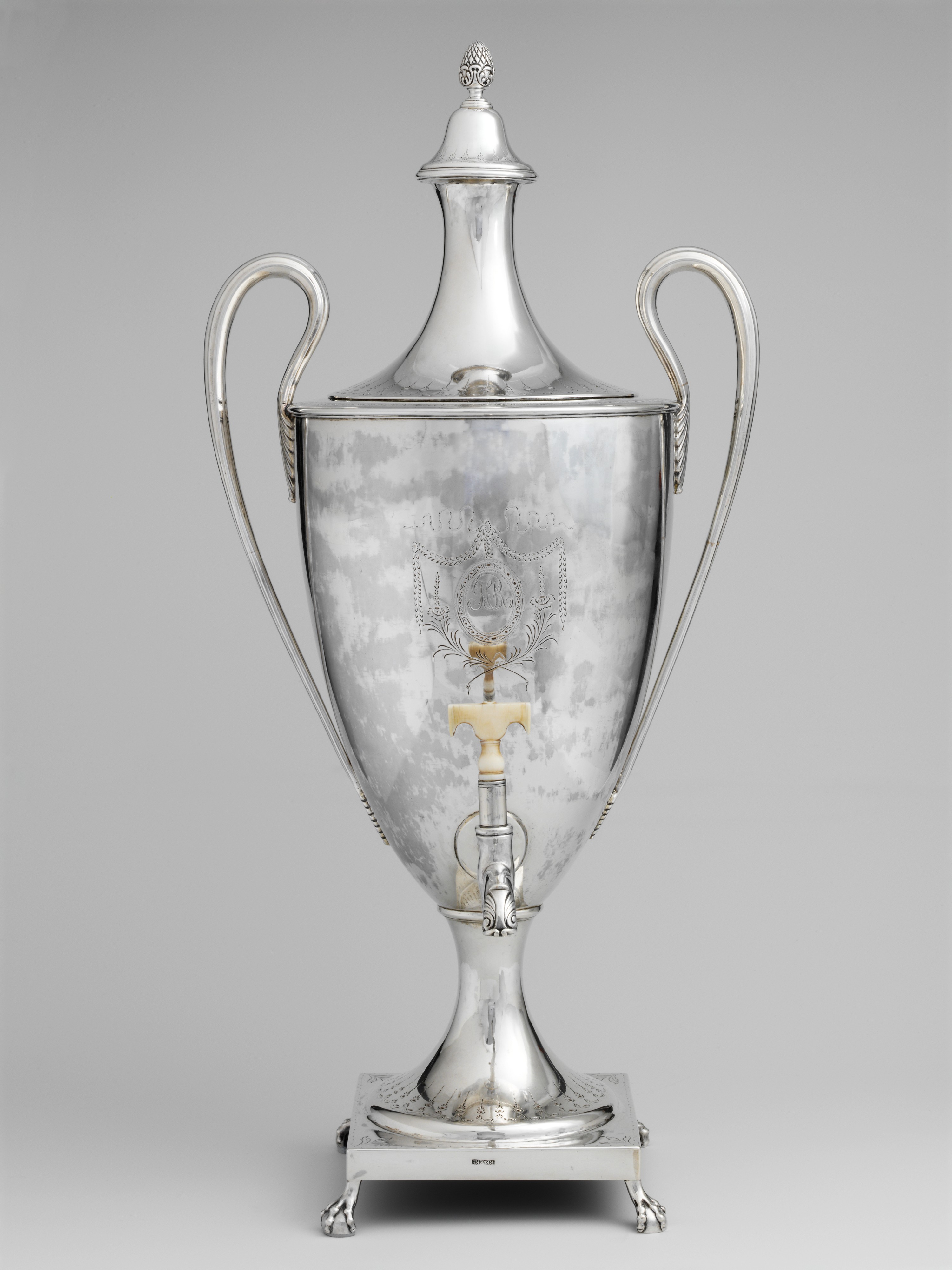
The silver tea urn, a fixture of the American Federal-era sideboard, is far more than a vessel for hot water. Within its polished curves and ivory finials lies a condensed narrative of national identity, domestic sovereignty, and the ritualized performance of hospitality. For Katherine Fashion Lab, this object offers a potent lexicon of symbolic power that can be translated into a 2026 luxury strategy rooted not in nostalgia, but in the reclamation of ceremonial gravitas. This analysis deconstructs the tea urn’s historical and spiritual resonance, then proposes a strategic framework for its integration into high-end brand narrative and product architecture.
I. Symbolic Power: The Urn as a Micro-Architecture of Authority
In the early American republic, the tea urn occupied a paradoxical position: it was both a domestic object and a public monument. Its form—often fluted, with a domed lid and a prominent spigot—mimicked the neoclassical urns of antiquity, deliberately invoking the civic virtues of Rome and Greece. This was not accidental. The American elite, having just severed political ties with Britain, sought to establish a new visual language of legitimacy. The tea urn became a portable monument to republican virtue, its silver body reflecting not only candlelight but also the aspirational clarity of a nascent nation.
For Katherine Fashion Lab, the symbolic power of the urn lies in its controlled distribution of abundance. Unlike a teapot, which pours indiscriminately, the urn’s spigot dispenses liquid through a deliberate, mechanical act. This is the symbolism of measured generosity—a quality that defines modern luxury. The 2026 consumer does not seek excess; they seek curation. The urn teaches us that authority is not in the volume of what is shared, but in the ritual precision of the offering. This principle can be translated into a limited-edition accessory line—for instance, a hand-held "dispensing" clutch with a sculptural, architectural clasp—where the act of opening becomes a ceremonial gesture, not a casual function.
II. Historical Adornment: Silver, Ivory, and the Semiotics of Material
The material composition of the tea urn—silver and ivory—demands scrutiny. Silver, in the 18th and 19th centuries, was not merely a precious metal; it was a socio-economic passport. Its reflective surface was believed to possess purifying properties, and its weight conveyed a family's financial permanence. The ivory finial, often carved into an acorn or flame shape, served as a thermal insulator but also as a tactile emblem of global trade and colonial reach. The white, smooth material contrasted sharply with the cool metal, offering a moment of organic warmth in an otherwise austere object.
In contemporary luxury, the use of such materials must be approached with ethical and cultural sensitivity. However, the principle of material contrast remains a powerful design tool. For Katherine Fashion Lab, the historical lesson is not to replicate ivory, but to replicate its functional and sensory juxtaposition. A 2026 strategy might pair high-polish, recycled sterling silver with a matte, bio-based resin that mimics the tactile warmth of ivory, or use sustainably sourced tagua nut. This creates a dialogue between the industrial and the organic, the cool and the warm—a sensory tension that signals refined discernment to the high-net-worth consumer who values provenance and ethical innovation equally.
III. Spiritual Meaning: The Hearth as an Altar
Beyond its civic and economic symbolism, the tea urn held a quasi-sacred role in the American home. The act of brewing and serving tea was a domestic liturgy, a daily practice that structured time and social hierarchy. The urn, placed at the head of the table, functioned as a domestic altar. Its steam was not just vapor; it was the visible breath of the household’s vitality. The hostess, by controlling the flow of the liquid, enacted a form of matriarchal priesthood, dispensing warmth and sustenance as a form of spiritual care.
This spiritual dimension is crucial for a 2026 luxury strategy. The modern affluent consumer is increasingly seeking meaningful ritual in a fragmented, digital world. The tea urn offers a blueprint for what Katherine Fashion Lab can call "The Ceremony of Self". This is not about religion, but about the deliberate creation of personal sanctity. The brand can leverage this by designing a "Ritual Collection"—not just garments, but objects and experiences. Imagine a cashmere wrap with a hidden interior pocket designed to hold a small, heated stone; or a silk robe with a structured collar that mimics the urn's domed lid. These are not clothes; they are vestments for daily devotion. The spiritual meaning is transferred from the object to the wearer, who becomes the steward of their own warmth and presence.
IV. 2026 Luxury Strategy: From Heirloom to Hyper-Contemporary Icon
To translate this heritage into a commercially viable and culturally relevant strategy for 2026, Katherine Fashion Lab must avoid the pitfall of historical pastiche. The tea urn should not appear as a literal print or a direct silhouette. Instead, its core DNA—authority, measured dispensing, material contrast, and ceremonial gravity—must be abstracted into a new design language.
Strategic Pillar 1: The "Dispensing" Silhouette
Design direction should focus on architectural volume with a defined point of release. Outerwear, for example, could feature a high, structured neckline that flares outward, echoing the urn's domed lid, while a single, sculptural zipper pull—crafted from recycled silver—acts as the "spigot." The aesthetic is not colonial; it is brutalist elegance—heavy, grounded, and deliberate. This appeals to the 2026 consumer who values permanence over trend cycles.
Strategic Pillar 2: The "Ritual Accessory" System
Luxury in 2026 will be defined by modularity and intention. The brand can launch a "Urn Capsule" comprising a series of interchangeable, weighted components—a silver-toned chain belt, a detachable ivory-resin brooch, a structured cuff—that are designed to be attached and removed in a deliberate, performative manner. Marketing materials should not show the product being worn casually; they should show the act of assembly, framing the dressing process as a meditative ritual.
Strategic Pillar 3: The "Sovereign Steward" Narrative
The brand narrative must shift from "consumer" to steward. The tea urn was a family heirloom, passed down through generations. Katherine Fashion Lab can adopt a "Perpetual Ownership" model, offering a lifetime repair and re-finishing service for its metal components. This is not a warranty; it is a covenant of permanence. The 2026 campaign will feature not models, but custodians—artists, architects, and historians—who speak about the object's role in their daily practice of focus and hospitality.
Conclusion: The Urn as a Mirror of Modern Authority
The American tea urn is not a relic; it is a mirror. It reflects a culture's desire for order, warmth, and measured power. For Katherine Fashion Lab, it provides a profound strategic archetype. By abstracting its symbolic core—the authority of measured dispensing, the sensory dialogue of silver and ivory, and the spiritual gravity of domestic ritual—the brand can create a 2026 luxury offering that is not merely worn, but administered. The consumer is not buying a product; they are acquiring a sovereign vessel for their own modern life, one that dispenses confidence and presence with the deliberate, quiet authority of a bygone American masterpiece.