A Study in Contrasts: Deconstructing the Textile Fragment at Katherine Fashion Lab
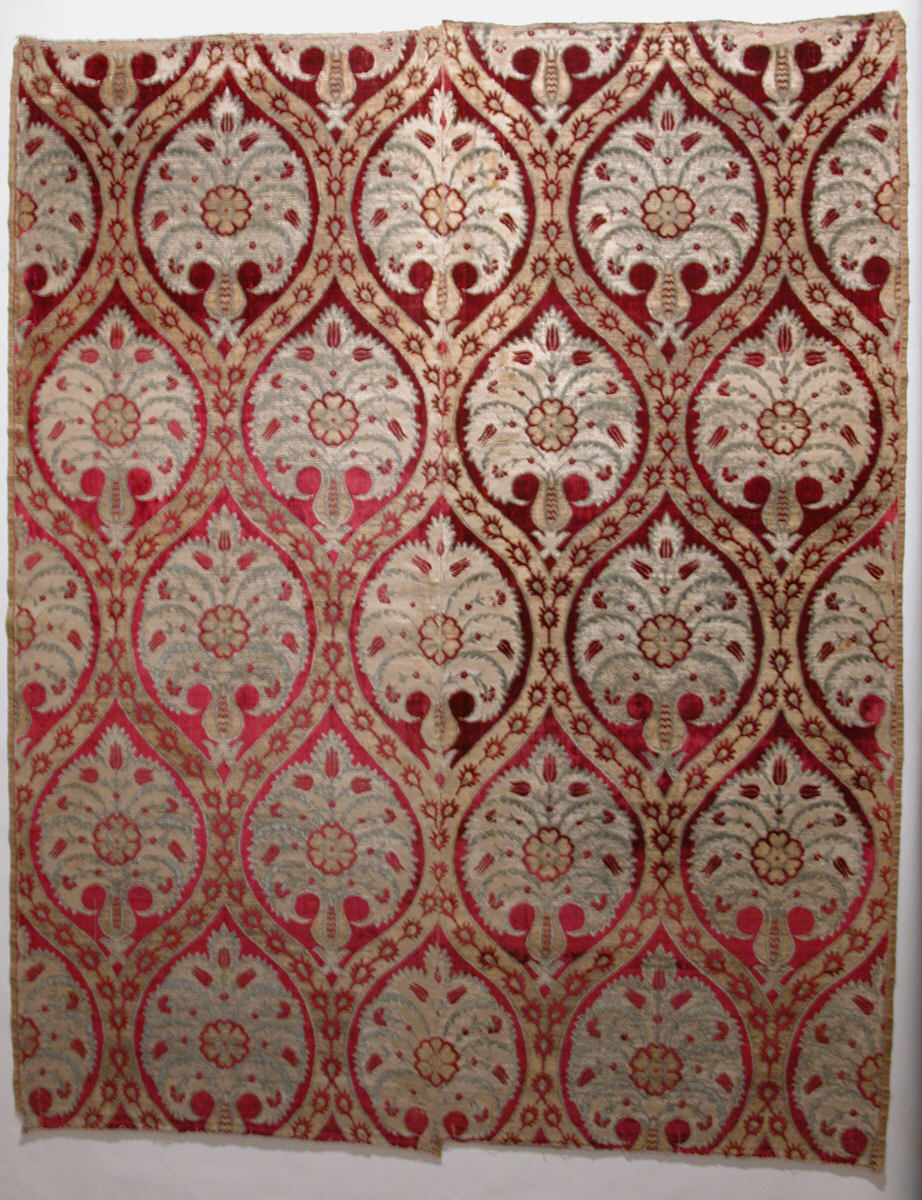
The textile fragment, in its most reductive form, is a severed piece of a larger whole. Yet, within the hallowed confines of Katherine Fashion Lab’s archival study, this particular specimen—a composite of silk, cotton, and metal-wrapped thread, executed in cut and voided velvet with brocaded accents—transcends mere archaeological interest. It is a masterclass in material diplomacy, a silent dialogue between disparate cultures and technical epochs. This analysis moves beyond the superficial appreciation of pattern to interrogate the fragment’s intrinsic value as a standalone object of couture-level study, revealing how its structural logic and textural opulence inform the contemporary language of high fashion.
Material Alchemy: The Tactile Hierarchy of Silk, Cotton, and Metal
The foundational genius of this fragment lies not in its visual exuberance alone, but in its deliberate orchestration of tactile contrasts. The ground weave, a supple silk warp interlaced with a cotton weft, provides a canvas of understated luminosity. Silk, with its prismatic refractive index, offers a shifting, almost liquid sheen, while the cotton weft introduces a matte, absorbent counterpoint. This is not a compromise; it is a calculated tension. The cotton grounds the silk’s ethereal glow, preventing it from becoming saccharine. The result is a surface that demands touch, a fabric that feels both cool and warm, dense and breathable—a paradox that high-end clients and discerning designers recognize as the hallmark of true luxury.
Superimposed upon this foundation is the metallic thread, typically a gilt or silvered strip wrapped around a silk or linen core. Its presence is not decorative flippancy; it is structural punctuation. The metal acts as a light reflector, creating a secondary, more aggressive glitter that contrasts with the silk’s soft sheen. In couture construction, this is a lesson in optical physics: the eye is drawn to the metallic accents, which then cast the velvet’s depth into sharper relief. The metal-wrapped thread is also a testament to historical trade routes, a nod to the global heritage of the piece. It speaks of Venice, of Ottoman silks, of Chinese export weaves—a globalized language long before the term was fashionable.
The Architecture of Voided Velvet: Sculpting Negative Space
The most intellectually compelling aspect of this fragment is its execution in cut and voided velvet. This is not a simple pile-on-ground construction. The technique involves weaving a ground cloth with two warps—one for the ground and one for the pile—and then selectively cutting the pile loops to create a raised, plush surface. The ‘voided’ element is where the pile is deliberately omitted, leaving the ground weave exposed. This is not absence; it is sculptural intent.
In this fragment, the voided areas function as negative space, carving out a pattern of deliberate emptiness against the dense, plush pile. The contrast between the raised, tactile velvet and the flat, smoother ground creates a topographical map of light and shadow. From a couture perspective, this is a lesson in silhouette and volume. The velvet’s pile absorbs light, creating areas of deep, velvety darkness, while the voided sections reflect it, producing highlights. This interplay mimics the chiaroscuro of a master painting, giving the fabric a three-dimensionality that flat printing can never achieve. For a designer, this fragment demonstrates how to build a garment that is not merely worn, but inhabited—a structure that plays with the body’s own contours and the ambient light of the environment.
Brocaded Embellishment: The Grammar of Ornament
Further enriching the composition is the brocaded element. Brocade, in its strictest sense, involves the introduction of supplementary weft threads—often metallic or differently colored—that are woven into the fabric only where required, creating a raised, discontinuous pattern. In this fragment, the brocaded motifs likely overlay the velvet or the voided areas, adding a layer of elaborate, almost architectural detail. This is not mere embroidery; it is an integral part of the weave, a structural addition that adds weight and rigidity to specific zones.
The brocading introduces a rhythmic grammar to the fragment’s visual syntax. The motifs—likely floral, geometric, or a hybrid of both—are not random. They follow a logic of repetition and variation, creating a cadence that guides the eye across the surface. In a couture context, this is the equivalent of a perfectly tailored seam or a precisely placed dart. The brocade provides the ‘statement,’ the moment of high drama, while the velvet provides the ‘breath,’ the space for the eye to rest. This balance is crucial; an over-brocaded fabric becomes gaudy, while a plain velvet can be somber. Here, the balance is impeccable, offering a masterclass in the restraint of opulence.
Standalone Study: The Fragment as a Complete Narrative
Contextualizing this piece as a standalone study is a curatorial choice that demands intellectual rigor. Often, fragments are viewed as mere remnants, awaiting reassembly into a larger garment. Katherine Fashion Lab’s framing subverts this narrative. By isolating the fragment, we are forced to confront it as a complete work of art. The severed edges are not flaws; they are deliberate frames, cropping the pattern in a way that suggests an infinite, continuous design. This is a postmodern interpretation—the idea that a detail can be a totality, that a single sleeve or a swatch can contain the entire essence of a collection.
This standalone perspective also allows for a deeper technical appreciation. Without the distraction of a garment’s silhouette, the viewer can focus on the warp and weft, the density of the pile, the precision of the brocade. It becomes a study in engineering as much as aesthetics. For the modern couturier, this is a call to action: to treat every element—every seam, every button, every square inch of fabric—with the same reverence as the final silhouette. The fragment teaches us that luxury is not a matter of scale but of execution. A single, perfectly executed square of this fabric holds more artistic value than a poorly constructed gown of the same material.
Implications for Contemporary Couture
The lessons gleaned from this fragment are profoundly relevant to contemporary fashion, which often oscillates between minimalist reduction and maximalist excess. This textile offers a third path: maximalist restraint. It demonstrates that one can employ a rich palette of materials—silk, cotton, metal, velvet, brocade—without descending into chaos. The key is the deliberate manipulation of texture and light as structural tools, not mere embellishment.
For the modern designer, this fragment serves as a blueprint for creating garments with inherent depth. It encourages a move away from flat, digital prints towards a more sculptural, tactile approach. It whispers of a time when fabric was the primary source of a garment’s narrative, before the dominance of silhouette and branding. It reminds us that the most intimate relationship in fashion is not between the wearer and the label, but between the wearer and the skin of the material itself. In this sense, the fragment is not a relic; it is a prophecy. It is a testament to the enduring power of textile innovation, a quiet but forceful argument for the return of material intelligence as the ultimate luxury. The fragment, in its silent, severed glory, speaks volumes.