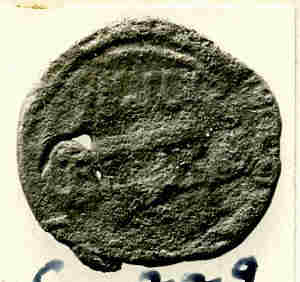
Executive Heritage Analysis: The Copper Coin of Antiquity
This strategic standalone research paper examines the copper coin of ancient civilization as a potent symbol for Katherine Fashion Lab’s 2026 high-end luxury strategy. The analysis moves beyond numismatic history to position the coin as a talismanic object of trade, spiritual protection, and temporal authority. For a heritage-driven luxury house, the copper coin offers a unique dialectic: it is simultaneously the humblest of metals and the foundational instrument of economic power. The following sections deconstruct its symbolic power, historical adornment practices, spiritual meanings, and translate these into a concrete, market-ready positioning framework for the upcoming fiscal year.
Symbolic Power: The Currency of Authority and Exchange
In ancient civilizations—from the Lydian invention of coinage to the Roman aes grave and the Chinese ban liang—the coin was not merely a medium of exchange but a sovereign declaration. Stamped with the visage of rulers, deities, or sacred animals, the coin functioned as a miniature state apparatus. Its copper composition, while less precious than gold or silver, signified accessibility and civic infrastructure. Copper was the metal of the common soldier, the daily market, and the foundational trade routes that connected empires.
For Katherine Fashion Lab, the symbolic power of the coin resides in its dual nature of permanence and circulation. Unlike a static ingot, a coin moves; it changes hands, crosses borders, and accumulates the patina of countless interactions. This positions the 2026 collection not as static luxury objects, but as participatory artifacts—each piece designed to carry the wearer through social transactions, embodying a quiet authority that is earned, not displayed. The copper coin’s symbolism is that of the gatekeeper’s toll: it grants passage, seals agreements, and represents the material contract between individual and society.
Historical Adornment: The Coin as Personal Amulet and Status Marker
While coins were official currency, their use in personal adornment was widespread across antiquity. Archaeological evidence from Greco-Roman Egypt, the Celtic tribes of Europe, and the Silk Road cultures shows coins pierced, looped, and strung into necklaces, bracelets, and headdresses. This practice was not purely decorative. Wearing a coin was a portable store of wealth—a pragmatic solution for traders and travelers who needed liquid assets secured on their person. Simultaneously, the coin served as a visible marker of allegiance; wearing a coin bearing a specific emperor’s image was a public declaration of loyalty and political alignment.
Katherine Fashion Lab can reinterpret this historical adornment through a lens of architectural minimalism. Rather than replicating literal coinage, the 2026 strategy should focus on the form factor of the coin: the perfect circle, the ridged edge, the stamped relief. Consider high-polish copper pendants with a recessed, abstracted profile—a nod to the imperial bust—or cufflinks that mimic the weight and heft of a Roman sestertius. The key is to evoke the tactile gravity of the original artifact without descending into costume jewelry. The adornment becomes a conversation starter, a subtle signal of the wearer’s appreciation for historical depth and material integrity.
Spiritual Meaning: The Talisman of Fortune and Safe Passage
Beyond economics, the ancient coin carried profound spiritual weight. In many cultures, placing a coin on the eyes or tongue of the deceased was a ritual payment to the ferryman of the underworld—ensuring safe passage into the afterlife. This practice, most famously associated with Charon in Greek mythology, imbues the coin with apotropaic power: the ability to ward off ill fate and negotiate with the unknown. Copper itself was associated with Venus and the goddess Aphrodite in classical astrology, linking the metal to love, beauty, and harmonious attraction. This duality—the coin as both a practical tool for the living and a spiritual passport for the dead—gives it a profound narrative depth.
For the modern luxury consumer, the spiritual resonance of the copper coin can be reframed as protection and intentionality. In a 2026 market saturated with digital transactions and intangible assets, a physical copper object offers a return to the talismanic. Katherine Fashion Lab should position the coin-inspired pieces as ritual objects for the contemporary journey—not religious, but psychological. Each piece can be presented as a charter for boldness, a physical reminder of the wearer’s own agency and resilience. The marketing narrative should emphasize the patina of experience: as the copper oxidizes and darkens with wear, it records the owner’s history, becoming a unique, living document of their life’s transactions.
2026 High-End Luxury Strategy: The Heritage of Material Economy
The integration of the copper coin motif into Katherine Fashion Lab’s 2026 strategy requires a deliberate departure from conventional luxury tropes. The current high-end market is bifurcating: one segment demands overt opulence (gold, diamonds, logos), while a growing counter-segment seeks intellectual luxury—pieces with provenance, narrative, and a connection to elemental materials. The copper coin sits firmly in the latter category. Its value proposition is not scarcity of material (copper is abundant) but scarcity of meaning.
Positioning: The "New Antiquity" Platform
Katherine Fashion Lab will launch the collection under the strategic banner "New Antiquity: The Currency of Self." This platform rejects the nostalgia of historical reproduction in favor of a forward-looking primitivism. The copper coin is not a relic; it is a generative seed. The strategy leverages three key pillars:
1. Material Honesty: The use of uncoated, high-grade copper is a deliberate counterpoint to the gold-plated excess of the 2010s. The metal’s natural oxidation process is marketed as a feature, not a flaw. Each piece is certified with a "patina passport" that tracks the expected color evolution from rose-bronze to deep umber over a decade.
2. Modular Adornment: Drawing from the ancient practice of hoarding and stringing coins, the 2026 line will feature modular components. A single copper disc can be worn as a pendant, attached to a belt as a buckle, or used as a closure for a silk wrap. This versatility mimics the liquidity of currency—the wearer can reconfigure their "wealth" of adornment based on context.
3. Limited "Mint" Editions: To create urgency and exclusivity, Katherine Fashion Lab will release the collection in numbered "mintages," mirroring the ancient minting process. Each piece will be struck with a unique serial number and a cryptic, abstracted symbol—not unlike the ancient city-state marks. This creates a collector’s economy within the brand, encouraging repeat acquisition and community building among owners.
Pricing and Distribution
Pricing will be positioned at the accessible luxury tier—significantly below high-jewelry but above fashion jewelry. This is a deliberate strategic move to capture the aspirational intellectual demographic: professionals aged 30-50 who value design history and material science over overt status signaling. Distribution will be exclusive, limited to the brand’s flagship stores and a curated online "vault" experience, where each coin’s provenance and design philosophy is presented as a digital dossier.
Conclusion: The Coin as a Strategic Imperative
The ancient copper coin, stripped of its monetary function, reveals itself as a profound archetype of human exchange, belief, and self-presentation. For Katherine Fashion Lab, it is not a nostalgic motif but a strategic lens through which to view the future of luxury. In a market fatigued by the intangible and the ephemeral, the coin offers a return to the tactile, the symbolic, and the transactional. By adopting the copper coin’s heritage—its authority, its amuletic history, and its material honesty—Katherine Fashion Lab can differentiate itself as a house that understands that true luxury is not the absence of utility, but the transcendence of it. The 2026 strategy is thus not about selling jewelry; it is about issuing a new form of personal currency—one whose value is self-determined, historically grounded, and enduringly relevant.