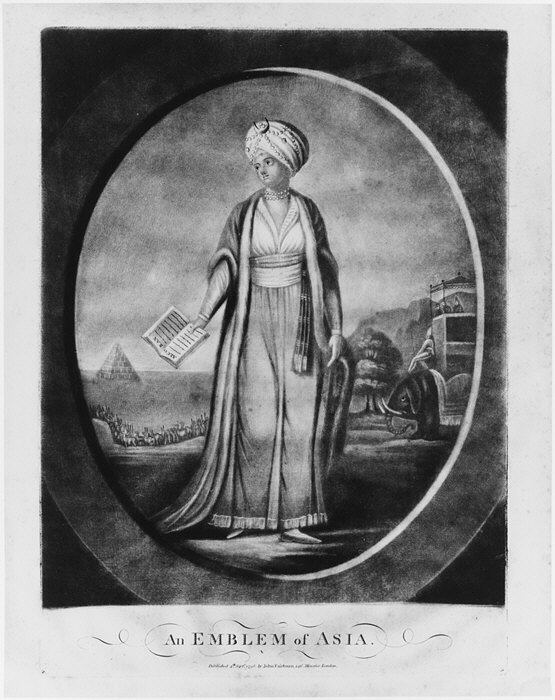
An Emblem of Asia: Deconstructing Identity Through Mezzotint and Fabric
In the rarefied echelons of contemporary couture, where innovation often masquerades as disruption, Katherine Fashion Lab’s latest standalone study, “An Emblem of Asia,” presents a compelling counter-narrative. It is not a garment in the traditional sense, nor a mere textile sample, but a profound meditation on heritage, materiality, and the very syntax of global identity. By employing the arcane printmaking technique of mezzotint—typically reserved for the hallowed pages of fine art folios—the Lab elevates fabric into a canvas of philosophical inquiry. This is not a collection piece; it is a thesis, rendered in chiaroscuro and thread, that interrogates what it means to carry a continent’s memory in an era of homogenized luxury.
The Alchemy of Mezzotint on Textile
At first glance, the choice of mezzotint is audacious. A process known for its velvety blacks and seamless tonal gradations, mezzotint is historically a labor of obsessive patience—a copper plate is rocked thousands of times to create a burr that holds ink. Katherine Fashion Lab has transposed this labor onto silk organza and raw silk twill, not through direct printing, but through a proprietary transfer that mimics the plate’s tactile depth. The result is a fabric that does not merely reflect light; it absorbs it, creating a surface that shifts from deep obsidian to smoky silver depending on the angle of the viewer.
This material choice is deliberate. Mezzotint’s signature is its lack of hard lines—forms emerge from darkness rather than being outlined. In “An Emblem of Asia,” this translates into a visual language of ambiguous geography. The motifs—a stylized lotus, a fragment of a Mughal arch, the sinuous curve of a dragon’s tail—are not printed with crisp precision. Instead, they appear as if recalled from memory, their edges softened by the grain of the burr. This is a profound statement: Asia is not a monolithic, clearly demarcated entity, but a palimpsest of overlapping cultures, each leaving a faint, indelible mark.
Global Heritage as a Design Lexicon
The study’s origin is explicitly labeled “Global Heritage,” a phrase that the Lab uses not as a marketing platitude but as a structural principle. Unlike typical couture houses that borrow a single ethnic motif for seasonal exoticism, Katherine Fashion Lab synthesizes disparate Asian iconographies into a cohesive, abstract whole. The central panel of the study features a mandala-like structure, but its geometry is interrupted by the asymmetrical flow of a Persian arabesque. The border, meanwhile, echoes the repetitive patterns of Japanese shibori, yet it is rendered in the deep, smoky tones of Indian indigo.
This deliberate fusion avoids the pitfall of cultural appropriation by refusing to represent any single tradition authentically. Instead, it presents a meta-narrative of exchange. The Silk Road, the maritime spice routes, and the colonial trade networks are all implicitly referenced. The garment becomes a cartographic tool, mapping the flow of ideas, dyes, and textiles across centuries. It asks the viewer to consider: What is “Asian” when the materials themselves—the silk from China, the indigo from India, the gold thread from Persia—have always been global commodities? The answer is not a place, but a process of becoming.
Standalone Study: The Power of the Fragment
Perhaps the most radical aspect of “An Emblem of Asia” is its status as a standalone study. It is not part of a runway collection, nor is it intended for commercial production. This framing liberates the piece from the tyranny of wearability. It is presented as a large, framed textile panel, roughly the size of a ceremonial robe, but it is displayed flat, like a manuscript page. This curatorial decision forces a different kind of engagement. The viewer does not imagine a body inside it; instead, they read it as a text.
This approach aligns with the Lab’s broader philosophical project: to reposition couture as a form of critical inquiry. By isolating the study, Katherine Fashion Lab removes the distractions of styling, accessories, and the human form. What remains is pure material rhetoric. The mezzotint’s deep blacks become metaphors for the unknown or the erased—the histories of women, of artisans, of colonized peoples that are often absent from official narratives. The subtle highlights, achieved through selective burnishing, suggest moments of resilience and brilliance that pierce through that darkness.
The fragmentary nature of the imagery reinforces this. No single motif is fully resolved. A peacock feather appears to dissolve into a cloud pattern; a calligraphic stroke morphs into a stem. This incompleteness is not a flaw but a thesis. It argues that Asian identity, in its global diaspora, is inherently unfinished—a living archive that is constantly being revised, reinterpreted, and re-inscribed. The study, therefore, is not a conclusion but an invitation to continue the conversation.
Materiality as Memory and Resistance
In an industry obsessed with digital prints and instant gratification, the choice of mezzotint is a deliberate act of resistance. The technique’s labor intensity—each piece requires hundreds of hours of manual work—serves as a counterpoint to fast fashion’s disposability. Katherine Fashion Lab is not merely creating a beautiful object; it is embedding a temporal dimension into the cloth. The time of making becomes part of the garment’s meaning. This is a quiet but powerful critique of the global supply chain, where the hands that produce are rendered invisible. Here, the hand is everything.
Furthermore, the mezzotint process is inherently unpredictable. The pressure of the rocker, the humidity of the studio, the viscosity of the ink—all contribute to variations that cannot be replicated. Each “An Emblem of Asia” is therefore a unique artifact, a singular expression of a shared idea. This aligns perfectly with the concept of global heritage: it is not a standardized product, but a collection of distinct, localized expressions that share a common DNA. The Lab celebrates this heterogeneity, rejecting the homogenizing force of global luxury that seeks to make a Parisian handbag indistinguishable from a Shanghai one.
Conclusion: A New Couture of Ideas
“An Emblem of Asia” is a watershed moment for Katherine Fashion Lab and for the discipline of couture at large. It demonstrates that high fashion can be a vehicle for intellectual rigor without sacrificing aesthetic beauty. The piece is stunning not despite its complexity, but because of it. The interplay of light and shadow on the mezzotint surface creates a hypnotic, almost sculptural quality that demands slow, contemplative viewing.
In its synthesis of a global heritage through a distinctly Asian lens, the study offers a model for a more ethical and thoughtful form of cultural exchange. It does not claim to represent Asia; rather, it presents a dialogue with Asia—a conversation that acknowledges the continent’s profound influence on global aesthetics while respecting its internal diversities. As a standalone study, it functions as a manifesto: couture is not merely about dressing the body, but about clothing the mind with new perspectives. Katherine Fashion Lab has not just made a garment; it has made a statement that will resonate in the annals of fashion theory for years to come. The emblem is not of Asia alone, but of a world that is finally ready to see the threads that connect us all.