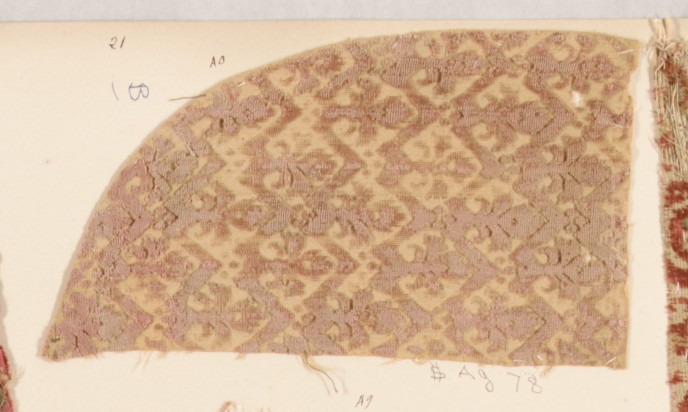
Deconstructing the Fragment: A Study in Global Heritage at Katherine Fashion Lab
In the rarefied echelons of haute couture, where novelty is often mistaken for innovation, Katherine Fashion Lab (KFL) offers a compelling counter-narrative. The house’s latest standalone study, simply titled Fragment, is not a collection but a thesis—a rigorous, philosophical exploration of how a single material, silk, can embody the fractured yet interconnected nature of global heritage. By isolating the "fragment" as both a physical and conceptual subject, KFL eschews the transient spectacle of seasonal trends in favor of a deeper, more intellectual engagement with the craft. This analysis dissects how Fragment transcends conventional design to become a meditation on memory, loss, and the enduring power of textile as a vessel for cultural identity.
The Semiotics of the Fragment: Beyond the Whole
The choice of "fragment" as the organizing principle is a deliberate act of intellectual defiance. In Western fashion, the dominant paradigm has long been the complete, seamless garment—a symbol of perfection and totality. KFL, however, posits that the fragment is not a sign of deficiency but rather a site of heightened meaning. A broken shard of porcelain, a torn edge of an antique kimono, a single embroidered motif salvaged from a once-grand tapestry—these are not remnants of failure but witnesses to history. The fragment carries the memory of the whole, yet its power lies in its incompleteness, inviting the viewer to fill the void with narrative.
This conceptual framework is executed with surgical precision in the construction. Each piece in the study appears to be assembled from irregular, non-repeating panels of silk, their edges left raw or finished with a micro-serged stitch that mimics the natural fray of time. The seams are not hidden but celebrated, often placed asymmetrically to disrupt the body’s silhouette. This is not deconstruction in the 1990s Belgian sense of aggressive ripping; rather, it is a curatorial reconstruction. KFL treats each silk panel as a found artifact, a discrete historical document that, when juxtaposed with another, creates a new, layered narrative. The wearer is not donning a dress; they are wearing a palimpsest, a text rewritten by generations of hands.
Silk as a Living Archive of Global Heritage
The material itself—silk—is the protagonist of this study. KFL’s sourcing strategy is a masterclass in global heritage. The lab has procured silks from disparate geographies, each with a distinct chemical and tactile signature. There is the crisp, slightly papery Habotai from the Jiangsu province of China, echoing the region’s millennia-old sericulture. Contrasting this is the fluid, heavy Dupioni from Como, Italy, whose irregular slubs speak to a European industrial tradition that reimagined Asian raw materials. Interspersed are fragments of Thai Mulberry silk, with its characteristic uneven texture and natural golden hue, a testament to the artisanal looms of Southeast Asia.
What is remarkable is how KFL refuses to homogenize these disparate origins. Instead of blending them into a single, harmonious fabric, the lab uses contrast as a binding agent. A bodice might be constructed from a stiff, antique Chinese brocade, its dragon motifs faded to spectral outlines, while the sleeve is a fluid, contemporary Italian crepe. The transition is abrupt, almost jarring, yet the overall effect is one of profound coherence. This is a deliberate strategy to represent the modern condition: we are all composed of fragments from different cultures, histories, and geographies. The silk is not merely a luxury material; it is a materialized memory, carrying the specific environmental and artisanal conditions of its origin into a new, synthetic whole.
Technical Mastery: The Architecture of Imperfection
From a purely technical standpoint, Fragment demands a level of mastery that borders on the obsessive. The inherent challenge is the instability of silk, particularly when cut into irregular shapes. KFL’s atelier has developed a proprietary technique of internal bias taping, where fine strips of silk organza are fused to the wrong side of each fragment before assembly. This invisible scaffolding provides the necessary tension and support, preventing the delicate fabric from collapsing under the weight of its own history, while allowing the garment to move with an organic, almost liquid fluidity.
Furthermore, the finishing details elevate the study from mere craft to fine art. The raw edges are not left to unravel haphazardly; they are meticulously rolled and whip-stitched by hand with a silk thread that is one shade lighter or darker than the base fabric. This creates a subtle, ghostly outline around each fragment, a visual cue that delineates the boundaries of each historical piece. The effect is akin to looking at a map where borders are drawn with a fine, luminous pen—each territory is distinct, yet part of a greater cartography. The closure system is equally innovative, employing invisible magnetic clasps covered in matching silk, ensuring that no metal hardware interrupts the narrative of the fabric.
The Standalone Study: A Curatorial Manifesto
By framing this as a "standalone study," KFL deliberately removes itself from the commercial calendar and its attendant pressures. This is not a pre-collection or a resort line; it is a scholarly exhibition worn on the body. The garments are presented with gallery-style placards, detailing the provenance of each silk fragment—the specific region, the approximate decade, the technique used to create the original textile. This transforms the act of dressing into an act of intellectual inquiry.
In an industry obsessed with the new, Fragment is a radical act of preservation. It suggests that the future of couture lies not in the creation of more objects, but in the re-contextualization of existing ones. Each garment is a unique, non-reproducible artifact, a wearable collage of global heritage that challenges the wearer to consider their own fragmented identity. The study does not offer solutions or easy answers; it offers a profound, tactile meditation on how we are all, in essence, beautiful fragments of a larger, more complex human story. Katherine Fashion Lab has not just designed clothes; it has curated a philosophy, and in doing so, has redefined the very definition of luxury as a form of cultural stewardship.