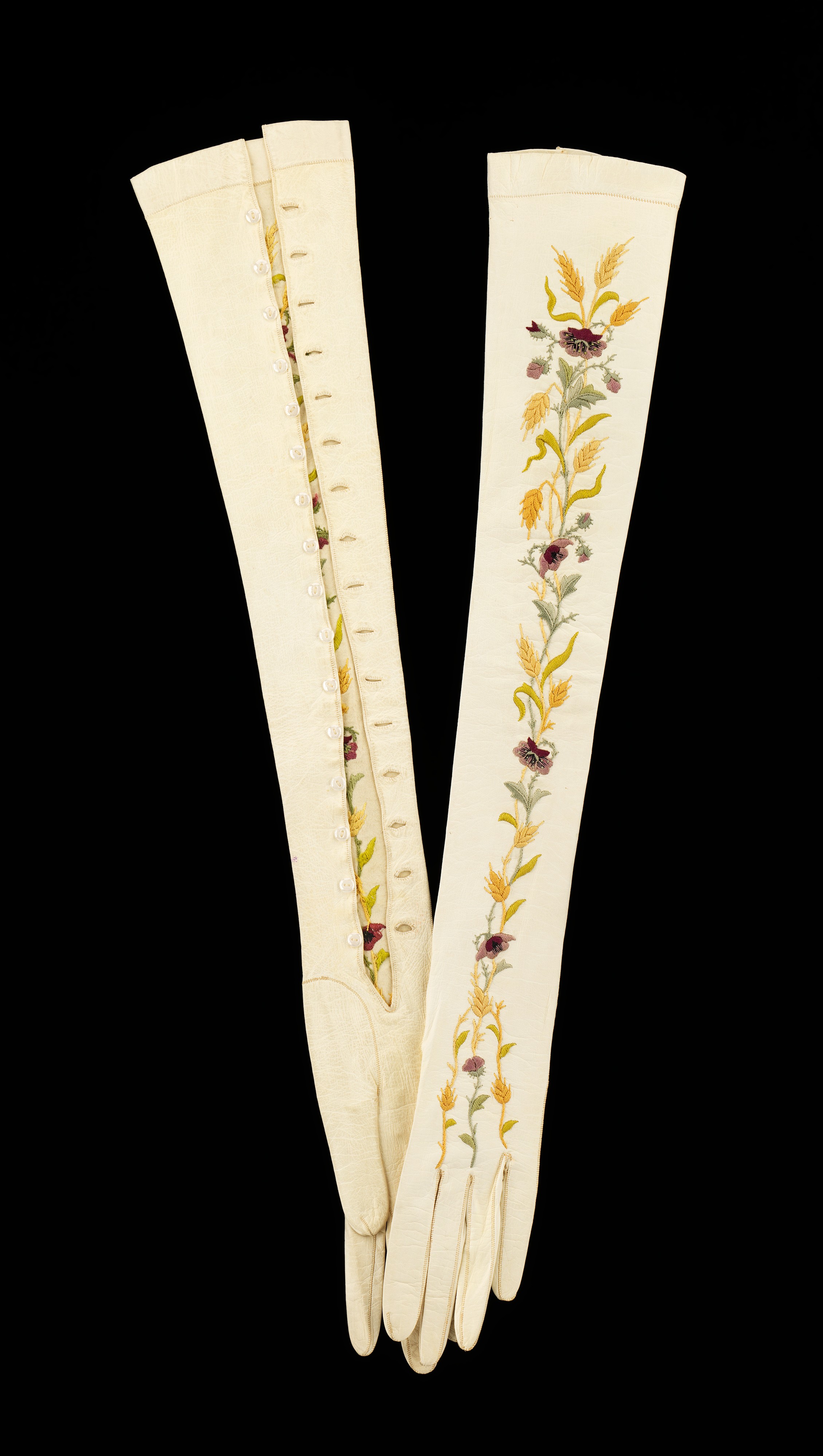
The Sovereign Silhouette: A Couture Analysis of the French Evening Glove
In the rarefied lexicon of haute couture, few accessories command the quiet authority of the evening glove. It is not merely a covering for the hand; it is a declaration of intent—a sculptural extension of the arm that transforms gesture into choreography. Within the ateliers of Katherine Fashion Lab, the French evening glove—crafted from supple leather and lustrous silk—is elevated from a mere sartorial relic to a standalone study in material philosophy, historical resonance, and contemporary power dressing. This analysis deconstructs the object as a masterclass in restraint, examining its provenance, its tactile dialectics, and its audacious relevance in a fashion epoch obsessed with the ephemeral.
Provenance and Paradox: The French Atelier Lineage
To understand the Katherine Fashion Lab glove is to first acknowledge its Gallic pedigree. France, specifically the glove-making houses of Grenoble and Paris, has long been the undisputed arbiter of this craft. The savoir-faire involved is not industrial; it is artisanal, passed down through generations of gantiers who understand that a glove must fit like a second skin yet move with the architectural precision of a bespoke suit. Katherine Fashion Lab’s decision to root this study in French origin is a deliberate act of historical citation. It invokes the courts of Louis XIV, where gloves were instruments of political flirtation, and the Belle Époque, where they signified bourgeois propriety. Yet, the Lab subverts this heritage. By isolating the glove as a standalone study, it removes the crutch of a full evening gown, forcing the observer to confront the object’s inherent tension: it is both an intimate garment and a public armor.
The Material Dialectic: Leather’s Discipline, Silk’s Seduction
The genius of this piece lies in its binary materiality. The primary structure is composed of kid leather, a material chosen for its extraordinary tensile strength and its ability to stretch and recover without losing form. In couture terms, leather is the disciplinarian. It provides the glove with its crisp, unyielding silhouette—the kind that snaps tautly over the wrist and palm, creating a clean line that terminates precisely at the elbow or above the bicep. This is not the soft, slouchy suede of a casual accessory; this is leather that has been shaved to a paper-thin thickness, then meticulously sewn with a single, invisible seam. The result is a surface that reflects light with a matte, almost velveteen sheen, suggesting power that is held in reserve.
In stark counterpoint, the leather is married to silk, most often in the form of a lustrous faille or a delicate charmeuse lining, but also as an exterior accent—perhaps a scalloped cuff or a delicate, hand-rolled hem. Silk introduces the element of fluidity and sensuality. Where leather commands, silk persuades. The interior silk lining is not merely functional; it is a private indulgence, a secret whisper against the skin that the public will never see. This juxtaposition creates a tactile dialectic: the exterior projects a formidable, almost glacial reserve, while the interior offers a luxurious, yielding softness. This is the paradox of couture—the external performance versus the internal experience—and Katherine Fashion Lab exploits it to brilliant effect.
Ergonomics of Elegance: The Architecture of the Hand
As a standalone study, the glove’s construction demands forensic attention. The pattern-making is a feat of negative-space engineering. A glove is not a simple tube; it is a three-dimensional puzzle of gussets, fourchettes (the side panels between fingers), and quirks (the small diamond-shaped inserts at the base of each finger). In this French example, the point back—a seam that runs from the wrist to the knuckle of the middle finger—is executed with surgical precision, allowing the glove to mimic the natural arch of the hand. The thumb is set at a pronounced angle, a design choice that facilitates movement without compromising the sleek aesthetic.
The length is crucial. This is not a wrist-length daytime glove. It is an opera-length or a twenty-button style, extending well past the elbow. This elongation does more than cover flesh; it visually lengthens the arm, creating a continuous, unbroken line from shoulder to fingertip. In couture analysis, this is referred to as the ligne continue—the continuous line that gives the wearer a statuesque, almost imposing presence. The glove, in this context, becomes a prosthetic of aristocratic bearing. It forces a certain posture: shoulders back, elbows slightly bent, hands held with deliberate intent. The wearer cannot slouch in this glove; it simply will not allow it.
The Semiotics of Removal: A Ritual of Power
No analysis of the evening glove is complete without addressing the act of removal. In the social choreography of the past, removing a glove was a highly charged gesture—a sign of intimacy, trust, or aggression. Katherine Fashion Lab’s standalone presentation resurrects this semiotic weight. The glove is not merely taken off; it is ritualistically unpeeled. The silk lining allows the leather to slide off with a whisper, revealing the bare hand as an act of profound vulnerability. In a contemporary context, this becomes a potent metaphor for the professional woman: the gloved hand is the corporate facade, the negotiator’s shield; the ungloved hand is the authentic self, exposed only in moments of strategic surrender.
This is where the Lab’s genius lies—in recontextualizing a historical artifact for modern psychological warfare. In the era of digital communication, where the hand is perpetually engaged with a screen, the evening glove becomes a defiant anachronism. It is a deliberate slowdown. To put on this glove is to announce that one is not at the mercy of speed or convenience. It signals a return to deliberate, physical presence. The wearer is not performing for a camera; she is commanding a room through the sheer force of her own materiality.
Conclusion: The Future of a Forgotten Armor
The French evening glove, as interpreted by Katherine Fashion Lab, is far more than a nostalgic curio. It is a masterclass in negative capability—the ability to convey immense meaning through what is left unsaid, or in this case, uncovered. The leather provides the structural integrity of a business suit; the silk supplies the emotional intelligence of a couture gown. Together, they form an object of profound duality: protective yet sensual, authoritative yet intimate. As a standalone study, it challenges the contemporary fashion industry’s obsession with the casual and the disposable. It demands attention, respect, and a certain degree of physical discipline from its wearer.
In a world of athleisure and digital disembodiment, the glove offers a return to the tactile aristocracy of dressing. It is not an accessory to an outfit; it is the outfit’s intellectual core. The Katherine Fashion Lab evening glove is a testament to the enduring power of craft, a silent rebuke to fast fashion, and a beautiful, terrifying reminder that true elegance is never accidental—it is a deliberate, studied act of will. To wear it is to understand that the hand that wears the glove is the hand that holds the pen, signs the treaty, and, ultimately, writes the future. It is not merely an accessory; it is a sovereign.