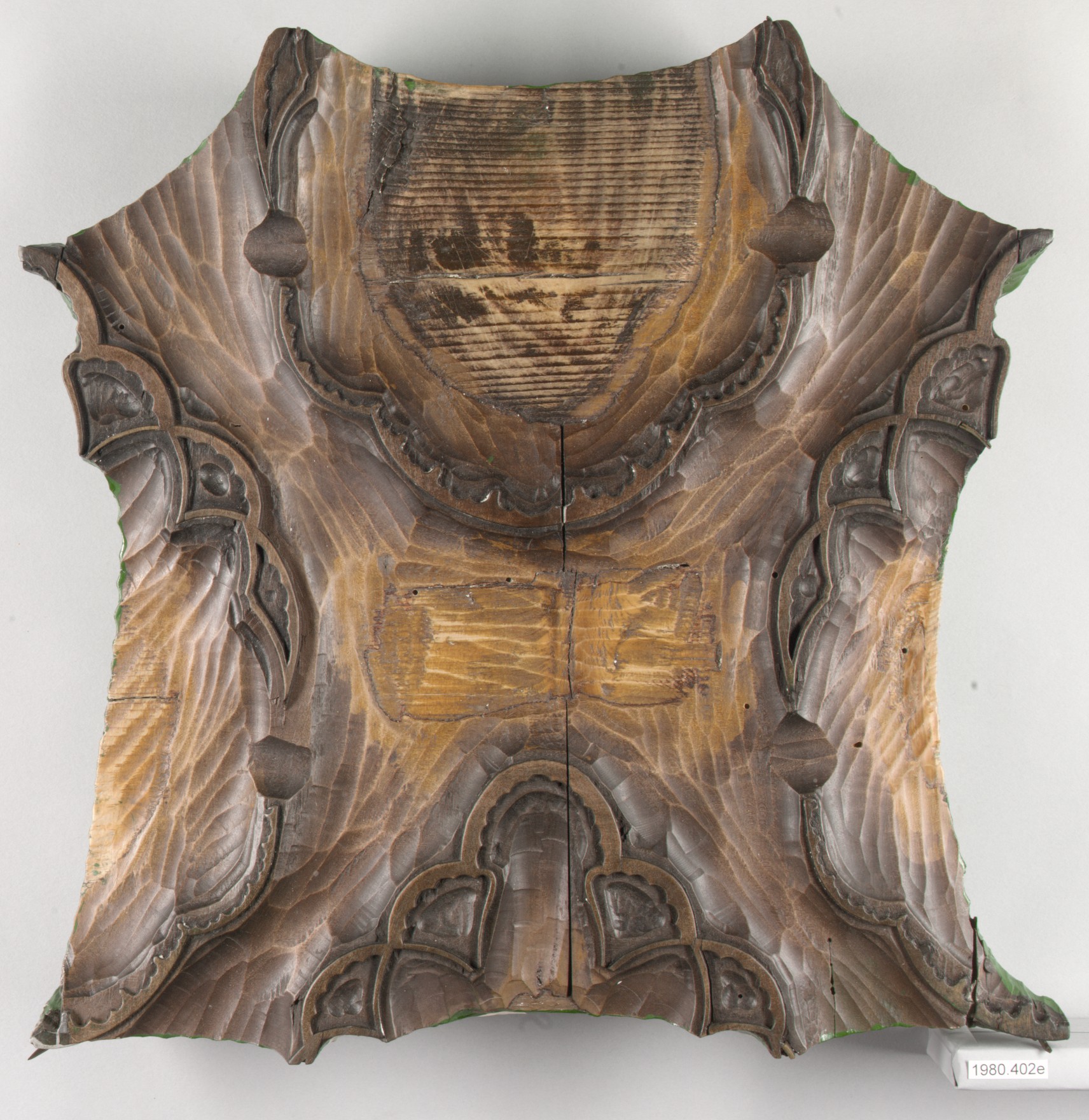
Executive Heritage Analysis: The Woodblock as a Strategic Archetype for Katherine Fashion Lab
In the pursuit of a 2026 high-end luxury strategy, Katherine Fashion Lab must look beyond transient trends and into the foundational technologies of human expression. The woodblock—a deceptively simple composite of carved timber and metal—represents one of humanity’s most profound intersections of material, ritual, and power. Originating in ancient civilizations across Asia and the Middle East, the woodblock was never merely a tool for reproduction; it was an instrument of spiritual authority, a vessel for symbolic narrative, and a precursor to the very concept of branded identity. For a heritage-driven fashion house, the woodblock offers a compelling strategic metaphor: the deliberate, artisanal impression of permanence upon a pliable world. This analysis deconstructs its historical resonance and translates its core principles into a concrete, actionable vision for Katherine Fashion Lab’s 2026 luxury positioning.
Symbolic Power and the Authority of the Impression
The woodblock’s symbolic power lies in its duality: it is both the source and the seal. In ancient civilizations, from the Han Dynasty’s earliest textile stamps to the intricate fabric prints of the Indus Valley, the block was an instrument of controlled repetition. To possess a block was to possess the right to create, to define the official image, and to disseminate a singular, unalterable truth. The metal inlay, often copper or bronze, added not just durability but a metallic resonance—a sound and weight associated with currency and royal decree. This was not decoration; it was the physical manifestation of *auctoritas* (the right to command).
For Katherine Fashion Lab, this translates into a 2026 strategy centered on exclusive signature motifs. The brand must move away from mass-produced, digital-only prints and instead commission master carvers to create limited-edition, physical blocks. Each garment would be stamped with an impression that is inherently imperfect—the slight variation in pressure, the grain of the wood, the faint metallic sheen—creating a fingerprint of authenticity. In a luxury market saturated with algorithmic uniformity, the woodblock’s power is its inability to be perfectly replicated. The strategic message is clear: Katherine Fashion Lab does not merely design; it authorizes. Each piece becomes a certified artifact, carrying the symbolic weight of a seal that cannot be forged by machine.
Historical Adornment: The Body as a Living Manuscript
Historically, woodblock-printed textiles were not passive coverings. They were active communicators of social rank, tribal affiliation, and personal virtue. In ancient Japan, the katazome process used carved blocks to apply resist paste, creating patterns that signified seasonal change and poetic allusion. In West African civilizations, the adire and adinkra blocks encoded proverbs and philosophical concepts directly onto cloth, transforming the wearer into a walking repository of cultural wisdom. The adornment was not superficial; it was a deliberate layering of meaning onto the human form, turning the body into a manuscript that could be read by the initiated.
Katherine Fashion Lab’s 2026 collection must revive this concept of narrative adornment. The strategy involves a "Lexicon of Impressions"—a curated library of 12 to 15 original woodblock designs, each tied to a specific heritage narrative (e.g., "The Weaver’s Patience," "The Merchant’s Compass," "The Guardian’s Gate"). These are not arbitrary graphics but symbolic hieroglyphs. For the high-end consumer, this offers a profound shift in value proposition: they are not buying a dress; they are acquiring a wearable biography. The garment becomes a conversation piece, a status marker that communicates intellectual and cultural capital rather than mere economic wealth. The strategic focus is on depth over surface, where the historical weight of the medium justifies a premium price point that cannot be justified by fabric alone.
Spiritual Meaning: The Ritual of Creation
The spiritual dimension of the woodblock cannot be overstated. In many ancient traditions, the carving of a block was a sacred act, often preceded by prayer or fasting. The wood—often from sacred trees like sandalwood or cedar—was believed to carry its own spirit, while the metal was associated with the earth’s core energy. The printing process itself was a ritual of transformation: the block is inked (birth), pressed (sacrifice), and lifted (revelation). The result is a fabric that carries the imprint of this sacred sequence. This is fundamentally opposed to the sterile, instantaneous nature of digital printing, which is devoid of ritual and thus devoid of soul.
For the 2026 luxury strategy, Katherine Fashion Lab should institutionalize this ritual as a core brand experience. We propose a "Sanctuary of the Press"—a physical atelier space, open by appointment only, where clients can witness (or participate in) the printing of their bespoke garment. The process would be choreographed: the artisan’s breath, the rhythmic tap of the mallet, the scent of natural pigments. This transforms a purchase into a pilgrimage. The spiritual meaning is operationalized as mindful scarcity. By limiting production to the physical capacity of the artisan (e.g., 50 impressions per block per season), Katherine Fashion Lab creates a product that is not just rare but sacred. The consumer is not buying a product; they are buying a blessing, an imprint of human intention that digital fabrication can never replicate.
2026 High-End Luxury Strategy: The "Legacy Impression" Framework
To translate this heritage into a commercially viable and strategically dominant position for 2026, Katherine Fashion Lab must adopt a three-pillar framework: Provenance, Process, and Permanence.
Pillar One: Provenance as a Pricing Lever
The woodblock must be elevated from a historical reference to a certified asset. Each block used in the 2026 collection will be serialized, documented with its wood source (e.g., reclaimed teak from a decommissioned Javanese temple), and accompanied by a certificate of authenticity signed by the master carver. This provenance dossier—delivered in a leather-bound folio—positions the garment as an investment-grade collectible. The strategy is to shift the consumer’s mental model from "fashion expenditure" to "cultural acquisition." The price point for a woodblock-printed couture piece should be set at a 40-60% premium over standard embroidery, justified by the irreplaceable nature of the block itself.
Pillar Two: Process as a Brand Narrative
In 2026, the luxury consumer is increasingly disillusioned with the opacity of fast fashion. Katherine Fashion Lab will counter this by making the process visible and slow. Our marketing campaign, titled "The Weight of a Mark," will feature macro-photography of the wood grain, the metallic inlay, and the pressure-induced fabric distortion. We will publish a quarterly "Impression Journal" documenting the creation of each new block, from initial sketch to final strike. This is not just content marketing; it is a strategic tool to build a community of connoisseurs who value the 72-hour drying time of natural indigo as a sign of authenticity. The slowness becomes a luxury signal, a direct counterpoint to the instant gratification of digital culture.
Pillar Three: Permanence as a Sustainability Ethos
The woodblock is inherently sustainable—it is a reusable tool, not a disposable template. In 2026, Katherine Fashion Lab will position its woodblock line as the ultimate expression of circular luxury. Unlike a digital print that can be infinitely reproduced and thus devalued, a woodblock print is finite. We will offer a "Re-Impression" service, where clients can return their garment after five years to have it re-printed with a new, archival metallic pigment, effectively giving the garment a second life. This strategy builds long-term customer loyalty and addresses the growing demand for environmental responsibility without sacrificing exclusivity. The message is powerful: Katherine Fashion Lab does not create waste; it creates heirlooms.
Conclusion: The Block as the Brand
The woodblock is more than a historical artifact; it is a strategic blueprint for a luxury house that seeks to differentiate through meaning rather than volume. By embracing its symbolic power of authority, its historical role in narrative adornment, and its spiritual process of ritual creation, Katherine Fashion Lab can forge a 2026 identity that is both timeless and avant-garde. The strategy is not to mimic the past but to channel its core principles—intentionality, scarcity, and permanence—into a modern context. In a world of fleeting digital impressions, the woodblock offers a tangible, weighted, and soulful alternative. Katherine Fashion Lab will not just print on fabric; it will impress upon the world a legacy of deliberate beauty, one strike at a time.