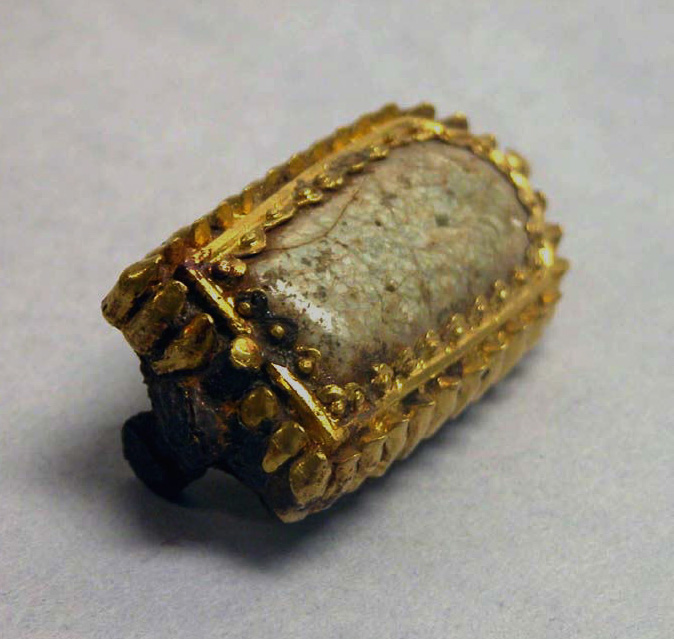
Heritage Analysis: The Headdress Ornament of Imperial China
Introduction: The Object as Sovereign Statement
The headdress ornament, rendered in a triumvirate of gold, jade, and iron, is not merely an artifact of personal adornment; it is a condensed manifesto of imperial authority, cosmological alignment, and martial invincibility. Within the canon of Chinese material culture, the headdress served as the paramount locus of symbolic communication, elevating the wearer from mortal subject to terrestrial intermediary of celestial mandate. For Katherine Fashion Lab, this object offers a profound strategic blueprint for 2026—a year in which the luxury market increasingly demands narrative depth, cultural authenticity, and the audacious fusion of fragility and strength. This analysis deconstructs the ornament’s layered semiotics and translates them into a high-end luxury strategy rooted in heritage stewardship and avant-garde commercialism.
Symbolic Power: The Tripartite Language of Authority
The material composition of the headdress is a deliberate lexicon of power. Gold, the immutable metal, signifies the sun, the emperor’s yang essence, and the unbroken lineage of dynastic rule. Its reflective surface was believed to deflect malign influences while projecting an aura of divine radiance. Jade, more precious than gold in Confucian thought, embodies the five cardinal virtues: benevolence, wisdom, righteousness, propriety, and courage. Its cool, translucent texture symbolizes the ideal ruler’s detachment from base desire, while its hardness—requiring immense labor to carve—demonstrates the state’s capacity to command extraordinary resources. Iron, the utilitarian metal, introduces a martial counterpoint. It represents the military might that underpins civil authority, the pragmatic force that protects the jade’s idealism and the gold’s splendor. The strategic juxtaposition of these three materials creates a dialectic of celestial, moral, and terrestrial power—a trinity that legitimized the wearer’s absolute sovereignty.
Historical Adornment: From Court Ritual to Political Apparatus
Historically, the headdress ornament was not a passive accessory but an active political instrument. From the Han dynasty’s ceremonial jinxian crowns to the elaborate phoenix crowns (fengguan) of the Ming and Qing empresses, the headdress encoded rank, occasion, and allegiance. The inclusion of iron, often hidden within the structure, is a sophisticated historical nuance. It suggests a militarized aristocracy, where the courtier or emperor was simultaneously a scholar, a priest, and a warrior. The ornament’s placement—elevated above the brow—positioned it as the first point of visual contact, ensuring that any audience, foreign envoy or domestic official, was immediately reminded of the wearer’s hierarchical supremacy. In the Forbidden City’s ritual spaces, the headdress was the final layer of a ceremonial armor that transformed the human body into a living talisman of the state.
Spiritual Meaning: The Microcosm of the Cosmos
Beyond political utility, the headdress functioned as a portable cosmos. The circular forms often incorporated into its design mirrored the heavens, while the central jade plaque represented the Pole Star, the fixed point around which the universe revolves—an explicit metaphor for the emperor’s role as the pivot of the earthly realm. The iron elements, often shaped as stylized dragon claws or mountain peaks, grounded the wearer to the earth’s tectonic stability. This spiritual architecture was not merely decorative; it was believed to channel qi (vital energy) from the cosmos through the crown and into the body, ensuring the ruler’s health, clarity, and longevity. For the wearer, the headdress was a daily ritual of self-deification, a reminder that their physical form was a vessel for ancestral and celestial will.
Strategic Translation for 2026: The Katherine Fashion Lab Blueprint
For Katherine Fashion Lab, the headdress ornament offers a compelling departure from the industry’s prevailing nostalgia-driven revivalism. The 2026 luxury consumer, particularly in the Asia-Pacific and global Gen-Z ultra-high-net-worth segment, is not seeking literal replication but semantic resonance. The strategy must therefore pivot from archaeological reproduction to conceptual extraction.
Material Alchemy: The “Iron-Jade” Paradox
The first strategic pillar is a radical material narrative. Katherine Fashion Lab should introduce a limited “Sovereign Triad” collection where gold, jade, and iron are fused using advanced metallurgy—specifically, titanium-infused iron alloys that are lightweight yet structurally resilient. This addresses modern wearability while honoring the original’s martial weight. The jade should be sourced from Myanmar or Hetian, with a visible, unpolished inclusion to signal authenticity. The gold should be applied via 24k electroforming to create a feather-light lattice. The marketing narrative must emphasize the contrast: the iron’s raw, dark patina against the jade’s luminous glow. This juxtaposition mirrors the contemporary luxury consumer’s desire for dual identities—strength and vulnerability, tradition and disruption.
Symbolic Recontextualization: Power as Personal Sovereignty
The second pillar involves re-encoding the symbolism for a post-imperial audience. The historical headdress signified obedience to a state; the 2026 Katherine Fashion Lab ornament must signify self-sovereignty. The gold remains a symbol of personal worth and achievement; the jade transforms from Confucian virtue to emotional intelligence and inner calm; the iron becomes a metaphor for digital resilience—the ability to withstand the “iron age” of cyber warfare and information overload. The product line should be positioned as “The New Mandate of Heaven,” where the wearer is the sole emperor of their personal domain. This is a powerful narrative for high-earning female executives and creative directors who see themselves as forging new dynasties in business and culture.
Experiential Luxury: The Ritual of Investiture
Finally, the 2026 strategy must transcend the physical object to create a ritualistic purchase journey. Borrowing from the historical investiture ceremonies, Katherine Fashion Lab will offer a private commissioning process called “The Celestial Audience.” Clients will be invited to a heritage atelier where a master artisan explains the material symbolism, then co-creates a bespoke ornament—choosing the specific jade hue, the iron finish, and a personalized gold engraving of a personal motto or familial sigil. The delivery is staged as a ceremony, complete with a lacquered box and a hand-written parchment explaining the object’s spiritual guardianship. This transforms a purchase into a legacy artifact, justifying a price point of $50,000–$150,000 and creating a cult-like following.
Conclusion: From Relic to Revelation
The Chinese headdress ornament, with its fusion of gold, jade, and iron, is a masterclass in materialized ideology. It teaches that true luxury is not ornamentation but intention. For Katherine Fashion Lab, this heritage object is not a museum piece to be copied but a strategic lens through which to view the future of high-end adornment. By honoring the material triad, reinterpreting the symbolism for individual empowerment, and staging the purchase as a modern rite of passage, the brand can position itself as the preeminent house for the 2026 sovereign consumer—one who understands that true power is worn, not spoken. The headdress is dead; long live the headdress.