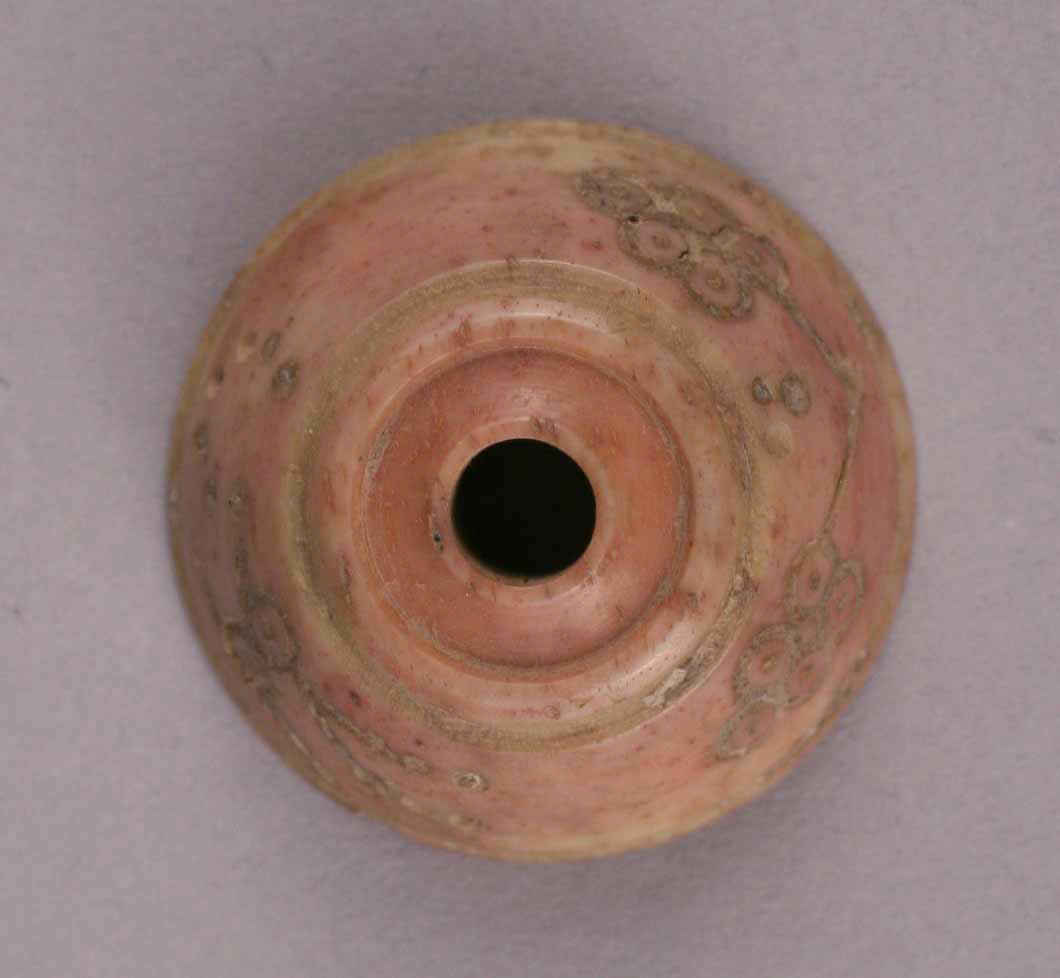
The Articulated Past: A Heritage Analysis of the Tinted Bone Button and Bead
In the lexicon of luxury, the smallest artifact often carries the most profound narrative. For Katherine Fashion Lab, the strategic examination of a bone button and bead from an ancient civilization is not an exercise in antiquarian curiosity, but a masterclass in symbolic capital. These micro-sculptures—tinted, incised, and inlaid with pigment—are not mere fasteners or ornaments; they are the original hard luxury commodities. This analysis deconstructs their historical power and translates their silent language into a coherent, high-value strategy for the 2026 luxury market.
Symbolic Power and the Semiotics of Status
The ancient button and bead were never passive objects. In their original context, they functioned as a non-verbal communication system, encoding social strata, tribal affiliation, and individual biography. The choice of bone as a medium was deliberate; it represented the boundary between the wild and the domestic, the living and the dead. When tinted with mineral ochre or incised with geometric lineage marks, the object transitioned from utilitarian to talismanic. The incised lines were not decoration but a form of proto-writing, a permanent record of ownership and identity that pre-dates text.
For the modern luxury strategist, this translates into a profound insight: authenticity is a function of narrative density. A garment that merely covers the body is a commodity; a garment that carries a mark of provenance is a heirloom. The ancient bead’s power lay in its irrefutable claim to a specific time, hand, and ritual. In 2026, Katherine Fashion Lab must replicate this by ensuring every product carries a verifiable, tactile story—not a marketing slogan, but a material truth.
Historical Adornment and the Architecture of the Body
Historically, the placement of these objects on the body was as significant as the object itself. The button, often found at the clavicle or wrist, served as a guardian of thresholds—the points where the body met the external world. The bead, strung near the heart or the solar plexus, was a repository of breath and life force. This ancient understanding of the body as a layered architectural system is critical for high-end design. Adornment was not applied; it was integrated with the wearer’s kinetic energy.
The tinting of the bone—often achieved through a laborious process of staining with plant dyes or iron oxides—was a form of alchemy. It changed the material’s optical temperature, making it appear warm, living, and organic. This contrasts sharply with the cold, polished sterility of modern mass-produced hardware. The 2026 luxury consumer is increasingly fatigued by digital perfection. They crave the wabi-sabi of the hand-tinted surface, the slight irregularity of the incision that signals human presence. The strategic takeaway is to prioritize artisanal finishing over industrial precision in all hardware, allowing for controlled variation that reads as bespoke.
Spiritual Meaning and the Economics of Protection
The spiritual dimension of these artifacts cannot be overstated. The inlaid paint—often a single dot of cinnabar or lapis—was likely apotropaic, designed to ward off evil spirits or to invoke ancestral protection. The bead was a portable shrine; the button, a seal of the self. This imbued the object with an emotional utility that far exceeded its physical function. The wearer did not simply use the button; they were empowered by it.
This ancient belief system offers a clear blueprint for modern luxury positioning. The market is saturated with products that offer status but not substance. Katherine Fashion Lab can differentiate by reintroducing the concept of the talismanic garment. This does not require a retreat into superstition, but rather a re-framing of the product as a protective asset—protection of identity, of heritage, and of the wearer’s time. In an era of data vulnerability, a physical object that promises a private, protected, and meaningful interaction is the ultimate luxury.
Translating Heritage into 2026 High-End Strategy
To leverage this heritage analysis for the 2026 fiscal year, Katherine Fashion Lab must execute a three-pronged strategy that moves beyond mere visual quotation.
Material Provenance as a Pricing Driver
We will source ethically reclaimed bone and horn offcuts from the food industry, subjecting them to a proprietary aging and tinting process that mimics the ancient patina. Each button and bead will be individually incised with a unique, non-repeating geometric code—a modern nod to the ancient lineage mark. This code will be registered in a digital ledger, providing the client with a certificate of authenticity that links the physical object to a specific artisan and a specific batch. This transforms a $5 component into a $150 value-add based on documented uniqueness.
The "Ritual of Dressing" as a Client Experience
We will launch a limited capsule collection—The Apotropaic Line—where the button and bead are sold not as spare parts, but as a ceremonial kit. The packaging will include a brief, museum-grade narrative card explaining the original spiritual function. The client is invited to "activate" their garment by attaching the bead in a private consultation, recreating the ancient ritual of personal consecration. This turns a purchase into a memory, significantly increasing client retention and word-of-mouth value.
Strategic Scarcity and the "Archeological Drop"
Unlike standard seasonal releases, the 2026 strategy will employ an "archeological drop" model. We will release small batches of 100 pieces, each batch referencing a different ancient civilization—Mesopotamia, Indus Valley, or Dynastic Egypt. Once a batch is sold, the specific incised pattern is retired permanently. This mirrors the finite nature of the original artifacts and creates a secondary market dynamic where the buttons themselves become collectible assets, potentially appreciating in value. This positions Katherine Fashion Lab not as a fashion house, but as a curator of wearable antiquities.
Conclusion
The ancient bone button and bead are far more than historical curiosities; they are a strategic blueprint for resisting commoditization. Their power lay in their specific materiality, their symbolic depth, and their spiritual utility. For Katherine Fashion Lab, the 2026 strategy is clear: we must not copy the aesthetic, but rather re-engineer the functional metaphysics of the object. By infusing our hardware with provenance, ritual, and scarcity, we elevate the garment from a product to a patrimony. In doing so, we do not merely sell clothing; we sell the power of the mark, the protection of the seal, and the enduring value of the human hand.