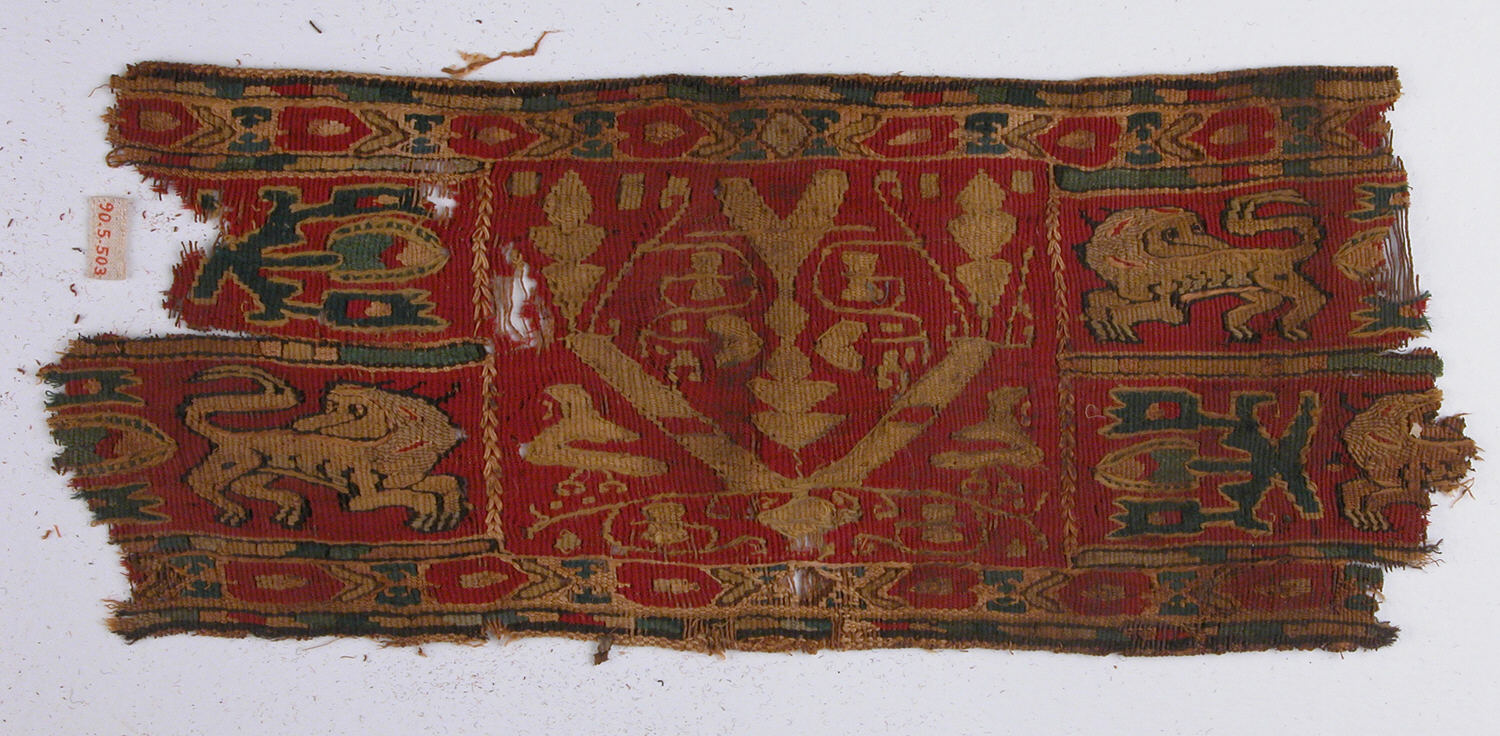
The Archaeology of Adornment: Deconstructing the Fragment of a Sleeve
In the rarefied echelons of haute couture, where garments are often conceived as ephemeral sculptures, Katherine Fashion Lab’s Fragment of a Sleeve presents a radical counter-narrative. This is not a garment in the conventional sense—no silhouette to drape, no closure to fasten, no body to clothe. Instead, it is a standalone study, a deliberate act of archaeological excavation performed upon the very concept of dress. By isolating a single anatomical component of a garment and elevating it to the status of a complete artistic object, the Lab challenges the primacy of the whole, proposing that the fragment can possess a more potent, more intellectually rigorous presence than the sum of its parts.
The piece’s power lies not in what it shows, but in what it withholds. A sleeve, by definition, implies an arm; its absence creates a void that the viewer’s imagination must populate. This is a masterclass in negative space, where the missing body becomes the true subject. The fragment is not a relic of decay but a deliberate curatorial choice—a decision to sever the sleeve from its historical and functional context, thereby liberating it from the tyranny of utility. It no longer serves to warm or protect; it exists solely to be contemplated, to be read as a text of global heritage and artisanal memory.
Materiality as a Cartography of Global Heritage
The Lab’s choice of materials—wool and linen—is anything but arbitrary. These are the foundational fibers of human civilization, predating silk and cotton in their widespread use across the Northern Hemisphere. Wool, with its inherent crimp and thermal resilience, speaks of pastoral societies from the Scottish Highlands to the Mongolian steppes. Linen, derived from the flax plant, evokes the Nile Valley’s ancient weavers and the meticulous craft of medieval European guilds. In this fragment, the two are not blended but woven together in a tapestry weave, a technique that is itself a global lingua franca of textile art. From Coptic Egypt to pre-Columbian Peru, from the Bayeux Tapestry to the warp-weighted looms of Scandinavia, tapestry weave has served as a medium for narrative, status, and spiritual expression.
By sourcing these materials without a single geographic anchor, the Lab crafts a deliberate ambiguity. The fragment is not “from” anywhere; it belongs to everywhere. This is a post-national garment, a piece of global heritage that resists the reductive labeling of provenance. The weave itself becomes a map—the warp threads running like longitude, the weft like latitude—interlacing to create a surface that is both structurally sound and visually rich. The texture is palpable: the slight roughness of the linen ground, the soft, yielding bulk of the woolen weft, the subtle irregularities that reveal the hand of the weaver. In an era of seamless, machine-knitted perfection, this tactile imperfection is a luxury, a reminder that true couture is a dialogue between human intention and material resistance.
The Tapestry Weave: A Syntax of Memory
To analyze the tapestry weave is to analyze a language of memory. Unlike a printed or embroidered pattern, tapestry weave is structural—the image and the fabric are inseparable. The design is not applied to the surface; it is the surface. In the Fragment of a Sleeve, the weave reveals a muted, abstracted pattern, perhaps a stylized botanical motif or an archaic geometric grid, but rendered with such subtle tonal shifts that it borders on the inchoate. This is not a flaw but a feature. The fragment’s imagery is deliberately occluded, like a memory half-recalled or a fresco faded by centuries of light. It forces the viewer to slow down, to lean in, to perform the act of close reading that is so often lost in the rapid consumption of contemporary fashion.
This occlusion is a sophisticated critique of the modern obsession with clarity and instant legibility. In a culture saturated with high-resolution imagery, the fragment offers a low-resolution, haptic experience. It asks not to be seen but to be felt, both physically and emotionally. The weave’s slight slubs, the uneven tension at the cut edge, the way the woolen threads catch the light differently than the linen—these are the details that reward patient observation. The sleeve becomes a palimpsest, with layers of meaning woven into its very structure, inviting the viewer to decipher a code that is ultimately personal and subjective.
Standalone Study: The Fragment as Complete Ontology
The designation of this piece as a standalone study is a critical curatorial frame. It liberates the fragment from the expectation of completion. It is not a preparatory sketch for a larger garment; it is the finished work. This recontextualization echoes the modernist tradition of the objet trouvé, where a mundane object is elevated to art through the artist’s gaze. However, the Lab’s approach is more rigorous, more analytical. This is not a found object; it is a made object that has been deliberately de-completed. The sleeve is a synecdoche—a part that stands for the whole—but the whole is no longer retrievable, nor is it desired. The absence of the cuff, the shoulder seam, and the body creates a hermeneutic gap that is the very source of its aesthetic tension.
In this sense, the fragment is a philosophical proposition about the nature of fashion itself. Fashion is often defined by its ephemerality, its relentless forward motion toward the next season. The Fragment of a Sleeve is an act of resistance against this temporality. By isolating a single element and presenting it as eternal, the Lab stops time. The sleeve does not age; it simply is. It exists in a perpetual present tense, a still point in the turning world of trends. This is couture as contemplative practice, not as spectacle.
Conclusion: The Poetics of Incompletion
The Fragment of a Sleeve by Katherine Fashion Lab is a triumph of intellectual and material curation. It transforms a utilitarian appendage into a profound meditation on heritage, craft, and the very ontology of dress. By severing the sleeve from its body and its origin, the Lab grants it a new, more resonant life. It challenges the viewer to reconsider what constitutes a completed garment, suggesting that the unfinished, the partial, and the fragmented can hold a deeper, more authentic truth than the polished whole. In its quiet, tactile insistence on wool, linen, and the ancient grammar of the tapestry weave, this piece is not a relic of the past but a blueprint for a more thoughtful, more deliberate future of fashion—a future where a single sleeve can contain the world.