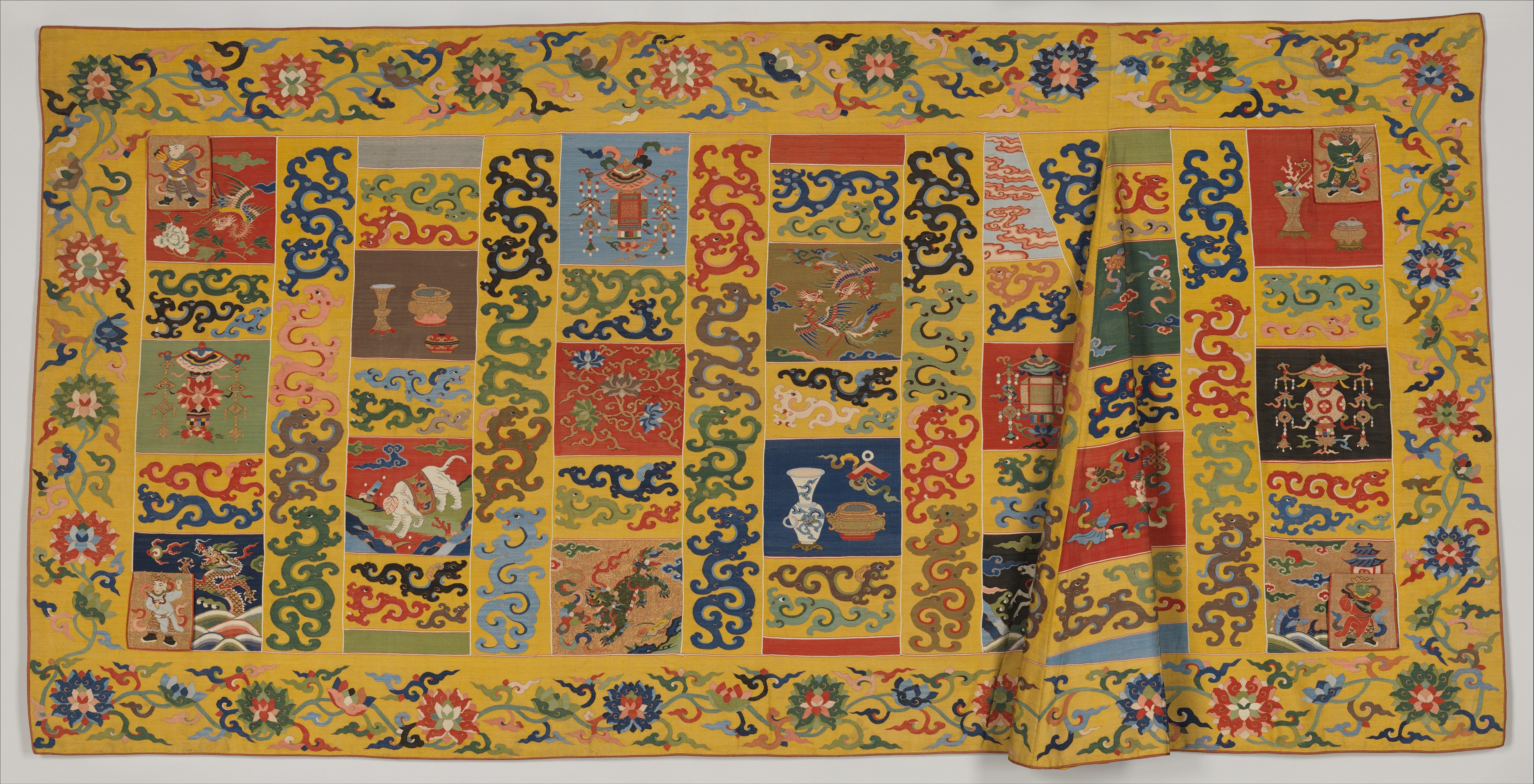
Heritage Analysis: Theatrical Costume for a Buddhist Cleric (China, Kesi Tapestry)
This strategic standalone research paper, prepared for Katherine Fashion Lab, examines a singular artifact: a theatrical costume designed for the role of a Buddhist cleric, originating from China and crafted in silk, metallic-thread, and feather kesi tapestry. The analysis deconstructs this object not merely as a costume but as a nexus of symbolic power, historical adornment, and profound spiritual meaning. Our objective is to extract core principles that can inform a forward-looking, high-end luxury strategy for 2026, positioning Katherine Fashion Lab at the intersection of transcendent craftsmanship, narrative depth, and cultural intelligence. The artifact serves as a case study in how spiritual authority is materially encoded and how that encoding can be respectfully translated into a contemporary luxury lexicon.
Deconstructing Symbolic Power and Historical Adornment
The very premise of a theatrical costume for a cleric is a study in layered symbolism. It is not a ritual garment, but a representation of one, designed for performance. This creates a meta-narrative: the garment symbolizes sanctity, while its purpose acknowledges the act of symbolization itself. The choice of kesi (cut silk) tapestry as the medium is the first signal of extreme symbolic weight. Historically associated with imperial patronage and Buddhist devotional objects, kesi is a slit-tapestry weave technique renowned for its pictorial complexity and jewel-like coloration. Its use here elevates the costume from stage prop to a legitimate object of veneration and artistic prestige. The incorporation of metallic threads (likely gold-wrapped silk) and feathers further amplifies this status. Gold symbolizes the immutable and the luminous, a direct correlate to spiritual enlightenment. Feathers, potentially from pheasants or peacocks, could allude to celestial beings (apsaras) or notions of ascension and lightness, connecting the wearer to a transcendent realm.
The garment’s adornment is therefore not decorative but hierographic. Every motif is legible within a Buddhist and Chinese cosmological framework. Potential elements include lotus flowers (purity rising from mud), endless knots (the interdependence of all phenomena), cloud collars (celestial authority), and possibly Dharma wheels or paired fish. The theatrical context allowed for a condensation and intensification of these symbols, making them more immediately legible to an audience. This practice of semiotic amplification is a critical insight for luxury strategy: in a crowded market, the narrative and symbolic content of a product must be both authentic and powerfully communicative.
The Spiritual Meaning: Garment as Sacred Interface
To analyze this costume is to understand the Buddhist cleric’s robe (kāṣāya) as an interface between the mundane and the sacred. In orthodox practice, the robe is a "field of merit," its patchwork construction a reminder of ascetic humility. This theatrical interpretation, however, inverts that material humility while honoring its spiritual intent. By crafting the "patches" in lavish kesi, it translates the concept of the "field of merit" into a "field of splendor," suggesting that the merit accumulated manifests as radiant, visible luminosity. This is a profound aesthetic pivot: sanctity expressed not through renunciation of beauty, but through its sublimation into a spiritual technology.
The costume acts as a visual mantra, its repeated symbols and meticulous craftsmanship creating a meditative focus for both the performer and the audience. The metallic threads would catch the light dynamically during movement, creating a living, shimmering aura around the actor—a literal embodiment of spiritual energy (qi or tejas). This transforms the wearer into an icon, a temporary vessel for a sacred archetype. For a modern luxury brand, this principle of the garment as an active interface—altering the perception and presence of the wearer—is paramount. It moves beyond fashion into the realm of talismanic dressing and experiential identity.
Strategic Translation: 2026 High-End Luxury Framework
For Katherine Fashion Lab’s 2026 strategy, this artifact provides a masterclass in crafting luxury with gravitas. The goal is not literal replication, but the abstraction and application of its core principles into a coherent, culturally-resonant collection or brand pillar titled, for instance, "The Iconography Collection."
1. Material Alchemy & Symbolic Technique: The kesi technique should be engaged not as a historical reproduction, but as a point of inspiration for textural storytelling. Partner with ateliers specializing in modern interpretations of tapestry, jacquard, and intarsia to develop proprietary fabrics where symbols are woven into the very structure of the cloth. Integrate metallic and iridescent threads (using ethical, innovative materials) to recreate the luminous effect. Feathers must be sourced with radical transparency and sustainability, or ingeniously replicated through laser-cut leather or layered silk gazar. Each material must carry a justifiable narrative within the product’s mythos.
2. Narrative Architecture & Silent Power: Every piece in the collection should be built around a core symbolic concept (e.g., "The Lotus Engineered Jacket," "The Endless Knot Gown"). Accompanying each item must be a minimalist, scholarly dossier—explaining the symbol’s origin, its philosophical meaning, and its modern reinterpretation. This transforms the client into a curator of meaning, wearing not just a garment but a conversation with heritage. The power is silent, embedded, and requires discovery, mirroring the depth of the source artifact.
3. The Modern Cleric Archetype: The 2026 consumer of high luxury is not seeking ostentation, but authority and authenticity. The "cleric" archetype translates to the thought leader, the visionary CEO, the artist—individuals who project a calibrated, impactful presence. Silhouettes should borrow from the robe’s modularity and volume (as seen in cloud collars, wide sleeves, layered construction) but rendered with architectural precision. Think of separates that layer to create a distinctive profile, capes that command space, and clean lines that allow the symbolic textiles to speak.
4. Experiential & Ceremonial Activation: The purchase should feel like an initiation. Leverage digital assets (NFTs of the design process, audio narratives on the symbols) and physical experiences (private viewings in serene, temple-like spaces, consultations with cultural historians). This creates a 360-degree brand universe that mirrors the immersive, transformative intent of the theatrical costume itself.
Conclusion: From Sacred Stage to Global Atelier
The theatrical Buddhist cleric’s costume in kesi tapestry is a testament to the power of material culture to embody the ineffable. For Katherine Fashion Lab, its lessons are multifold: the strategic use of supreme craftsmanship as a carrier of narrative, the re-contextualization of spiritual archetypes for a secular but meaning-seeking elite, and the creation of luxury that derives its status from depth rather than mere visibility. By 2026, the most compelling luxury will be that which offers not just status, but substance and soul. By applying the rigorous analysis of historical adornment and symbolic power demonstrated here, Katherine Fashion Lab can position itself not as a follower of trends, but as a curator of timeless iconography for the modern world, crafting garments that are, in their own way, contemporary relics of meaning.