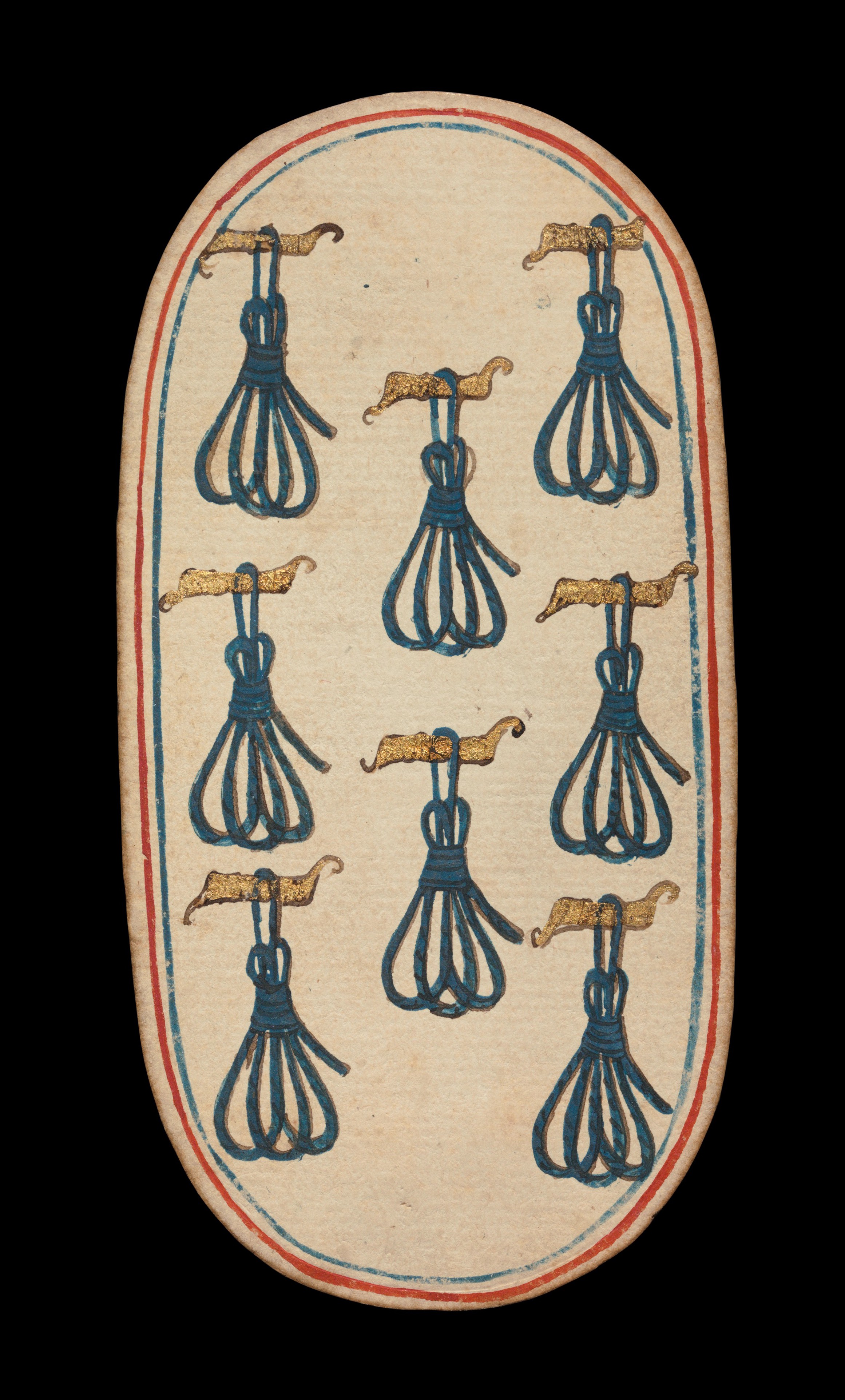
Heritage Analysis: The Eight of Tethers and the Architecture of Restraint
For Katherine Fashion Lab, the study of historical artifacts is not an exercise in antiquarianism but a strategic excavation of enduring symbolic structures. The Eight of Tethers, from the famed Cloisters Playing Cards, offers a profound case study in the semiotics of power, control, and material transcendence. Originating in the South Netherlandish courts of the late 15th century, this card—part of a deck commissioned for aristocratic entertainment—transcends its ludic function to serve as a compressed treatise on social order, spiritual discipline, and the aestheticization of constraint. This analysis decodes the card's layered iconography and translates its core principles into a viable 2026 luxury strategy predicated on quiet authority and curated scarcity.
Iconographic Decoding: The Semiotics of the Tether
The suit of Tethers, an archaic precursor to modern batons or wands, is depicted not as a weapon but as a bound bundle of cords or ropes. In the Eight of Tethers, eight such tethers are arranged in a strict, almost heraldic symmetry. The visual language is one of deliberate repetition and disciplined alignment. Unlike the chaotic energy of a hunt or the martial aggression of swords, tethers signify a different kind of power: the power to bind, to secure, and to restrain. Within the feudal and mercantile context of the Burgundian Netherlands, this imagery resonates with the legal and economic instruments of the era—the sealing of contracts, the binding of obligations, and the management of trade routes. The card, therefore, is a microcosm of administrative control, rendered in a medium of extraordinary fragility and value.
Materiality as a Metaphor for Mastery
The physical construction of the card is critical to its symbolic weight. Composed of four layers of pasteboard, it was not a flimsy ephemera but a durable, tactile object. The application of opaque paint, glazes, and applied silver and gold transforms a utilitarian object into a relic of conspicuous consumption. The gold leaf, in particular, is not mere decoration; it is a theological and political statement. In medieval and Renaissance thought, gold was the incorruptible metal, symbolic of divine light and eternal sovereignty. By gilding the tethers, the artist elevates the mundane concept of binding into a celestial act. The cords become divine laws, and the card itself becomes a portable altar of governance. For the modern luxury strategist, this demonstrates that material integrity is the primary vehicle for conveying conceptual value. The weight of the paper, the reflectivity of the gilding, and the precision of the hand-applied pigment all communicate a level of mastery that machine production cannot replicate.
Spiritual and Historical Adornment: The Aesthetic of the Yoke
Within the Christian iconography of the late Middle Ages, binding carried a dual connotation. On one hand, it represented imprisonment and punishment. On the other, it symbolized sacred vows and the "yoke of Christ," which was paradoxically described as easy and light. The Eight of Tethers navigates this theological tension by presenting the tethers not as oppressive chains but as elegant instruments of order. The symmetry suggests a cosmic balance, a Pythagorean harmony where numerical perfection (the number eight, representing regeneration and new beginnings) is achieved through restraint. This is the essence of historical adornment: the body and the objects surrounding it were dressed to project a specific spiritual and social status. The card’s wearer or holder would have been associated with prudence, fiscal responsibility, and the divine right to enforce order. The aesthetic is one of controlled power—a visual whisper rather than a shout, relying on the viewer’s literacy to decode the subtle message of authority.
Strategic Translation: The 2026 Luxury Paradigm
As we project into the 2026 luxury landscape, the prevailing market is saturated with loud logos and ephemeral trends. The consumer of 2026 is increasingly seeking substance, provenance, and psychological resonance. The Eight of Tethers offers a counter-intuitive but potent strategy: the luxury of restraint. Katherine Fashion Lab can leverage this heritage to develop a collection that is not about liberation, but about intentional binding—the choice to limit, to focus, and to curate.
The first strategic pillar is Material Asceticism. Just as the card uses gold to sanctify rope, the 2026 collection should utilize hyper-rare, technically complex materials (e.g., bio-fabricated silk, recycled aerospace alloys, hand-dyed Japanese indigo) to elevate utilitarian forms. The design language should be modular, featuring straps, closures, and "tethers" that allow the wearer to adjust, bind, and secure their garments. This is not a literal costume, but a conceptual nod to the idea that true luxury is the ability to control one's environment and presentation.
The second pillar is Numerological Exclusivity. The number eight is a powerful marketing construct. We propose a limited "Octad" series—eight distinct pieces, each produced in a run of eighty-eight units, referencing the card's numerical value. This creates a narrative of scarcity that is mathematically justified by the artifact. Each piece would be accompanied by a certificate of provenance that details the historical symbolism of the tether, connecting the buyer to a lineage of aristocratic discernment. This strategy transforms a purchase into an act of cultural preservation and personal empowerment.
The third pillar is Ritualistic Engagement. The card was an object of play and divination. The 2026 strategy should reintroduce a sense of ritual. This could manifest as an interactive digital platform where clients "cast" their chosen tether configuration, unlocking bespoke styling recommendations or private viewing events. The act of dressing becomes a ceremonial act of self-governance, aligning with the card's spiritual undertones of discipline and renewal.
Conclusion: The Quiet Power of the Bound
The Eight of Tethers is not a relic of passive beauty; it is a strategic document of power through order. Its historical significance lies in its ability to encode complex social and spiritual hierarchies within a compact, luxurious format. For Katherine Fashion Lab, the translation of this heritage is clear: the future of high-end luxury is not in louder expression, but in deeper meaning and deliberate constraint. By embracing the aesthetic of the tether—the beauty of the bind, the elegance of the limit—the brand can offer a product that speaks to the modern connoisseur's desire for control, authenticity, and quiet, unassailable authority. In a chaotic world, the ability to bind one's own narrative is the ultimate luxury, and Katherine Fashion Lab is uniquely positioned to be the architect of that binding.