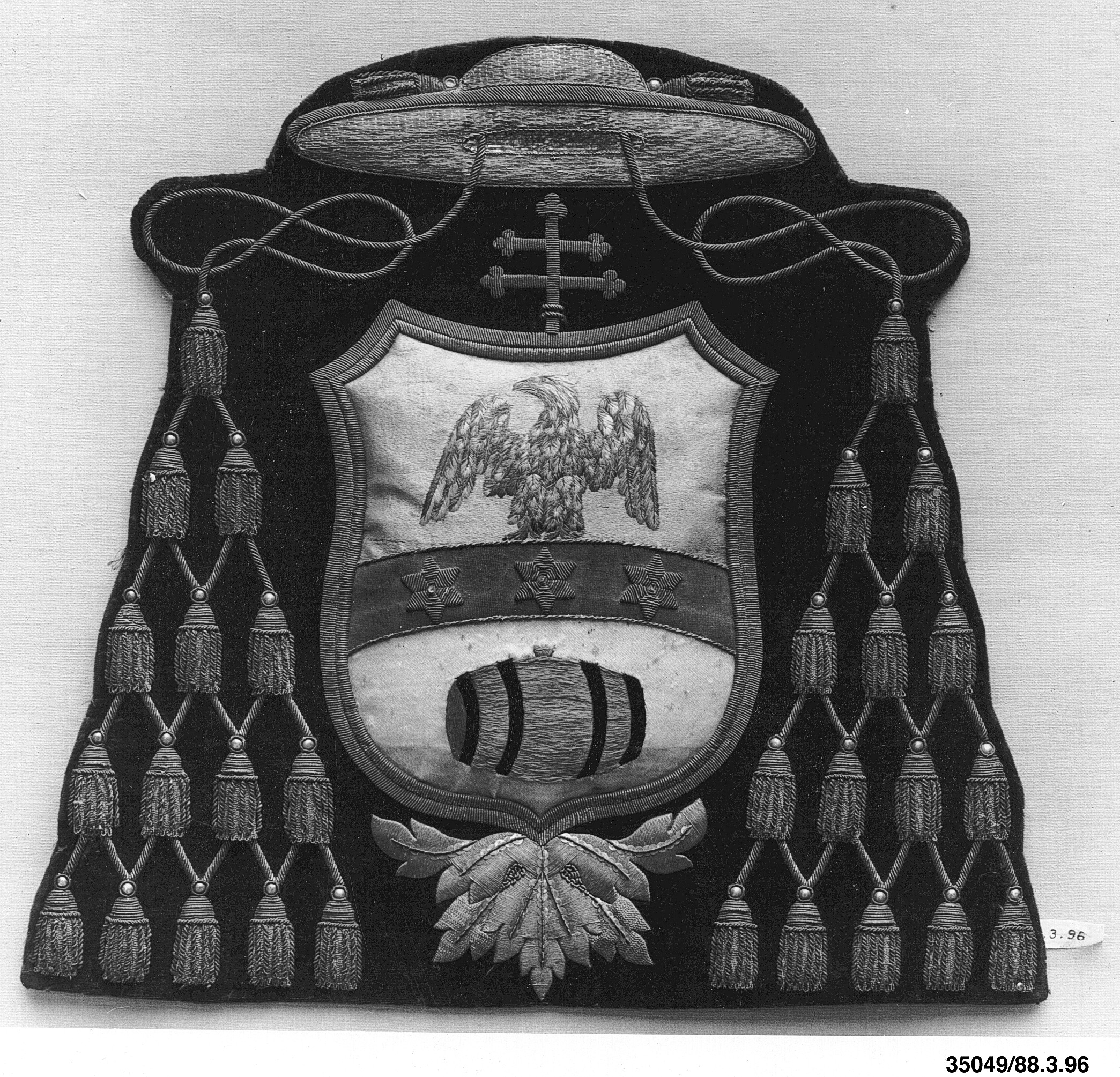
The Cardinal’s Armorial: A Study in Ecclesiastical Power and Textile Sovereignty
In the rarefied echelons of haute couture, where fabric becomes argument and stitch becomes ideology, Katherine Fashion Lab’s Cardinal’s Armorial emerges not merely as a garment but as a thesis. This standalone study, drawn from the vast lexicon of Global Heritage, interrogates the semiotics of ecclesiastical vestment through the dual prisms of material extremism and historical memory. The piece is a masterclass in controlled opulence—a deliberate, almost scholarly, deviation from the transient whims of seasonal fashion. It does not whisper of trends; it declaims in the grammar of permanence.
The subject—the cardinal’s armorial—is a loaded cipher. Historically, the cardinal’s red, the cappa magna, and the intricate coats of arms stitched into liturgical garb were not decorative afterthoughts. They were instruments of soft power, visual declarations of jurisdictional authority and spiritual lineage. Katherine Fashion Lab has extracted this heraldic vocabulary and recontextualized it for the contemporary connoisseur, stripping away the overtly religious function while retaining its gravitational weight. The result is a garment that functions as a secular relic, a wearable monument to the idea that authority is, at its core, a matter of meticulous presentation.
Material Dialectics: Silk as Canvas, Metal as Calligraphy
The material construction of the Cardinal’s Armorial is where the Lab’s intellectual rigor becomes palpable. The primary substrate is a duchesse silk of uncompromising density—a fabric that holds its shape with the architectural defiance of a cathedral buttress. This is not the fluid, yielding silk of evening gowns; it is a silk that demands deference. Its surface, a deep, oxblood-infused crimson, is achieved through a laborious double-dye process that yields a chromatic depth reminiscent of aged Florentine velvet. The color does not sit on the fabric; it emanates from within, shifting from a near-black garnet in shadow to a fiery vermilion under direct light.
Against this sanguine field, the Lab deploys its most potent tool: metal-wrapped thread. This is not a mere embellishment; it is a structural and narrative counterpoint. The thread, a composite of fine gold and antiqued silver wrapped around a silk core, is used in a technique that approximates opus anglicanum—the famed English embroidery that once adorned the vestments of medieval bishops. The armorial motifs—a stylized lion rampant, a fleur-de-lis, and a geometric grid of crosses—are not printed or appliquéd. They are hand-embroidered in a raised, three-dimensional relief that casts its own shadows. The metallic thread catches light with a fractured, Byzantine shimmer, suggesting the flicker of candlelight on gilded altarpieces. This is a deliberate dialogue between the softness of the silk and the unyielding rigidity of the metal, a tension that mirrors the historical conflict between spiritual humility and terrestrial dominance.
Construction as Ideology: The Architecture of the Silhouette
The silhouette of the Cardinal’s Armorial is a study in severe minimalism that paradoxically houses maximalist detail. The garment—a structured, floor-length overcoat with a high, stand-away collar—eschews the body-con contouring of contemporary fashion. Instead, it proposes a sartorial architecture that creates space between the wearer and the fabric. The shoulders are extended with a subtle, almost imperceptible padding, evoking the robe de chambre of a Renaissance prince. The sleeves are cut in a wide, bell-shaped profile, reminiscent of the chimere worn by Anglican bishops, yet they are lined in a contrasting, matte black silk that appears only when the wearer moves. This hidden lining is a signature of the Lab’s methodology: the revelation of the unseen, a nod to the idea that true power is often most potent when partially concealed.
The construction itself is a feat of engineering. The silk is interfaced with a fine horsehair canvas, not to stiffen it into a shell, but to give it a living, breathing rigidity. The seams are hand-felled, a technique that creates a flat, almost invisible join, allowing the metallic embroidery to remain the sole focal point. The closure is a series of hidden, hand-worked silk frogs, each one individually knotted and secured with a small, faceted jet bead. There are no visible buttons, no zippers, no overt fasteners. The garment closes like a vestment—through ritualistic, deliberate action—reinforcing the idea that dressing in this piece is an act of investiture, not mere adornment.
Global Heritage and the Politics of Appropriation
Within the context of Global Heritage, the Cardinal’s Armorial navigates a precarious, yet intellectually fertile, terrain. It does not appropriate a single culture but rather synthesizes a pan-European liturgical and heraldic tradition, which itself was a melting pot of Roman, Byzantine, and Gothic influences. The Lab’s approach is archival and analytical. The embroidery motifs are not copied verbatim from a single source; they are deconstructed and recombined, creating a fictional, yet historically plausible, coat of arms. This is a critical act of re-signification. By removing the armorial from its specific ecclesiastical context, the Lab invites the wearer to consider the universal human desire for insignia, for markers of belonging and distinction.
The choice of silk and metal also speaks to the Silk Road’s legacy—a network of exchange that was as much about the transmission of aesthetic technique as it was about commerce. The metal-wrapped thread, a technology that originated in the Near East and was perfected in medieval Italy, is a testament to the fluidity of craft across borders. The Cardinal’s Armorial, therefore, is not a static object of heritage preservation. It is a dynamic argument that heritage is not a museum piece to be dusted off, but a living language that can be spoken in new accents. The Lab refuses the binary of authenticity versus innovation, instead proposing a third path: critical continuity.
Standalone Study: The Garment as Thesis
As a standalone study, divorced from a larger collection, the Cardinal’s Armorial demands to be read on its own terms. It is not a "look" to be styled with accessories; it is a totalizing statement. The absence of a collection context forces the viewer to confront the garment’s intrinsic logic. There is no narrative of a "mood board" or a "seasonal story." Instead, there is only the object itself—its weight, its texture, its silent heraldic language. This is a deliberate curatorial choice by Katherine Fashion Lab, positioning the piece as an artifact of material philosophy.
In practical terms, this is a garment that imposes its own ritual. To wear it is to adopt a posture of stillness and gravity. The weight of the metal thread—which adds a significant, grounding heft to the silk—anchors the wearer, discouraging fidgeting or hurried movement. The high collar frames the face like a reliquary frame, demanding direct eye contact. This is couture as performance art, where the act of wearing becomes a public declaration of one’s willingness to be encumbered by beauty, to carry the weight of history on one’s shoulders—literally.
The Cardinal’s Armorial is not for the faint of heart or the trend-driven. It is a garment for the collector who understands that true luxury is not about ease, but about significance. It is a meditation on the relationship between power and ornament, between the body and the institution. In an era of fast fashion and digital ephemerality, Katherine Fashion Lab has produced a piece that is deliberately, almost obstinately, slow and permanent. It is a quiet, metallic rebuke to the disposable, and a resplendent affirmation that the most profound fashion statements are those that take the longest to articulate.