The Printed Prestige: Deciphering the Social Fabric of a 16th-Century Fashion Plate
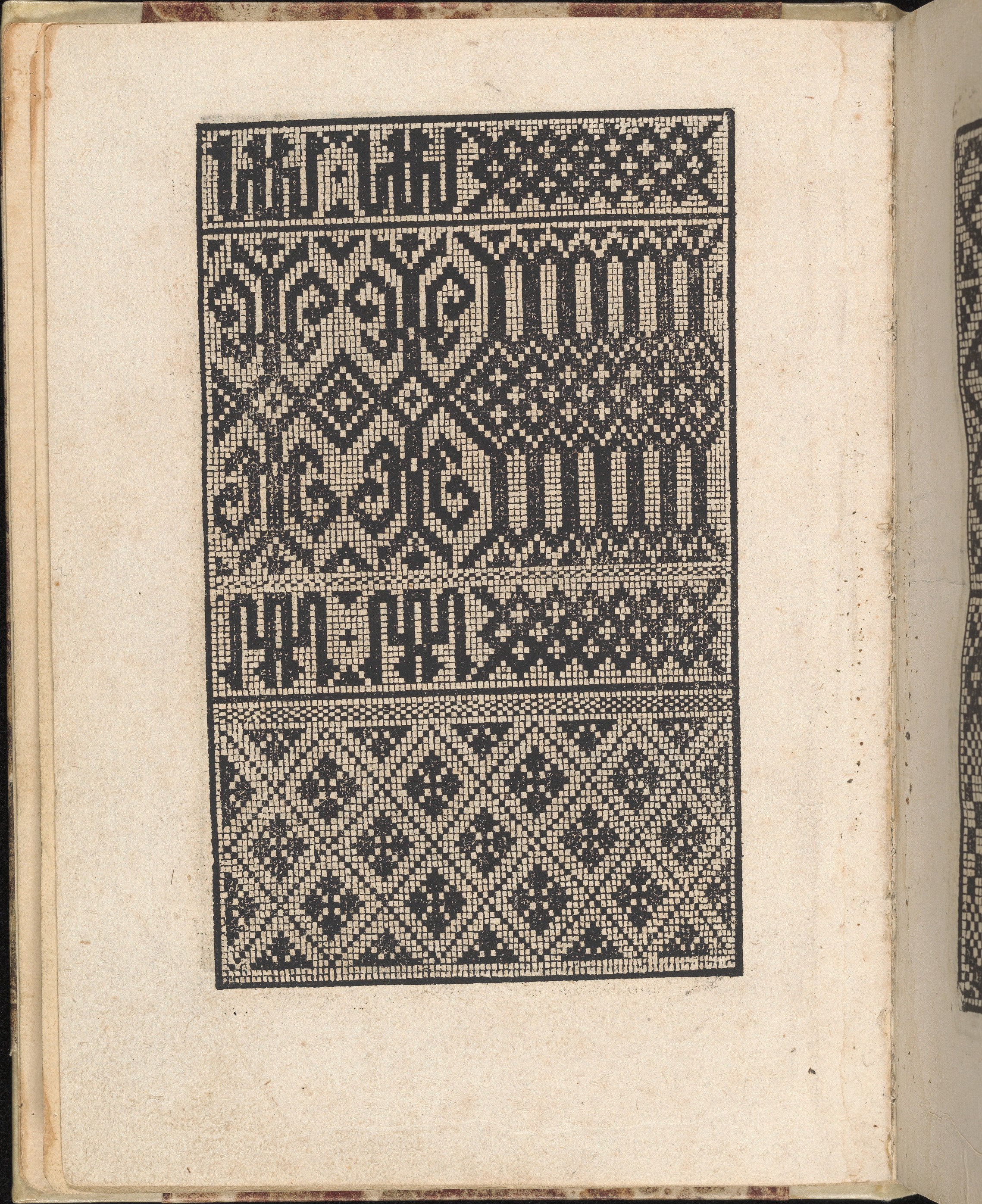
In the rarefied atmosphere of haute couture, where the ephemeral whisper of a silk taffeta underskirt or the precise architectural fall of a structured shoulder can define an era, the study of historical dress is not merely an academic exercise. It is the very bedrock upon which contemporary innovation is built. At Katherine Fashion Lab, our curatorial gaze is perpetually drawn to the artifacts that bridge the chasm between sartorial intention and social realization. This week, our analysis turns to a singular, unassuming object: a woodcut print from the 16th-century German publication, Ein new getruckt model Büchli, specifically Page 4, recto. This is not a garment, nor a bolt of fabric, but a sheet of paper—a "model book"—that serves as a profound testament to the democratization of fashion and the intricate semiotics of dress in the early modern period.
At first glance, the woodcut presents a static, two-dimensional figure, likely a noblewoman or a woman of substantial bourgeois standing, rendered in stark black ink against the cream of the page. The absence of color, which we in the modern atelier might consider a limitation, is in fact the key to its revolutionary power. This print is a masterclass in the communication of silhouette and construction. The image is not a portrait; it is a technical specification, a pattern, a blueprint for aspiration. Within the context of the model Büchli, this page functioned as a standalone study, a template for tailors, seamstresses, and discerning clients who wished to replicate the fashions of the imperial courts without direct access to them.
Deconstructing the Silhouette: The Anatomy of an Ideal
Our forensic analysis of Page 4, recto, begins with the foundational structure of the depicted gown. The woodcut reveals a rigid, conical bodice that extends to a distinct V-point at the waist. This is a precursor to the farthingale and stays that would dominate the subsequent century, indicating a period of transition where the natural waistline was being deliberately suppressed and elongated. The artist’s line work, though executed in a coarse medium, is precise in delineating the seams. We can observe the placement of the armholes, set relatively high and close to the back, which would have restricted arm movement—a physical manifestation of aristocratic leisure, where manual labor was anathema.
The sleeves are a particular point of interest. They are depicted as full and puffed at the shoulder, gathered into a tight forearm, and finished with a pronounced cuff. This "gigot" or leg-of-mutton style, centuries before its Victorian revival, was a deliberate amplification of the upper body. It creates a visual triangle, with the broad shoulders and voluminous skirts balancing on a tiny, cinched waist. The woodcut’s lack of shading forces the eye to read these volumes through the placement of the printed lines—the slashes in the sleeves, which we can infer, were not mere decoration but functional openings to pull the puffed lining through, creating a striped effect of contrasting fabrics. This is a critical detail for the modern designer: the understanding that volume is not just about yardage, but about the manipulation of layers and the strategic release of tension.
Materiality and the Semiotics of the Woodcut
The choice of medium—the woodcut—is a critical element of this artifact’s cultural significance. Unlike the illuminated manuscript or the oil painting, which were bespoke and singular, the woodcut was reproducible. It was the mass media of its day. This particular page, part of a series, was intended for circulation. It took the highly codified, exclusive language of court dress and translated it into a graphic, legible format that could be disseminated across cities and borders. For the first time, fashion was not solely disseminated by the physical presence of the elite but by the printed image of them.
This reproduction had profound implications for the construction of social identity. The print did not merely show a dress; it showed a way of being. The posture of the figure, the placement of the hands, the elaborate headdress—all are encoded within the stark lines. The woodcut’s inherent lack of detail paradoxically forces the viewer to focus on the most essential elements of the design: the line of the neckline, the angle of the bodice, the fall of the skirt. It abstracts the garment into a pure, graphic form, which is precisely what makes it so useful for a fashion house like ours today. We are looking at the DNA of a trend, stripped of its textile flesh.
The Global Heritage and the Local Garb
Labeled as "Global Heritage," this print occupies a fascinating position. It is a German interpretation of a style that had its roots in the Spanish court, which was the undisputed arbiter of European elegance at the time. The model Büchli is thus a document of cultural translation. It takes an international aesthetic—the Spanish farthingale, the high-necked bodice—and renders it through a local, Germanic lens, potentially adjusting proportions or details for regional tastes and available materials. This is not a simple copy; it is an adaptation, a process of sartorial localization that we in the contemporary global fashion industry recognize all too well. The print is a testament to the fact that fashion has always been a global conversation, a constant flow of ideas that are borrowed, reinterpreted, and re-exported.
For the curator, the "standalone study" context is paramount. It was likely used by a professional tailor as a reference for cutting and construction. The image would be pinned to a wall, consulted for proportions, and used as a visual contract between the maker and the client. It is a document of professional knowledge, a precursor to the modern pattern book. It elevates the craft of dressmaking from a purely oral, hands-on tradition to one that is codified and shareable. This is the moment when the designer, as a distinct role, begins to emerge from the shadows of the tailor.
Implications for the Contemporary Atelier
At Katherine Fashion Lab, our engagement with Page 4, recto, is not nostalgic. It is a strategic study in the fundamentals of design. The woodcut teaches us that clarity of line is the ultimate luxury. Before the embellishment, before the fabric choice, there is the silhouette. The 16th-century woodcut forces us to ask: Does the garment read effectively in two dimensions? Does its structure hold a compelling narrative? We see in this print the genesis of the power suit—a garment designed to project authority through the manipulation of space and volume.
Furthermore, the print is a lesson in accessibility. It reminds us that high fashion’s influence is not confined to the runway but filters down through patterns, knock-offs, and adaptations. The model Büchli was the Instagram of its age, a tool for the dissemination of desire. By analyzing its stark, graphic honesty, we are reminded to strip our own designs down to their most potent, communicative essence. We are not just creating clothes; we are creating images, identities, and social markers that will be read and reproduced.
In conclusion, this small woodcut is a monumental artifact. It encapsulates a moment of technological, social, and artistic convergence. It stands as a powerful reminder that fashion is a language, and the printed page is one of its most enduring dialects. As we move forward, we carry with us the lessons of this page: the power of a strong silhouette, the importance of material communication, and the eternal, human desire to dress for a role we aspire to play.