The Rapier: An Exercise in Architectural Elegance and Martial Precision
Within the hallowed halls of Katherine Fashion Lab, where the ephemeral meets the eternal, the study of a singular artifact often yields the most profound insights into the language of design. Today, our focus is not on a gown or a tailored jacket, but on an object of lethal grace: the Italian rapier. Removed from the context of the duel or the battlefield, this weapon is presented as a standalone study in form, materiality, and the philosophical underpinnings of Renaissance aesthetics. It is, in essence, a masterpiece of wearable architecture—a testament to the idea that the most refined design is often that which balances opposing forces with absolute precision.
Deconstructing the Silhouette: Line, Balance, and the Illusion of Weightlessness
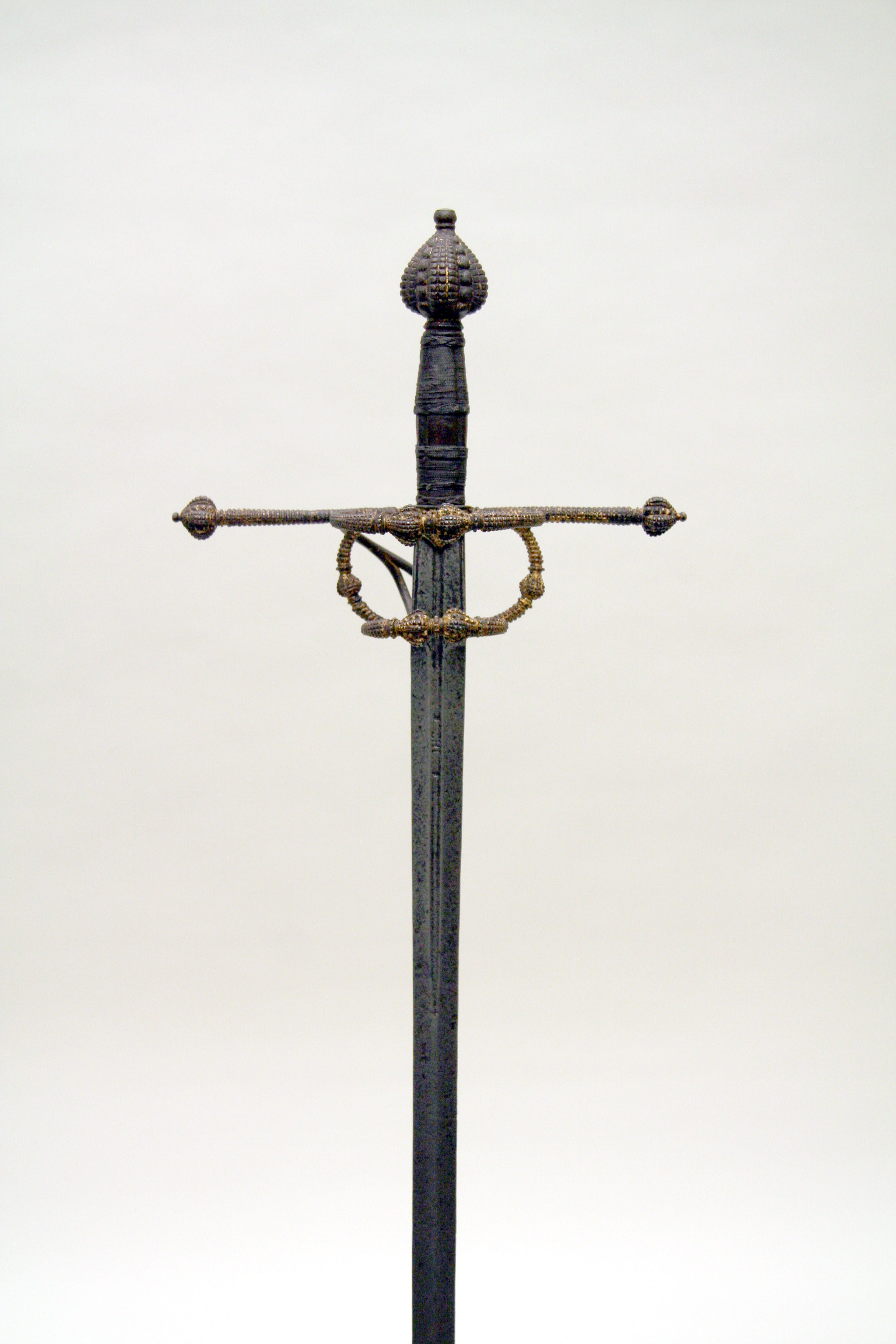
At first glance, the rapier’s silhouette is one of stark linearity. Yet, a closer examination reveals a sophisticated play of geometry that any couturier would recognize. The blade, a long, tapering triangle of steel, is not merely a functional extension; it is a study in visual elongation. Its slender profile creates a vertical line that draws the eye upward, suggesting a stature and an attitude of command. In our atelier, we speak of the “line of the garment” as the primary driver of its character. Here, the line is one of unbroken tension—a single, uninterrupted sweep from the tip of the blade to the base of the hilt. This is the antithesis of the billowing, Romantic-era silhouette; it is a modernist’s dream of clarity before modernism existed.
The counterpoint to this linear severity is the hilt—the “bodice” of this object, if you will. The hilt is a complex assemblage of cross-guards, quillons, and a pommel, all arranged in a symmetrical, cruciform pattern. This is where the design becomes truly couture. The hilt is not a single piece but a collection of interlocking components that create a sense of structured volume. The quillons extend horizontally, creating a strong shoulder line that visually anchors the weapon. This horizontal thrust against the vertical blade creates a dynamic tension, a visual “cinching” at the waist that is reminiscent of a perfectly tailored corset. The result is a piece that feels both grounded and airborne—a paradox that is the hallmark of exceptional design.
Materiality as Narrative: The Dialogue Between Steel, Gold, Iron, and Wood
In fashion, fabric is the primary language of storytelling. For the rapier, that language is spoken in metal and wood. The steel of the blade is not a passive surface; it is a mirror, reflecting the light and the environment around it. This polished, mirror-like finish is akin to the lustrous sheen of a high-gloss satin or a liquid metallic lame. It speaks of clarity, of a sharpened intellect, and of an uncompromising commitment to performance. The blade’s surface is a blank canvas, inviting the eye to trace its length and admire the purity of its form.
Contrast this with the gold accents, typically found in the intricate details of the hilt’s guard and pommel. Gold is the embroidery of this piece—the delicate passementerie that elevates a functional object into a work of art. It introduces a warm, yellow undertone that disrupts the cool, monochromatic palette of the steel. This is not a garish display of wealth; it is a strategic use of accent color to highlight the points of articulation—the wrists, the fingers, the points of control. The gold acts as a visual exclamation point, drawing the eye to the craftsmanship of the joins and the complexity of the guard’s scrollwork. In our lab, we would call this the “jewelry” of the look—the final, essential layer that defines the wearer’s status and taste.
The iron, often used in the internal structure of the hilt or the pommel, provides the necessary weight and counterbalance. It is the unseen structural element, the horsehair canvas or the steel boning that gives a garment its shape. Iron is the anchor, the material that ensures the rapier’s balance is perfect—neither too tip-heavy nor too hilt-heavy. This speaks to a critical principle in our craft: fit and balance are not optional; they are the very essence of luxury. A garment that does not move correctly, that does not feel like a second skin, is a failure, regardless of the beauty of its fabric. Similarly, a rapier that is unbalanced is a failure as a weapon and as an object of design.
Finally, the wood, typically found in the grip, introduces a tactile, organic element. It is the only non-metallic component, and it serves as a point of human connection. The wood is often wrapped in wire or leather, but its presence is felt—a warm, textured surface against the cold, hard metal. This is the “skin” of the piece, the interface between the human hand and the inanimate object. It grounds the rapier in the physical world, reminding us that despite its celestial beauty, it was made to be held, to be wielded, to be used. This juxtaposition of the organic and the inorganic is a powerful narrative tool, one that we frequently explore at Katherine Fashion Lab to create pieces that feel both futuristic and deeply human.
Contextualizing the Object: The Rapier as a Standalone Study in Power
Presented as a standalone study, divorced from the context of the duel, the rapier transcends its martial purpose. It becomes a pure object of contemplation, a three-dimensional sketch of the Renaissance ideal of the uomo universale—the universal man who is equally adept at art, science, and combat. This weapon is not a tool of aggression; it is an extension of the wearer’s intellect and will. It represents a philosophy of life where grace and power are not mutually exclusive but are, in fact, complementary forces.
For us at Katherine Fashion Lab, this rapier is a potent source of inspiration. It challenges us to consider how we can imbue our own designs with a similar sense of disciplined elegance. It asks us to question the relationship between form and function, between beauty and utility. The rapier’s construction is a masterclass in negative space—the empty areas between the quillons and the blade are as important as the metal itself, creating a sense of airiness and lightness. This is a lesson we apply to our own garments, where the cut of a neckline or the drape of a sleeve can create equally compelling voids.
The piece also speaks to the importance of artisanal precision. Every curve of the guard, every facet of the pommel, is a result of hours of painstaking handwork. There is no room for error, no allowance for imperfection. This is the same standard we hold ourselves to in the atelier, where a seam must be perfect, a bead must be placed with intention, and a hem must hang with absolute integrity. The rapier is a monument to the idea that true luxury is not in the ostentation of the materials, but in the mastery of their manipulation.
Conclusion: The Eternal Code of Style
In conclusion, the Italian rapier, when examined through the discerning lens of a fashion laboratory, reveals itself to be far more than a historical weapon. It is a profound study in architectural design, material dialogue, and the philosophy of personal power. Its steel blade is a statement of clarity, its gold accents a whisper of opulence, its iron structure a promise of integrity, and its wooden grip a reminder of its human connection. It is a lesson in balance, a testament to the enduring appeal of objects that are both beautiful and purposeful. As we continue to design for the modern connoisseur, this rapier stands as a silent mentor, reminding us that the most compelling style is always a fusion of precision, restraint, and a fearless embrace of one’s own distinct identity.