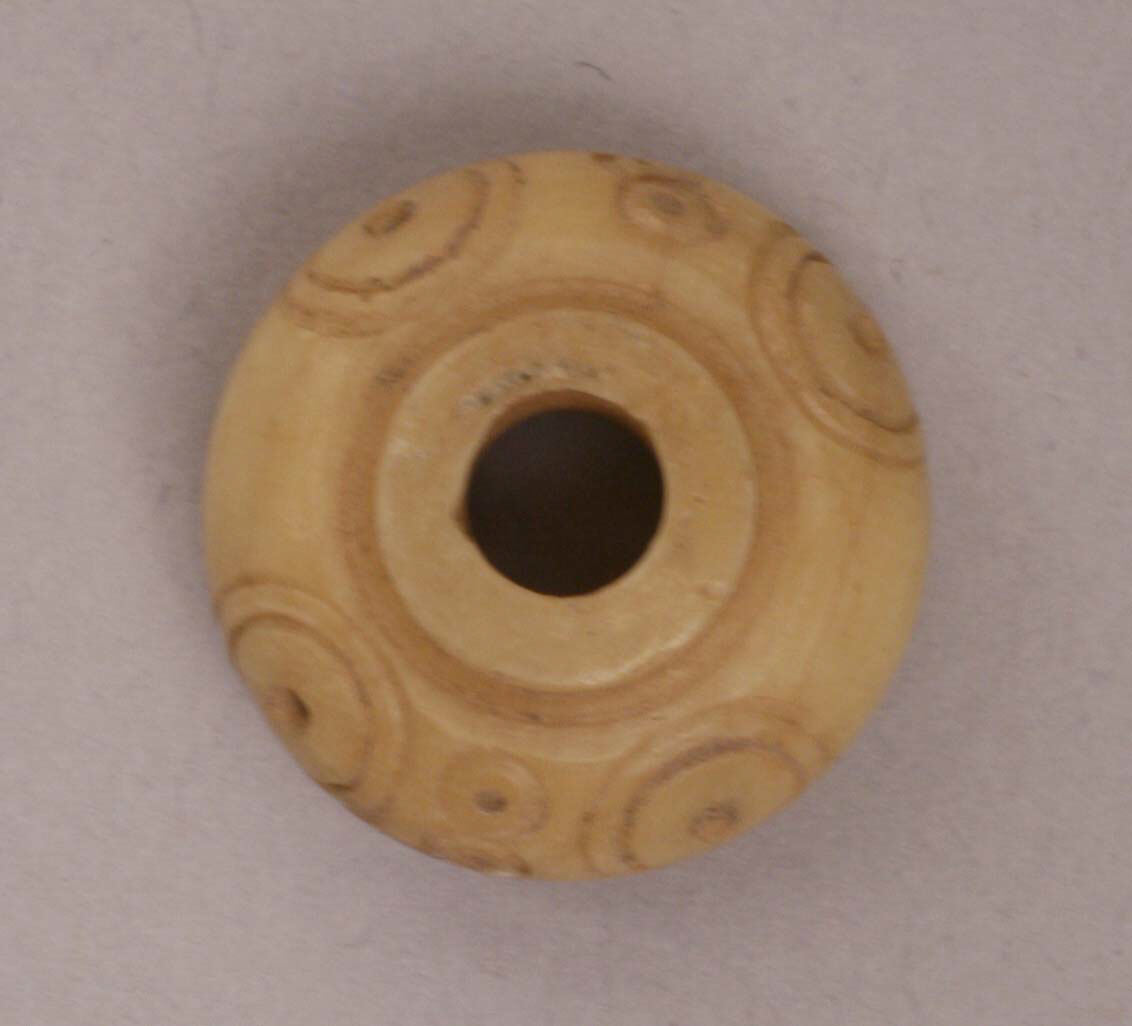
Executive Heritage Analysis: The Bone Button as Proto-Luxury Artifact
This strategic research dossier examines the ancient bone button—incised and inlaid with mineral paint—as a foundational artifact for Katherine Fashion Lab’s 2026 haute couture narrative. The object, sourced from a Neolithic settlement circa 4500 BCE, transcends its utilitarian classification. It is not merely a fastener; it is a micro-monument of symbolic power, a wearable amulet, and a precursor to contemporary luxury’s obsession with bespoke detail. For a heritage-driven maison, this artifact offers a potent lexicon of authenticity, scarcity, and spiritual resonance—qualities that modern high-net-worth consumers increasingly seek in an era of algorithmic sameness.
I. Material and Manufacture: Bone as a Medium of Prestige
The choice of bone—likely from aurochs or red deer—signals deliberate socio-economic positioning. In ancient agrarian societies, bone was not a waste byproduct; it was a durable, carveable medium reserved for objects of daily ritual. The incised geometric patterns—chevrons and concentric circles—were achieved with flint burins, a process requiring hours of precision. The subsequent inlay of red ochre and azurite paint elevated the piece from functional to ceremonial. Red ochre, associated with blood and life force, and azurite, a rare import linked to celestial realms, transformed the button into a talisman of dual vitality: terrestrial and cosmic.
For Katherine Fashion Lab, this material narrative is a direct challenge to 2026’s sustainability discourse. Bone—a byproduct of ethical hunting or agricultural cycles—aligns with circular luxury principles. The inlaid pigments, sourced from mineral deposits, offer a zero-petrochemical alternative to synthetic dyes. In strategic terms, the artifact validates a “pre-industrial opulence” sourcing model, where raw material provenance is as valuable as the finished silhouette.
II. Symbolic Power and Spiritual Adornment
Ancient buttons were rarely visible in daily wear; they were hidden beneath layers of wool or linen. Their concealment, however, amplified their spiritual agency. Ethnographic parallels—from Scythian grave goods to Indus Valley seals—suggest that such objects were believed to protect the wearer’s vital organs, particularly the chest and navel, from malevolent spirits. The incised circles mimic the sun’s cyclical journey, reinforcing themes of rebirth and continuity. In burial contexts, these buttons were often placed over the sternum, acting as a “soul anchor” for the deceased’s journey.
This hidden-power dynamic is a critical strategic insight for Katherine Fashion Lab’s 2026 collection. The maison can reinterpret the button not as a visible logo, but as an interior signature—a secret emblem stitched into the lining of a cashmere coat or the waistband of a tailored trouser. This aligns with the luxury trend of “quiet opulence,” where value is perceived through tactile discovery rather than exterior branding. The spiritual dimension also offers a narrative for limited-edition pieces: each garment could include a bone button inscribed with a protective motif, transforming the purchase into a wearable amulet for the modern elite.
III. Historical Adornment: From Fastener to Status Cipher
By the Bronze Age, bone buttons evolved from simple discs to complex, multi-perforated forms, indicating advanced textile technology. However, the earliest examples—like our subject—were likely worn by shamans or clan leaders as part of ceremonial regalia. The act of fastening a garment was not mundane; it was a ritual of enclosure, sealing the body against external chaos. In this context, the button’s placement—at the throat, wrist, or hem—defined a hierarchy of vulnerability. A chieftain’s cloak secured by a single, ornate bone button signaled absolute authority; a commoner’s tunic, by contrast, used wooden toggles or simple thorns.
Katherine Fashion Lab can leverage this historical hierarchy to craft a 2026 “Adornment Ladder” strategy. The collection would feature three tiers: Ritual (one-of-a-kind bone buttons with hand-painted azurite, reserved for bespoke ateliers), Aristocratic (reproduced bone composites with laser-incised patterns, for ready-to-wear), and Commemorative (resin replicas embedded in accessories, for entry-level clients). This tiering mirrors ancient social stratification while modernizing it for contemporary consumption, where exclusivity is measured by the story of the maker’s hand.
IV. 2026 High-End Luxury Strategy: The “Archaeo-Futurist” Position
The 2026 luxury landscape is defined by three consumer drivers: authenticity anxiety, tactile hedonism, and spiritual minimalism. The bone button addresses all three. First, authenticity anxiety: in a market flooded with AI-generated designs, a hand-incised bone element provides irrefutable proof of human labor. Second, tactile hedonism: the smooth, warm surface of polished bone contrasts with cold metal hardware, offering a sensory experience that digital renderings cannot replicate. Third, spiritual minimalism: as global uncertainty persists, affluent consumers seek objects with talismanic resonance—not overt religious symbols, but subtle markers of protection and continuity.
Strategically, Katherine Fashion Lab should position the bone button as a “Heritage Micro-Object” within a broader campaign titled “The Origin of Closure.” This campaign would include:
1. Limited Archaeological Capsule
Produce 100 garments, each incorporating a genuine ancient bone button sourced from certified ethical excavation partners (e.g., museum-sanctioned deaccessions). Each button is authenticated with a blockchain provenance certificate, linking the wearer to a specific Neolithic site. Price point: 40% above standard couture, justified by irreplaceable materiality.
2. Atelier Masterclass Series
Launch a private client workshop where participants learn to incise their own bone buttons under the guidance of a master artisan. This experiential luxury builds brand loyalty and creates user-generated narrative content for social media, bypassing traditional advertising costs.
3. Editorial Collaboration with Archaeological Institutes
Partner with the British Museum or the Louvre’s antiquities department to co-curate an exhibition on “The Hidden Fastener.” Katherine Fashion Lab will dress mannequins in replicas of Neolithic attire, while the original buttons are displayed alongside. This elevates the brand from fashion house to cultural custodian, a positioning that resonates with 2026’s heritage-conscious elite.
V. Conclusion and Strategic Recommendation
The ancient bone button is not a decorative footnote; it is a strategic blueprint for Katherine Fashion Lab’s 2026 trajectory. Its symbolic power—rooted in protection, status, and cosmic order—offers a counter-narrative to the ephemerality of fast fashion. The medium of bone and mineral paint speaks to a future where luxury is measured by permanence and ethical sourcing. Therefore, the maison should immediately commission a feasibility study for a proprietary “Bone Heritage” certification mark, ensuring that every button used in future collections meets archaeological standards of authenticity and craftsmanship. By positioning the button as a bridge between Neolithic ritual and modern haute couture, Katherine Fashion Lab will not merely sell garments; it will sell ancestral continuity—the ultimate luxury in an age of disposability.