Deconstructing Heritage: The Fragment as a Complete Narrative
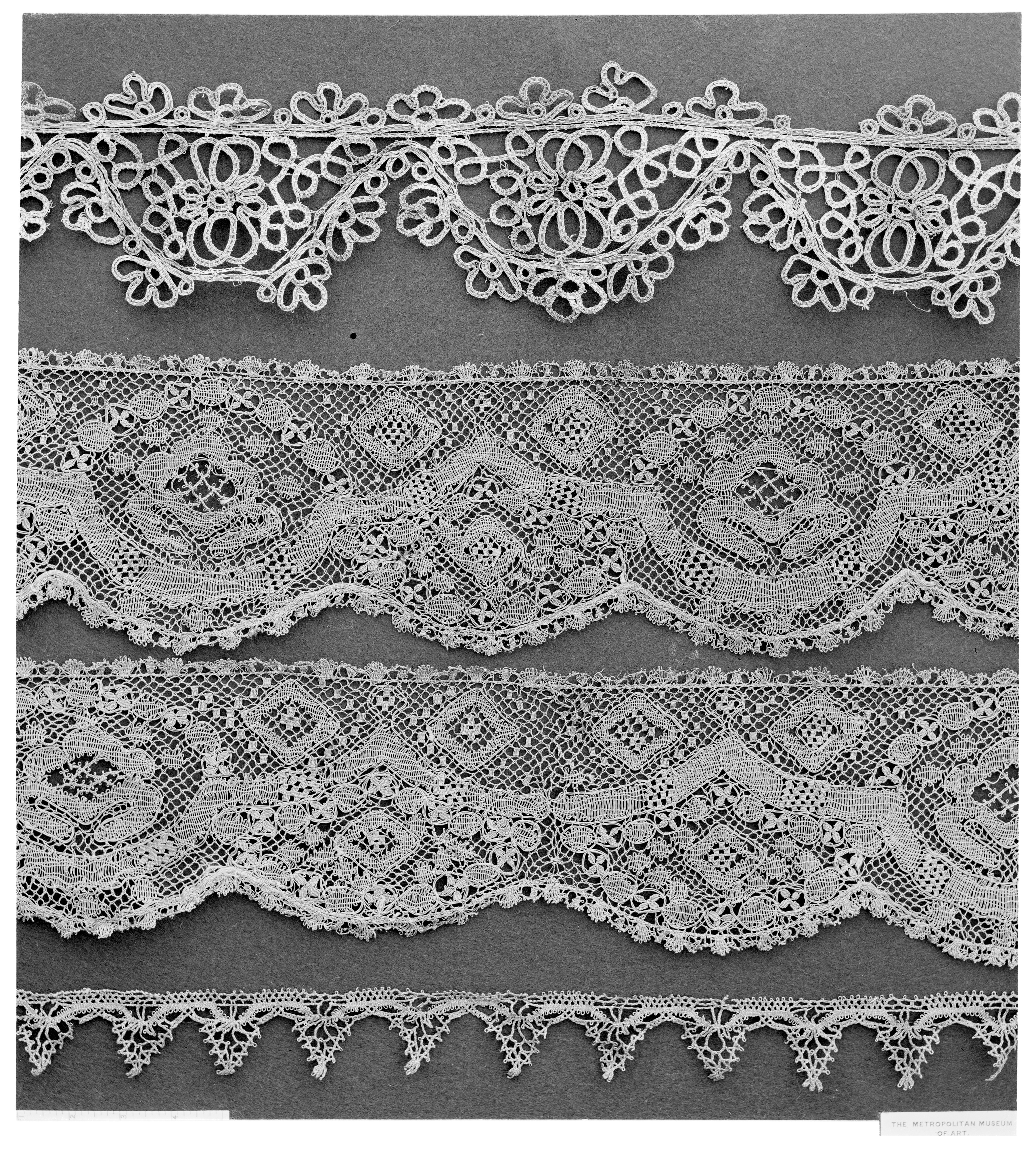
In the rarefied echelons of contemporary couture, where novelty often masquerades as innovation, Katherine Fashion Lab’s latest standalone study—titled simply Fragment—offers a profound recalibration of how we perceive materiality and memory. This is not a garment in the conventional sense, nor is it a mere accessory. It is a thesis, rendered in metal thread and bobbin lace, that interrogates the very architecture of global heritage. The piece operates as a synecdoche: a part that speaks voluminously for a whole, a shard of cultural memory polished to a mirror finish. By isolating the fragment as a subject, the Lab eschews the totalizing impulse of the runway in favor of a concentrated, almost archaeological, examination of how civilizations encode identity into weave and filament.
The Metallurgy of Memory: Reimagining Metal Thread
The primary material—metal thread—is immediately arresting, yet it defies the gilded opulence one might anticipate. Katherine Fashion Lab has long eschewed the superficial glitter of metallic brocade for a more rigorous, textural dialogue. Here, the metal is not merely a decorative overlay; it is the structural skeleton of the piece. The thread, a proprietary alloy of fine silver and drawn copper, is oxidized in controlled passes to achieve a patina that evokes both ancient armory and contemporary industrial sculpture. This is not the burnished gold of Byzantine icons, but rather a muted, lunar luminosity that shifts with the viewer’s angle, suggesting the unstable nature of historical record.
The choice of metal thread carries a dual semiotic weight. On one hand, it speaks to the martial and mercantile histories of the Silk Road, where metallic yarns were traded as currency of power. On the other, it signifies the resilience of craft—the ability of a filament to withstand the corrosive forces of time. In Fragment, the metal is worked into a dense, almost rigid grid at the piece’s core, mimicking the structural logic of a fragment of chainmail or a torn page of an illuminated manuscript. This density gives way to a gradual, almost imperceptible dissolution at the edges, where the threads fray into loose, unbound ends. This deliberate degradation is not a flaw; it is a narrative device. It visualizes the process of erosion, the way that cultural artifacts lose their coherence while retaining their evocative power.
Bobbin Lace as Cartography: The Logic of the Openwork
Juxtaposed against the metallic severity is the ethereal, almost architectural, application of bobbin lace. This is a masterstroke of dialectical design. Bobbin lace, historically a craft of European convents and aristocratic ateliers, is here re-territorialized. The Lab treats the lace not as a soft, romantic trim, but as a cartographic grid—a mapping of intersections, crossings, and deliberate voids. The lace is worked in a monochrome, undyed silk base, yet it is interwoven with the metal thread at critical junctures. The result is a piece that reads as a topographical map of a lost civilization, where the solid metal forms are landmasses and the lace is the intricate, fragile network of rivers and trade routes.
The technical execution is staggering. Bobbin lace of this complexity typically requires hours of painstaking manipulation of dozens of bobbins. Katherine Fashion Lab has pushed this further by integrating a negative-space philosophy. The lace does not fill a shape; it defines the absence of shape. The openwork areas are not empty—they are loaded with tension, functioning as the visual breath between the metallic ribs. In the context of "Global Heritage," this lacework serves as a metaphor for the connective tissue of human migration. The pin-holes and twisted threads evoke the intricate kinship networks and linguistic borrowings that define cross-cultural exchange. It is a testament to the fact that heritage is not a monolithic block, but a series of delicate, interlocking patterns that can be unpicked and re-laced to form new meanings.
Structural Autonomy: The Standalone Study
The context of this piece as a standalone study is critical to its interpretation. Unlike a collection piece, which must function within a seasonal narrative or a cohesive runway show, Fragment exists in a hermetically sealed conceptual space. It is not meant to be worn in the traditional sense; rather, it is designed to be inhabited by the gaze. The piece is suspended on a custom, minimalist steel armature, allowing the viewer to walk around it, to observe the reverse side where the chaos of thread ends and the structural undercarriage are exposed. This reverse view is as integral as the front, revealing the labor and the logic of its construction.
This autonomy allows the Lab to pursue a purity of concept. There is no concession to comfort, drape, or the human silhouette’s conventional demands. The fragment is presented as an artifact, a relic of a future-past. It asks the viewer to consider what it means to preserve, to curate, and to display. In a fashion ecosystem obsessed with the ephemeral, the standalone study offers permanence—or at least, the illusion of a halted moment. It is a museum piece in waiting, yet it is alive with the kinetic energy of its own making.
A New Lexicon of Global Heritage
What elevates Fragment beyond mere technical bravura is its philosophical stance on "Global Heritage." The piece refuses the easy visual signifiers of cultural appropriation—no obvious kimono sleeves, no African mudcloth prints, no Andean iconography. Instead, it abstracts the processes of heritage. Metal thread, present in the ceremonial textiles of the Caucasus, the court robes of the Ming Dynasty, and the ecclesiastical vestments of medieval Europe, becomes a universal constant. Bobbin lace, from Flanders to the Philippines, is a testament to the diffusion of technique through colonial and mercantile routes. By decontextualizing these materials from their specific geographic origins, the Lab achieves a syncretic universality.
The fragment, then, is not a broken piece of something larger. It is the complete thing in itself. Katherine Fashion Lab argues that our understanding of heritage is always fragmentary—we only ever have access to shards, to remnants, to the metallic threads that survive the decay of the organic. The piece posits that beauty lies not in the reconstructed whole, but in the honest acceptance of the partial. The frayed edges are not wounds; they are openings for future interpretation. The bobbin lace’s holes are not absences; they are portals to other narratives.
In conclusion, this standalone study is a masterclass in conceptual couture. It demands a slow, deliberate viewing, rewarding the patient observer with a profound meditation on time, value, and the materiality of memory. Katherine Fashion Lab has not created a garment; it has created a philosophical instrument, one that measures the weight of history and finds it, paradoxically, both heavy as metal and light as air. Fragment is a definitive statement that in the hands of a master, the smallest piece of the past can hold the entirety of our collective future.